
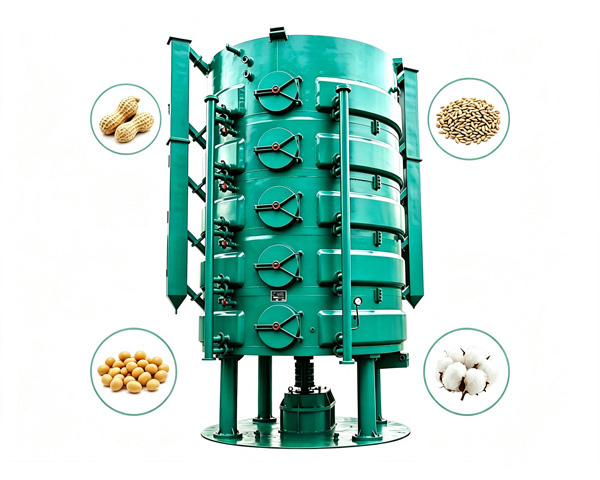
Pre-treatment of oilseeds before pressing is never about simply “toasting the seeds” – it is about adjusting the internal cellular structure and moisture content of the seeds to make mechanical pressing more effective.
Proper roasting heat treatment can reduce seed moisture to a level ideal for pressing (typically around 5%), create micropores, soften proteins, and enhance oil fluidity – resulting in higher oil yields and lower residual oil in the meal.
But different oilseeds require completely different roasting parameters. How long do peanuts need? What temperature is best for sesame? How should soybeans and cottonseed be handled? This article organises the roasting parameters for four common oilseeds into a reference table for small and medium-sized oil mills.
I. Why Are Roasting Parameters So Critical?
Roasting is far more than just “applying heat.” Several factors influence the time seeds spend in the roaster:
Oilseed type: Different oilseeds and nuts have varying structures and moisture contents, which affect how heat penetrates.
Desired oil quality: The flavour, stability, and nutritional value you aim for determine the roasting time. Over-roasting destroys antioxidants like tocopherols, while under-roasting results in low oil yield.
Roasting temperature: Higher temperatures shorten roasting time but risk over-drying and scorching.
Seed moisture: Seeds with higher moisture content take longer to reach the ideal 5% moisture level.
Equipment performance: A stable, reliable drum roaster saves time and allows operators to focus on subsequent pressing or filtration stages.
II. Roasting Parameters Comparison for 4 Common Oilseeds
The table below summarises the recommended roasting temperature and time ranges for peanut, sesame, soybean, and cottonseed:
| Oilseed | Recommended Roasting Temp (°C) | Recommended Roasting Time (minutes) | Key Considerations |
|---|---|---|---|
| Peanut | 120–170 | 10–25 | Temperatures below 160°C preserve nutty aroma and improve oil yield |
| Sesame | 170–180 | 18–30 | Optimises aromatic oil release while preventing carbonisation |
| Soybean | 110–200 | 10–25 | 140°C is the optimal balance between oil yield and quality |
| Cottonseed | 120–130 | 30–40 | Roast to light golden colour to inactivate gossypol toxin |
The above temperatures are for reference only and should be adjusted according to local seed varieties and desired oil quality. Lower temperatures generally better preserve nutrients in the oil, while higher temperatures improve oil yield.
III. Detailed Roasting Guidelines for Each Oilseed
1. Peanut – Balancing Aroma and Oil Yield
Peanuts have a wide roasting temperature range (120–170°C), but the key is that temperatures below 160°C preserve nutty aroma and improve oil yield. In one real-world case in Senegal, a groundnut oil mill operator optimised his roasting to 130°C for 25 minutes after three trials – significantly improving oil yield while retaining the nutty aroma essential for premium oil.
Excessively high temperatures or prolonged roasting can scorch the outside of the kernels while leaving the inside still moist – severely compromising both oil yield and flavour.
2. Sesame – Precise Temperature Control for Aromatic Oil Release
Sesame seeds should be roasted at 170–180°C for 18–30 minutes to optimise aromatic oil release while preventing carbonisation. Sesame seeds are small, and heat penetrates quickly, making temperature control especially critical. Too low a temperature results in insufficient aroma; too high produces a burnt flavour.
3. Soybean – Finding the Optimal Balance
Soybeans have a wide roasting range (110–200°C), but 140°C is the optimal balance between oil yield and oil quality deterioration. Proper roasting significantly improves oil yield when soybeans enter the screw oil press. Too low a temperature fails to adequately break down cellular structures; too high can compromise oil quality.
4. Cottonseed – A Critical Step for Gossypol Deactivation
Cottonseed requires roasting at 120–130°C for 30–40 minutes, and roasting to a light golden colour effectively inactivates gossypol. Gossypol is a naturally occurring toxin in cottonseed that must be deactivated through proper heat treatment – a critical safety step in cottonseed oil production. Cottonseed also has higher fibre content, requiring longer roasting times and uniform heating for optimal results.
IV. Choosing the Right Roasting Equipment
Once you have your roasting parameters, the next consideration is equipment.
A stable, reliable drum roaster saves time and allows operators to focus on subsequent pressing or filtration stages. An ideal roaster should offer:
- Uniform heating: Ensures every seed receives the same heat treatment within the specified time
- Precise temperature control: Adjustable temperature and time for different oilseeds
- Batch flexibility: Adapts to different production scales
Traditional manual roasting in iron pans results in low oil yield, unstable temperatures, and sometimes burnt flavours. A professional drum roaster (including electromagnetic heating types) transforms roasting from “guesswork” into a “precisely controllable process.”
Roasting is just the beginning. Choosing the right screw oil press or hydraulic oil press equally determines the quality and profitability of your final product.
V. Common Roasting Issues and Solutions
Even with the right roasting parameters and equipment, problems can still arise:
| Common Issue | Possible Cause | Solution |
|---|---|---|
| Over-roasting / scorching | Temperature too high or time too long | Reduce temperature, shorten time, increase stirring frequency |
| Under-roasting | Insufficient time, moisture not reduced to ≤5% | Extend roasting time, ensure moisture reaches target |
| Low oil yield | Excessive seed moisture loss | Control temperature and time; lightly mist water if necessary |
| Uneven heating | Inconsistent heat distribution in the equipment | Use a roaster with uniform heating design |
Peanut, sesame, soybean, and cottonseed – these four common oilseeds each require different roasting parameters. Understanding and mastering these parameters is a critical step in improving oil yield and preserving flavour and nutritional value.
From 120°C cottonseed to 170°C sesame, from 10-minute soybean to 40-minute cottonseed – every oilseed has its own “roasting rhythm.” Combined with a reliable drum roaster and appropriate pressing equipment, small and medium-sized oil mills can transform roasting from “guesswork” into a “standardised process.”
Contact us today for roasting and pressing equipment solutions tailored to your specific oilseed varieties!