
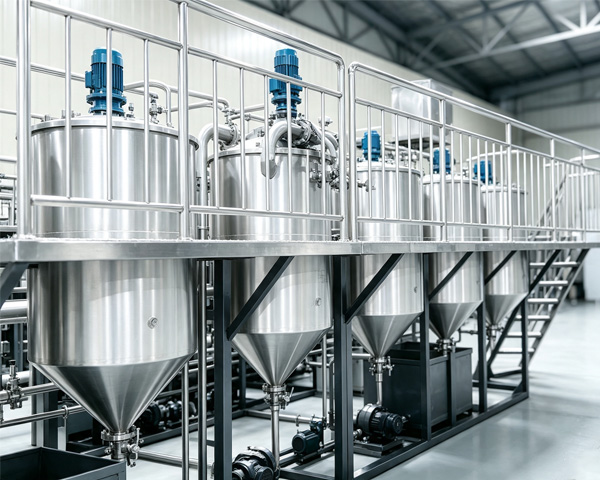
Refining equipment, plate and frame filter press, and centrifugal oil separator – when faced with these three filtration options, many flaxseed oil producers struggle to make a choice.
Choose refining equipment – higher investment but the most stable oil quality. Choose a plate and frame filter press – high purity but ongoing consumable costs. Choose a centrifugal separator – fast processing but requires manual residue cleaning.
There is no “best” solution – only the solution that best fits your production model. This article compares the three options across four dimensions – cost, quality, capacity, and maintenance – to help you make the right decision.
I. First, Clarify: What Level of Filtration Does Your Oil Need?
The oil coming out of a screw oil press or hydraulic oil press is called “crude oil” – it contains fine seed particles, phospholipids, and sediments, making it appear cloudy and unclean.
Different sales channels require completely different levels of oil clarity:
- Farmers’ markets / bulk wholesale: Basic filtration is sufficient – customers are not demanding about clarity
- Supermarket bottled retail: Needs to be crystal clear – consumers won’t buy cloudy oil
- Premium health / export markets: Requires extremely high purity, even pharmaceutical-grade standards
Your target market determines your filtration solution.
II. Deep Comparison of Three Filtration Solutions
Solution 1: Edible Oil Refining Equipment – The “Ultimate Solution” for Maximum Purity
How it works: This is a complete refining system that goes far beyond simple filtration. It removes free fatty acids, gums, and odours from flaxseed oil, maximising purity.
Advantages:
- Produces oil that is stable, clear, and neutral in flavour
- Highly scalable and customisable to different capacities
- Suitable for large commercial markets – products can enter supermarkets and branded retail channels
Disadvantages:
- Highest cost and largest space requirements
- Small amount of oil loss during the refining process
Cost vs quality trade-off: Refining equipment requires the highest initial investment, but delivers the lowest unit labour cost per bottle – ideal for high-volume production. If you’re targeting the mass market – supermarkets, branded retail, export – refining equipment is an investment worth considering.
Best for: High-volume production, supermarket channels, export markets.
Solution 2: Plate and Frame Filter Press – The “Quality Guarantee” for Premium Cold-Pressed Oils
How it works: Uses mechanical pressure to force flaxseed oil through multiple layers of fine filter paper, producing high-purity oil.
Advantages:
- Produces extremely pure flaxseed oil
- No heating required – perfectly preserves the flavour and nutrition of flaxseed oil
- Ideal for premium cold-pressed products
Disadvantages:
- Relies on filter paper – an ongoing consumable cost
- Operation can be more complex and labour-intensive
Cost vs quality trade-off: The plate and frame filter press requires moderate equipment investment, but filter paper is a consumable that needs replacement every batch. For premium cold-pressed oil producers, this ongoing cost is worthwhile for the purity and nutrient retention it delivers.
Best for: Premium cold-pressed oils, high-end markets, quality-focused producers.
Solution 3: Centrifugal Oil Separator – Fast, Efficient Continuous Production
How it works: Uses high-speed rotation to spin impurities out of crude oil.
Advantages:
- Very fast – ideal for continuous production lines
- No filter cloth or paper required – saves on consumable costs
Disadvantages:
- Residue collected in the drum requires manual cleaning
- Higher initial machine cost
Cost vs quality trade-off: The centrifugal separator requires moderately high equipment investment, but has no ongoing consumable costs. Its speed advantage is significant in high-volume production, but the labour cost of manual residue cleaning should be factored into your operating budget.
Best for: Continuous medium-to-large production lines, producers prioritising speed and efficiency.
III. At a Glance: Cost vs Quality Comparison of Three Solutions
| Comparison Dimension | Edible Oil Refining Equipment | Plate and Frame Filter Press | Centrifugal Oil Separator |
|---|---|---|---|
| Equipment Investment | Highest | Moderate | Moderate to High |
| Ongoing Consumable Cost | Low | High (filter paper) | None |
| Labour Cost | Low (automated) | Moderate | Moderate (manual cleaning) |
| Oil Purity | Highest (pharmaceutical-grade) | Very High | Moderate |
| Nutrient Retention | Mostly lost | Perfectly preserved (no heat) | Good |
| Processing Speed | Fast | Slow | Fastest |
| Best Suited For | High volume, supermarket channels | Premium cold-pressed oils | Continuous medium-large lines |
IV. Your Choice Depends on Your Answers
Ask yourself three questions:
1. Who are you selling to?
- Farmers’ market / bulk → Basic filtration is enough
- Supermarket bottled retail → Plate and frame or refining
- Premium health / export → Plate and frame or refining
2. How large is your production volume?
- A few hundred kg per day → Plate and frame filter press is sufficient
- A few tonnes per day → Centrifugal separator or refining is more efficient
- Dozens of tonnes per day → Refining equipment is the only choice
3. What is your core selling point?
- Price advantage → Centrifugal separator (lower cost, faster)
- Natural nutrition → Plate and frame filter press (no heat, preserves nutrients)
- Stable quality → Edible oil refining equipment (most consistent quality)
If you’re producing premium cold-pressed artisan oil, the plate and frame filter press may be your best choice – it preserves the natural flavour and Omega-3 fatty acids of flaxseed oil without heating. But if you’re focused on high-volume production for broader markets, a complete refining system is more suitable.
Filtration is not optional – it’s essential. From the high-speed processing of a centrifugal oil separator, to the fine filtration of a plate and frame filter press, to the complete purification of edible oil refining equipment – each filtration method has its unique value.
Choose the right filtration solution, and your flaxseed oil can go from “crude oil” to the “liquid gold” that customers are willing to pay for.
If you’re planning a flaxseed oil production line, or unsure which filtration solution best fits your production scale and quality goals, we can provide complete equipment solutions – from screw oil presses and hydraulic oil presses to filtration equipment and refining systems – tailored to your capacity and oil quality targets.
Contact us today – calculate the true cost of filtration, and don’t let good oil sell for a low price.