
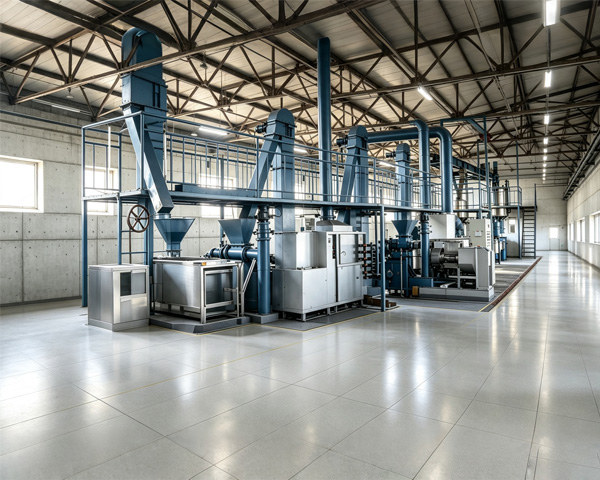
Many people think oil extraction is just “throwing seeds into a machine and oil comes out.” In reality, turning flaxseed into a clear, high-quality finished oil requires 6 key steps – miss one, and your oil could end up cloudy, unstable, or unable to command a good price.
The global flaxseed oil market reached $5.54 billion in 2024 and is projected to grow to $7.3 billion by 2032, with a compound annual growth rate (CAGR) of 3.50%. Three major industries – food, pharmaceuticals, and cosmetics – are all competing for this “liquid gold.”
So, what exactly does a complete flaxseed oil production line consist of? What equipment is needed at each step? This article breaks down the 6 steps from flaxseed to bottled oil.
Step 1: Cleaning and Sieving – Dirty Seeds Won’t Produce Clean Oil
This is the most basic and most overlooked step.
Flaxseed harvested from the field contains sand, stones, twigs, metal fragments, and various other impurities. If not thoroughly removed, these impurities will accelerate wear on the core components of your oil press, while also affecting the flavour and quality of the final product.
Cleaning process:
- Multi-stage vibrating screen: Equipped with different mesh sizes to remove larger impurities
- Gravity destoner: Uses vibration and airflow to separate small stones and clods
- Powerful magnetic separator: Removes metal fragments to protect downstream equipment
The goal is simple: only flaxseed enters the production line – nothing else.
Step 2: Roasting (Hot Pressing Route) – Making the Oil Flow More Easily
If you choose the hot pressing route, roasting is an essential step.
Using a drum seed roaster to roast the seeds achieves several objectives: reducing moisture content, breaking down seed cell walls to release more oil, and imparting a distinctive nutty roasted flavour to the final product. Temperature control is critical – too low and it’s ineffective, too high and the seeds burn. For flaxseed, 65–100°C is generally the optimal temperature range.
If you choose the cold pressing route, the roasting step can be largely skipped. To preserve nutrients, the temperature should be kept below 40°C.
This is a strategic choice: cold pressing yields less oil (22%–28%) but commands a premium price; hot pressing yields more oil (35%–40%) but sacrifices some nutritional content.
Step 3: Pressing – The Core Process
The pretreated flaxseed enters the oil press for extraction. This is the heart of the entire production line.
Two mainstream pressing equipment types:
Screw oil press: Ideal for continuous high-volume production with a high degree of automation – the choice for established factories. If you prioritise output and efficiency, this is the more effective option.
Hydraulic oil press: Excels at cold pressing with precise temperature control – ideal for high-value cold-pressed oil production. If you prioritise quality and brand premium, this is the better choice.
Oil yield comparison:
- Cold pressing (hydraulic oil press, below 60°C): 22%–28%
- Hot pressing (screw oil press, 65°C–100°C): 35%–40%
Step 4: Filtration – The Critical Step That Determines Oil Value
The oil coming out of the press is called “crude oil” – containing fine seed particles, phospholipids, and sediments, making it look cloudy. If you skip filtration, your oil won’t command a good price.
Four common filtration methods:
| Filtration Method | Principle | Best For |
|---|---|---|
| Centrifugal oil filter | High-speed rotation separates impurities | Continuous production lines, high speed |
| Plate and frame filter press | Mechanical pressure through fine filter paper | High purity, premium cold-pressed oils |
| Vacuum oil filter | Vacuum pump draws oil through filter | Preserves nutrients, small oil mills |
| Pneumatic oil filter | Compressed air pushes through filter cloth | Simple operation, small to medium oil mills |
Filtration determines whether your oil is a “premium product worth a high price” or a “low-value commodity.”
Step 5: Refining (Optional) – An Upgrade for Maximum Purity
If you’re targeting the mass market – supermarkets, branded retail, export – then refining equipment is an investment worth considering.
A refining system removes free fatty acids, gums, and odours from flaxseed oil, maximising purity. Refined flaxseed oil is stable, clear, and neutral in flavour – ideal for large commercial markets. While the initial investment is higher, it reduces labour cost per bottle and ensures consistent flavour across every batch.
Refining is not mandatory – it’s a choice you make after deciding “how big you want to go.”
Step 6: Packaging – Don’t Let Good Oil Spoil in the Bottle
Flaxseed oil is highly sensitive to light and oxygen. Improper packaging will cause even the best oil to oxidise and spoil quickly.
Packaging essentials:
- Container choice: Dark glass bottles or metal containers are best – they effectively block light
- Storage tank: A volumetric food-grade stainless steel oil storage tank ensures finished oil is properly stored before bottling, preventing oxidation and environmental contamination
- Filling equipment: Using metered, volumetric, or flow-based filling machines ensures each bottle is filled accurately and hygienically
- Nitrogen flushing: Using a nitrogen flushing system to remove oxygen before sealing can significantly extend shelf life
Your Next Step
A complete flaxseed oil production line – from cleaning, roasting, pressing, filtration, refining, to packaging – requires the right equipment at every stage.
Whether you want to follow an artisanal cold-pressing path or a large-scale branded route, we can provide complete equipment solutions based on your capacity and oil quality goals – from seed roasters, screw oil presses, and hydraulic oil presses to filtration equipment, refining systems, and filling equipment.
Contact us today – from flaxseed to bottled oil, we’ll help you get there in one step.