
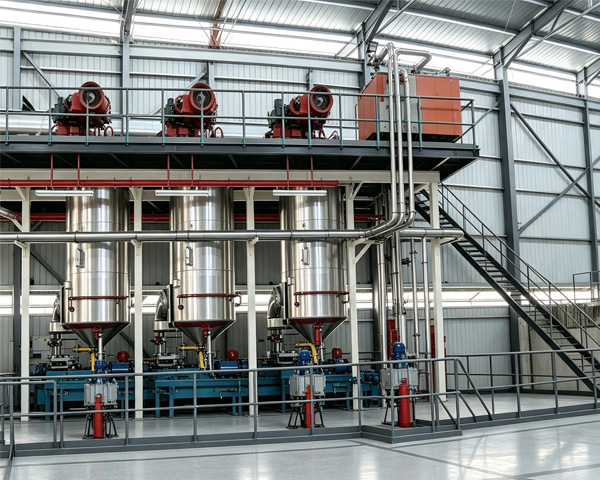
The Philippines is emerging as a new hotspot for palm oil investment in Southeast Asia. The Philippine palm oil market reached 1.18 million tonnes in 2024 and is projected to grow to 2.26 million tonnes by 2034, at a compound annual growth rate (CAGR) of 6.70%. However, traditional large-scale palm oil mills require over $1 million in investment – a barrier that has kept countless small and medium investors on the sidelines.
But that is changing. The emergence of small-scale palm oil processing equipment is turning this once-capital-intensive game into an opportunity accessible to smaller investors.
I. Why the Philippines? – Three Numbers Tell the Story
Number One: 92% of palm oil is imported
The Philippines consumes approximately 1.25 million tonnes of palm oil annually, while domestic production is only about 104,000 tonnes – just 8% of total demand. The remaining 92% is entirely dependent on imports. This massive supply-demand gap means the market opportunity for local palm oil processing is virtually “limitless.”
Number Two: 1.2 million tonnes of import substitution opportunity
The Philippines imports approximately 1.2 million tonnes of palm oil products annually, primarily from Indonesia and Malaysia. According to the Philippine Department of Agriculture’s “Palm Oil Industry Roadmap 2024-2033,” achieving self-sufficiency would theoretically require expanding domestic plantation area by 250,000 to 300,000 hectares. This figure represents only the planting-side gap – the processing-side demand is even more urgent.
Number Three: 6.70% CAGR
The Philippine palm oil market is projected to grow at a CAGR of 6.70%, reaching 2.26 million tonnes by 2034. Among Southeast Asian countries, the Philippines is one of the few where the palm oil market remains in a high-growth phase.
II. $1 Million vs. $100,000 – Two Ways to Enter the Market
Traditional large-scale palm oil processing plants require upwards of $1 million in investment, not including land, buildings, or working capital. For small and medium investors, cooperatives, and rural entrepreneurs, this threshold is virtually insurmountable.
But small-scale palm oil processing equipment is rewriting the rules.
A small-scale production line costs just 10%–20% of a large mill’s price tag. A 1–5 tonnes/hour small-scale palm oil processing line – including core equipment such as palm fruit sterilizer, palm fruit thresher, screw press, and plate filter – requires a total investment far below that of a traditional large mill. A single 500 kg/hour small palm oil press can replace traditional manual processing, tripling efficiency.
More importantly, the modular design allows future expansion from 1 tonne/hour to 10 tonnes/hour, avoiding redundant investment – every dollar you invest today will be put to full use.
III. From Fresh Fruit Bunches to Bottled Oil: The Complete Processing Flow
A complete palm oil processing line covers the entire journey from fresh fruit bunches to finished oil:
Step 1: Pre-Treatment
Fresh fruit bunches enter the system via automatic conveyor, reducing manual labour. The palm fruit sterilizer treats the bunches at 95–100°C for approximately 20 minutes, inactivating enzymes and preventing excessive free fatty acid (FFA) formation. The palm fruit thresher (drum or vibrating type) efficiently separates fruits from empty bunches, while the digester uses agitation and heating to break emulsions and improve oil extraction rates.
Step 2: Pressing and Crude Oil Filtration
The core equipment is the screw press – made of wear-resistant alloy steel for long service life and high oil yield. The pressed crude oil passes through a plate filter to remove fibres and impurities, producing clear crude palm oil (CPO).
Step 3: Refining System
To produce edible-grade refined oil, the crude oil must undergo four processes: degumming, deacidification, bleaching, and deodorisation. A complete palm oil refining system can transform crude oil into refined palm oil that meets Philippine FDA and international edible oil standards.
Step 4: Storage and Filling
Refined palm oil is stored in stainless steel tanks to prevent oxidation, then processed through automatic filling lines for 5-litre, 10-litre, and 20-litre bottles or containers, with quality testing (acidity, moisture, colour, etc.) ensuring consistent product quality.
IV. The Numbers: A 1-Tonne/Day Small Mill – How Soon Will It Pay Back?
Take a small-scale palm oil processing plant processing 1 tonne per day in the Philippines as an example:
| Metric | Value |
|---|---|
| Daily FFB Processing | 1 tonne (8 hours operation) |
| Daily Crude Oil Output | Approximately 1.5 tonnes (18%–22% oil yield) |
| Local Market Price | Approximately $800/tonne |
| Monthly Revenue | Approximately $30,000–35,000 (26 working days) |
| Payback Period | Typically 12–18 months |
After deducting labour, electricity, and raw material costs, the payback period is typically 12–18 months. This level of return on investment is highly attractive to startups and small-to-medium enterprises in the Philippine agricultural sector.
V. Why Now Is the Best Time
1. Policy Incentives
The Philippine government offers import tariff and tax reductions for agricultural machinery. Eligible agricultural processors can benefit from tax exemptions on equipment imports, significantly reducing initial investment costs.
2. By-Product Value Addition
By-products of palm oil processing – fibres and shells can be used as boiler fuel, reducing energy costs; palm kernels can be further processed into palm kernel oil, creating an additional revenue stream. Oil extraction is no longer a “single-income” business.
3. Branding Opportunities
Equipment supports filling and packaging, helping investors build local brands and enter supermarkets and retail channels directly, capturing higher value-add.
VI. How to Take the First Step
For small and medium investors in the Philippines, starting with a small-scale palm oil processing plant is the safest entry strategy.
Key equipment configuration includes:
- Palm fruit sterilizer: Controls FFA to ensure oil quality
- Palm fruit thresher: Efficiently separates fruits from empty bunches
- Screw press: Core pressing equipment for high oil yield
- Plate filter: Removes impurities for clear crude oil
- Refining system: Degumming, deacidification, bleaching, deodorisation
- Filling line: Bottles or containers for direct market access
From small oil mills to fully automatic refining lines, configurations can be flexibly adapted to your actual budget and capacity requirements.
The $1 million price tag of traditional large-scale palm oil mills has kept most small and medium investors out. But now, you can enter the Philippine palm oil business for just one-tenth of that cost.
With 92% of palm oil imported, the market gap in the Philippines is immense. With a 1–2 year payback period, returns are attractive. With modular equipment design, you can scale up as your business grows.
If you’re looking for the next investment opportunity in the Philippines, palm oil processing – especially entry via small-scale equipment – deserves your serious consideration.
Contact us today for a customised palm oil processing equipment solution and quotation for the Philippines!