
The global edible oil market is undergoing a profound shift toward health-conscious choices. Consumers are no longer satisfied with simply having oil—they want better oil: low in cholesterol, high in unsaturated fatty acids, and rich in natural bioactive compounds.
Within this transformation, rice bran oil is rapidly moving from a rice-milling by-product to a high-growth category in the health oil sector. In 2025, the global rice bran oil market was valued at approximately $10.8 billion and is projected to reach $26.2 billion by 2034. This article examines the investment logic of rice bran oil processing across four dimensions: market growth, raw material advantages, investment costs, and core processing stages.
I. Market Growth: A Faster-Growing Segment Than Conventional Edible Oils
The global rice bran oil market is expanding rapidly. According to Fortune Business Insights, the market was valued at approximately $10.8 billion in 2025 and is expected to reach $26.2 billion by 2034, representing a compound annual growth rate of 10.46%. The Asia-Pacific region accounts for 82.7% of the global market and remains the dominant force.
Several factors are driving this growth:
Rising health awareness. Rice bran oil is rich in gamma-oryzanol, phytosterols, and vitamin E, with unsaturated fatty acids making up as much as 70% of its composition. Its high smoke point (232°C) makes it suitable for high-temperature cooking, giving it a natural advantage in frying applications across East and South Asia.
Demand from cosmetics and pharmaceuticals. Gamma-oryzanol and phytosterols in rice bran oil are widely used in skincare products and functional foods, supporting continued demand growth.
Structural opportunities from geographic concentration. India is the largest producer and consumer of rice bran oil, followed by China and Japan. Building a rice bran oil processing plant in an Asian rice-producing region allows you to source raw material locally while directly serving the largest consumer markets.
II. Investment Costs: Real Budgets from Small Pressing to Large Refining
Investment Reference by Capacity Tier
| Capacity Tier | Daily Rice Bran Processing | Investment Budget (USD) | Typical Process Route |
|---|---|---|---|
| Small | 10 TPD | $150,000–$400,000 | Mechanical pressing + basic refining |
| Small-Medium | 30 TPD | $250,000–$800,000 | Solvent extraction + batch refining + dewaxing |
| Medium | 50 TPD | $500,000–$900,000 | Continuous extraction + semi-continuous refining + dewaxing |
| Large | 100 TPD | $1,500,000–$5,000,000 | Fully automatic continuous extraction + continuous refining + dewaxing |
Data source: Industry equipment supplier quotations and market research. A 10–20 TPD small plant typically requires $150,000–$400,000, while a 50 TPD medium plant ranges from $500,000–$900,000.
Economies of scale are significant. A 50 TPD plant achieves 30%–40% lower cost per tonne of processing capacity compared to a 10 TPD plant. When raw material supply is sufficient, larger capacity delivers a higher return on investment per unit.
Profit Margin Analysis
According to IMARC Group, gross margins for rice bran oil processing projects typically range from 20%–30%, with net profit margins of approximately 8%–15%. Raw material procurement accounts for 80%–85% of operating costs, while utilities account for 10%–15%.
For a plant processing 100 tonnes per day, breakeven can typically be reached within 3 years. The full investment payback period for a rice bran oil project generally ranges from 3 to 6 years, depending on project scale, process route, and raw material supply conditions.
III. Three Core Technical Stages of Rice Bran Oil Processing
Stage One: Stabilization – The First Step That Determines Success
The fundamental difference between rice bran and other oilseed crops is that rice bran contains highly active lipase. If not treated immediately after milling, free fatty acid content can rise by 1%–5% per hour.
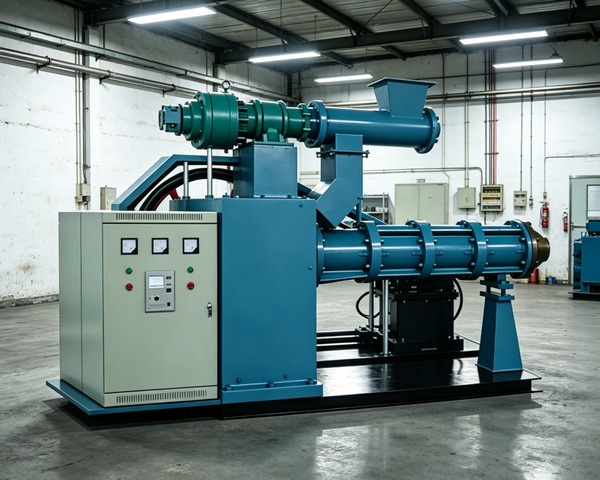
The rice bran extruder is the core equipment for solving this problem. At temperatures of 110°C–120°C, the extruder processes rice bran into porous pellets, inactivating lipase and preventing rancidity. This treatment not only extends rice bran storage life but also delivers two additional benefits:
- Oil yield increase of 2%–3%: The porous structure improves solvent permeability.
- Significantly improved extraction efficiency: Studies show that the percolation rate of extruded rice bran can reach 9 times that of untreated bran, and the extraction time required to reach 1% residual oil is reduced from 100 minutes to 10 minutes.
A study published in Cereal Foods World compared the oil extraction performance of different stabilization methods: rice bran treated by extrusion produced 202 g/kg of oil, while bran treated only with a pelletizer produced 172 g/kg. The advantage of extrusion in oil yield is clear.
Stage Two: Solvent Extraction – The Key to Maximizing Oil Yield
For plants processing 20–30 tonnes per day or more, solvent extraction is the optimal choice. Mechanical pressing leaves 5%–7% residual oil, while solvent extraction can reduce residual oil to below 1%. For medium-sized plants, the additional oil recovery from solvent extraction typically offsets the equipment cost difference within 3 to 12 months of operation.
Industrial projects typically use Rotocel or Loop extractors. The key cost factor in this stage is the solvent recovery system. A vacuum evaporation system can reduce steam consumption by 20% and ensure the solvent operates in a closed loop.
Stage Three: Refining and Dewaxing – The Dividing Line for Commercial Value
Rice bran oil contains 3%–5% waxes. Without removal, the finished oil will appear cloudy at room temperature and cannot enter the bottled retail market.
A complete refining workshop includes degumming, deacidification, bleaching, deodorization, and winterization (dewaxing). Studies show that a two-stage membrane system can recover 97.8% of free fatty acids from rice bran oil, while increasing the FFA concentration in the retentate to over 20% and reducing the FFA content in the permeate to a negligible level (0.13%).
Compared with chemical refining, physical refining significantly reduces oil loss and nutrient loss during processing. Physical refining loses almost no gamma-oryzanol, while alkali refining can cause 83%–95% gamma-oryzanol loss.
IV. Operating Costs and Investment Returns
| Operating Cost Item | Reference Data |
|---|---|
| Steam consumption | 280–450 kg per tonne of rice bran (depending on heat recovery configuration) |
| Solvent loss | Can be controlled below 2 kg per tonne of material processed |
| Power consumption | Approximately 28–35 kWh per tonne |
By keeping the residual oil rate below 1%, more oil goes into the finished oil tank rather than remaining in the meal, establishing a competitive advantage in a market where rice bran prices fluctuate sharply. Data from QIE Group’s loop extractor project shows that with an efficient solvent recovery system, the investment payback period can be shortened to 18–24 months.
V. What KMEC Can Do for You
Whether you are planning a 10 TPD small pressing plant or a 100 TPD large refinery, KMEC offers complete rice bran oil processing equipment solutions.
Our product line covers the entire process from stabilization to refining:
- Stabilization and pre-treatment: Rice bran extruder (110–140°C precise temperature control), cleaning screens, conditioners
- Pressing and extraction: Screw oil press, Rotocel/Loop extractor, evaporators, solvent recovery system
- Refining and dewaxing: Degumming tank, deacidification tower, bleaching tank, deodorizer tower, winterization crystallizer, winterization filter press
- Auxiliary equipment: Conveying systems, automation control systems, oil quality testing equipment
KMEC engineers can provide the optimal equipment configuration based on your capacity targets, raw material characteristics, budget, and product positioning – from single machines to complete turnkey EPC plants.
Contact KMEC today for a customized rice bran oil processing plant investment plan and quotation!
Data sources: Fortune Business Insights, IMARC Group, The Insight Partners, Cereal Foods World, Guance Machinery, Huatai Rice Bran Oil Machinery, and related peer-reviewed research literature.