
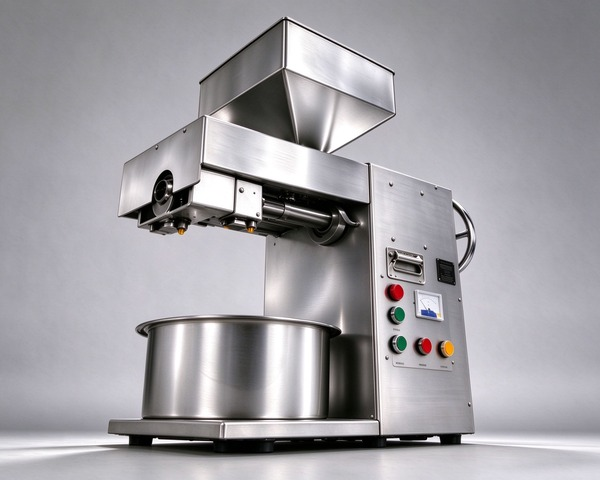
A 370W Model Rated at 7 kg/h, a 1500W Model at 3.5–5.5 kg/h: Wattage and Real Throughput Are Not the Same Thing
On home oil press listings, wattage is the most prominent number. 1500W, 2200W — they look “more powerful.” But one easily overlooked fact sits inside the same product specifications: wattage and throughput are not proportional.
One model rated at 370W (the JR15) carries a stated capacity of 7 kg/h. Another rated at 1500W (the MX-10) carries a stated capacity of 3.5–5.5 kg/h. Four times the wattage, lower throughput. This is not a specification error. It is the combined result of press mechanism, barrel geometry and energy utilisation efficiency. The wattage figure alone tells you nothing about how much material a machine can process per hour, how much oil it delivers, or how much oil remains in the cake.
Buying a home oil press is a matching exercise across press mechanism, real throughput, residual oil rate, energy consumption and cleaning cost — not a ranking exercise on wattage. KMEC has over two decades of experience configuring oil pressing equipment. The sections below break down five decision points.
1. Press Mechanism: Hydraulic and Screw Serve Different Feedstocks
1.1 Hydraulic: High Pressure, Clean Oil, But Batch Operation Is a Structural Cost
A hydraulic press drives a cylinder through a high-pressure pump, applying static pressure to the oilseed and forcing oil out of the cellular structure. Its strengths are high peak pressure, clear oil, and suitability for low-temperature cold pressing, with better retention of flavour and nutrients in high-value feedstocks such as olives and sesame.
But hydraulic presses operate in batches — load, pressurise, hold, discharge, then start the next batch. For a household user, processing multiple feedstocks or a larger volume stretches the total time. Hydraulic suits small batches, high-value oils, and users willing to spend the time.
1.2 Screw: Continuous Output, But Friction Heat Is a Variable That Must Be Managed
A screw press uses a rotating screw shaft to push material continuously through the barrel, generating compression and friction as oil flows out. Its strengths are continuous feeding, a simple operating rhythm, and higher throughput per unit time — well suited to everyday feedstocks such as peanuts, rapeseed and soybeans.
The cost is friction heat. Barrel temperature during screw pressing can reach the 140–210°F (60–99°C) range. Without effective temperature control or cooling, that heat degrades heat-sensitive components and undermines any “cold pressed” claim. For a home machine positioned as cold press, temperature control precision matters more than “maximum temperature capability.”
2. Throughput: “kg/h” Is Feedstock Processed, Not Oil Produced
Home oil press capacity is usually stated in kg/h, but that number refers to the weight of feedstock processed per hour, not the oil produced. At a rapeseed oil yield of roughly 35–40%, a 5–7.5 kg/h machine processes 5–7.5 kg of feedstock per hour and produces roughly 2 litres of oil.
For an ordinary household, 5–7.5 kg/h is a workable range. Below that, a single pressing session requires repeated loading; above 10 kg/h, the machine’s size, weight and wattage climb noticeably and it edges toward small-scale commercial use rather than home use.
One caveat: different listings use the capacity figure inconsistently. Some 1500W models are stated at 3.5–5.5 kg/h, others at 6–10 kg/h, and some at 10–15 kg without specifying whether the unit refers to feedstock or oil. Buyers should favour machines that state the feedstock type and the corresponding capacity, rather than relying on a single isolated number.
3. Residual Oil Rate: A More Honest Performance Metric Than “45% Yield”
3.1 What “45% Oil Yield” Actually Means
Home oil presses often advertise “oil yield up to 45%.” That figure usually refers to oil output as a percentage of feedstock weight, not “how much of the oil content was extracted.” Peanuts contain roughly 45–50% oil, sesame 45–55%, and soybeans only 18–20%. A machine rated at “45% oil yield” may be reasonable for peanuts and may mean substantial oil is left in the cake for soybeans. Oil yield cannot be compared across feedstocks — it is closer to a marketing number than an engineering metric.
3.2 Residual Oil Rate Is the Real Scale
Residual oil rate in the cake — the proportion of oil still left in the cake after pressing — tells you directly how much oil stayed in the cake instead of reaching your container.
A qualified small screw press typically holds residual oil in the 6–8% range. Some home models, by contrast, state a dry cake residual oil rate of 30%. A 30% residual rate means that for every kilogram of feedstock processed, close to a third of the oil remains in the cake. For an occasional user, the absolute amount may not be large; for a household pressing weekly, the cumulative “hidden loss” becomes noticeable within a few months. A residual oil rate below 10% should be a screening threshold, rather than relying on “high oil yield” language.
4. Energy Consumption: The “Diseconomy of Scale” in Home Presses
4.1 Energy Per Litre Is Often Higher at Home
A counterintuitive engineering fact: a small home oil press can consume several times more energy per litre of oil than a 100 kg/h commercial screw press, because the fixed overhead of friction and heating does not shrink proportionally with machine size.
Home oil press wattage typically sits in the 0.4–1.5 kW range. Running for an hour or two in the evening, the electricity bill itself is not alarming. But “a modest absolute bill” and “energy efficiency per litre” are two different things. If a machine has a high residual oil rate, requires repeated pressing, or runs long because the heating system is inefficient, its energy per unit of output rises significantly. Rather than fixating on wattage, buyers should ask how long the machine must run to reach the target oil output — that is the real driver of the electricity bill.
5. Cleaning: The Primary Reason a Machine Ends Up Idle
Among consumer reviews of home oil presses, “low oil yield and troublesome cleaning” is one of the most concentrated negative themes. A machine that is hard to clean gets shelved after two uses, regardless of what the specification sheet says.
The engineering difficulty sits inside the barrel: if residual oil and debris cannot be fully removed, they oxidise before the next use and affect the quality and flavour of the fresh oil. Consumer reviews also mention models where the pressing chamber is poorly sealed, causing oil leakage and frequent wiping.
Buyers should check whether the barrel, screw and filter mesh can be removed and washed without special tools. For a household using the machine once a week or more, removable, washable components deliver more practical value than an extra “smart feature.” On materials, food-grade 304 stainless steel is a reasonable baseline for contact parts — but material alone does not solve cleaning accessibility.
6. Selection Guidance by Use Case
| Use case | Machine direction | Core decision basis |
|---|---|---|
| Occasional use; sesame, walnut, flaxseed; flavour-focused | Hydraulic, small batch | High pressure, clear oil; suits high-value small batches; accept batch operation |
| Weekly use; peanut, rapeseed, sunflower; efficiency-focused | Screw, 5–7.5 kg/h, adjustable temperature | Continuous output suits frequent use; temperature control determines whether a cold-press claim holds |
| Multiple feedstocks | Screw with adjustable temperature and removable parts | Different feedstocks need different temperature windows; cleaning accessibility determines changeover cost |
| Small-scale commercial or market-side pressing | Screw, 10 kg/h and above, industrial-grade motor and gearbox | Continuous running capability and durability outrank home convenience |
KMEC’s home oil press machine and oil press machine lines cover the range from household to small-scale commercial configurations. The design logic centres on matching the mechanism to the feedstock, balancing residual oil rate against real throughput, and keeping cleaning and maintenance workable — not on adding to the wattage number. For buyers with a defined feedstock type and use frequency, KMEC can recommend a machine and parameter set based on the actual material, rather than leaving the buyer to guess from a specification table.
7. FAQ
Q1: Why can a 1500W home oil press have lower throughput than a 370W model?
Wattage does not equal real throughput. The 370W JR15 is rated at 7 kg/h, while some 1500W models are rated at only 3.5–5.5 kg/h. Throughput is determined by press mechanism, barrel geometry and energy utilisation efficiency together; the wattage figure alone does not reflect processing capability.
Q2: Should I buy a hydraulic or a screw home oil press?
Hydraulic suits high-value small batches such as sesame and walnut — good oil quality but batch operation. Screw suits everyday high-frequency feedstocks such as peanut and rapeseed — continuous output, but friction heat and temperature control need attention. The choice depends on feedstock type and use frequency; neither is universally superior.
Q3: What do “45% oil yield” and “30% residual oil” mean?
A 45% oil yield means oil output as a percentage of feedstock weight and cannot be compared across feedstocks. A 30% residual oil rate means 30% of the oil remains in the cake. Qualified small screw presses typically hold residual oil at 6–8%; buyers should prioritise residual oil rate over oil yield claims.
Q4: What throughput is suitable for a home oil press?
For an ordinary household, 5–7.5 kg/h (feedstock processed) is a workable range, corresponding to roughly 2 litres of oil per hour. Below 3–4 kg/h requires frequent reloading; above 10 kg/h edges toward small-scale commercial use, with noticeably larger size and wattage.
Q5: Is the electricity cost of a home oil press high?
Home oil press wattage typically sits at 0.4–1.5 kW, so the per-session electricity cost is not high. But energy efficiency per litre can be lower than commercial equipment, because friction and heating overhead do not scale down proportionally. Asking “how long must it run to reach the target oil output” is more meaningful than looking at wattage.
Q6: Does cleaning difficulty really affect use?
Yes. “Low oil yield and troublesome cleaning” is one of the most concentrated negative themes in home oil press consumer reviews. Machines that are hard to clean see use frequency drop quickly. Buyers should prioritise models where the barrel, screw and filter mesh can be removed and washed.
References
- Made-in-China, Mini Automatic Sunflower Mustard Castor Seed Oil Press Machine — JR15: 370W, 7 kg/h; JR10-150: 150W, 4 kg/h; JR10-250: 250W, 5 kg/h.
- DHgate, New Stainless Steel Oil Presser Machine Commercial Home Oil Extractor — Model MX-10: 1500W, 3.5–5.5 kg/h.
- Baidu Baike, 小型榨油机 — screw presses operate continuously, hydraulic presses operate in batches; qualified small screw presses hold residual oil at 6–8%.
- 环保在线, 小型家庭用榨油机 — dry cake residual oil rate 30%.
- 163.com / China Food News, “家用榨油机热销,自榨油安全吗?”, 2024 — consumer feedback “low oil yield and troublesome cleaning”; incomplete cleaning can harbour bacteria.
- SinoOil Machinery, Oil Press Machine Buying Guide 2025 — Electricity Cost Calculator — home oil press energy per litre can be several times that of commercial screw presses; home wattage typically 0.4–1.5 kW.
- Amazon.co.jp, CGOLDENWALL desktop oil press 5–7.5 kg/h — 5–7.5 kg/h home range.
- National Oil Press, The Complete Guide to Oil Press Machines — screw pressing friction can raise temperature to 140–210°F; hydraulic suits cold pressing but operates in batches.
- Baidu Baike, 小型榨油机 — hydraulic presses suit high-oil-content feedstocks such as olive and sesame; screw presses suit continuous production of soybean and rapeseed.
For home oil press machine selection, feedstock-specific parameter advice, or small-scale commercial configuration, contact the KMEC engineering team.