
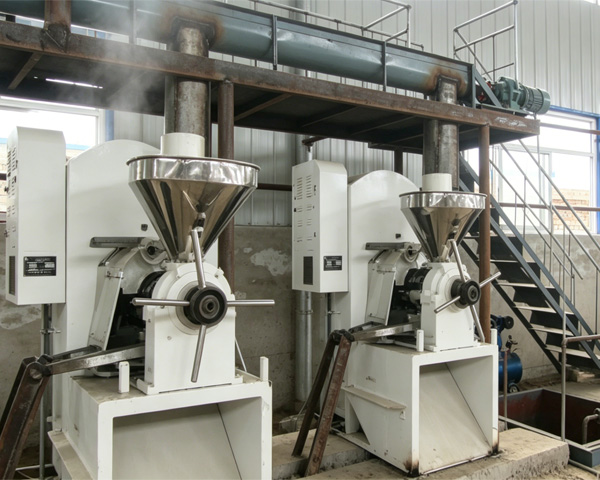
In the increasingly competitive edible oil processing industry, every drop of oil translates directly to profit, and the residual oil content in soybean meal serves as the ultimate benchmark for measuring a plant‘s efficiency in “extracting every last bit.” This metric not only reflects oil recovery efficiency but also exposes process deficiencies in the preparation and extraction stages, as well as the operational status of oil extraction equipment. For a production line processing 3,000 tons of soybeans per day, reducing the residual oil content in meal by just 0.1 percentage points—based on the current price spread between oil and meal—can add over one million RMB in net profit annually.
Therefore, whether selecting equipment for a new plant or upgrading an existing facility, meticulous control of oil processing machinery is essential to achieving the core objective of minimizing residual oil. This article will provide a deep dive into the detailed factors affecting residual oil content throughout the soybean crushing process and explain how optimizing oil extraction equipment parameters can maximize economic returns.
Part One: The Preparation Section — The “Inherent Genes” Determining Extraction Success
Preparation is not simply about crushing materials; it involves the combined effects of mechanical force, heat, and moisture to create an ideal flake structure for subsequent solvent extraction. The quality of preparation determines approximately 70% of the lower limit for residual oil.
1. Raw Material Cleaning: More Than Just Impurity Removal, It’s Equipment Protection
Impurities such as stones, stems, and metal fragments mixed into soybeans during transit and handling have a strong physical affinity for oil at the microscopic level. If not thoroughly removed, the oil adsorbed onto these impurities will remain in the meal, directly causing a physical increase in residual oil. More critically, ferrous metal impurities entering high-precision flaking mills or crackers can severely damage roll corrugations, leading to uneven flake thickness and widespread incomplete cell rupture.
Equipment Selection Recommendation:
The front end should be equipped with high-efficiency vibrating grading screens and permanent magnetic drums. It is also advisable to add gravity destoners to ensure that clean soybeans entering the conditioner contain less than 0.1% foreign material.
2. Conditioning and Cracking/Dehulling: Precise Control of Hull Separation Efficiency
Soybean hulls are tough and contain very little oil (<1%). If they enter the extractor, they not only occupy valuable volume but also create “bridges” within the material bed, impeding solvent percolation. The vertical conditioner tower uses indirect steam heating and hot air drying to precisely reduce soybean moisture by 1%-2% and raise the temperature to around 60°C. At this point, the hulls become brittle. After passing through a double-roll cracker, the soybeans are broken into 6-8 pieces, allowing the hulls to detach cleanly.
Operational Key Points:
Airflow adjustment in the aspiration system is critical. Excessive airflow draws away valuable cotyledon fines, causing yield loss; insufficient airflow results in poor dehulling efficiency. The ideal dehulling rate should be maintained above 85%. Incomplete dehulling leaves residual hulls that, when pressed by the flaking mill, become embedded in the flake surface, forming a dense barrier layer that blocks solvent penetration. This phenomenon is often the hidden culprit behind localized high residual oil in the meal.
3. The Flaking Process: The Physicochemical Dynamics Behind the 0.3mm Thickness
The hydraulic flaking mill (or roller flaking mill) is the most precise piece of auxiliary oil extraction equipment in the preparation section. Its core function is to rupture oil cell walls through intense linear pressure, transforming granular soybeans into thin flakes with uniform thickness and dramatically increased surface area. Flaking performance is judged by two key metrics: “fines content” and “thickness.”
– Flakes Too Thick (>0.45mm): Cell tissue is not sufficiently disrupted, resulting in an excessively long diffusion path for internal oil molecules. Even with extended extraction time, deep-seated residual oil remains difficult to dissolve.
– Flakes Too Thin (<0.28mm): While the oil path is short, flakes are prone to powdering during conveyance. Fines clog the screen gaps in rotary extractors or chain drag extractors, causing solvent “short-circuiting” or channeling. This leads to localized dead zones in the bed and actually *increases* residual oil.
Practical Recommendation:
Implement a routine check of flake thickness every two hours using a micrometer. Take multiple sample points and strictly control thickness within the range of 0.30mm – 0.38mm, ensuring the cross-section shows no “white core” (un-crushed hard lumps).
4. Expansion Technology: Building a “Porous Sponge” for Oil Extraction
This is a core technology for reducing residual oil in modern large-scale processing plants. The soybean extruder-expander utilizes the instantaneous release of high temperature, pressure, and shear force to flash water vapor inside the flakes, creating countless micro-capillary channels. Material processed by the expander sees its bulk density drop from approximately 400 kg/m³ (as flakes) to around 550-600 kg/m³, increasing solvent percolation rates by 3 to 5 times.
Equipment Factors Affecting Expansion Quality:
– Die Plate Open Area: Worn die plates result in insufficient back pressure, producing hard, dense collets with low porosity.
– Steam Addition: Must be coordinated with a steam regulation system to stabilize discharge temperature at 100-105°C, yielding golden, porous collets.
For plants aiming to further minimize residual oil, investing in a high-performance wet expander downstream of the flaking mills is one of the highest-return investments in oil extraction equipment.
Part Two: The Extraction Section — The Art of Precise Solvent Extraction
The extraction department is the last line of defense for determining residual oil content. Assuming consistent flake quality, fine-tuning extraction parameters and the operational status of the extractor determines whether residual oil can be driven down from 1.0% to below 0.5%.
5. Extraction Temperature: The Balance Between Viscosity and Vaporization
When using hexane-based solvents, the optimal process temperature range is 55-60°C. Within this window, oil viscosity is low, and the molecular diffusion coefficient is high.
– Excessive Temperature (>62°C): Solvent tends to vaporize within the material bed, creating “vapor locks” that hinder fresh solvent percolation. Additionally, high temperatures accelerate the dissolution of non-oil substances like phosphatides and pigments, increasing the load on the miscella evaporation system and causing finished meal to darken or redden, affecting commercial appearance.
– Insufficient Temperature (<50°C): Miscella becomes viscous, compromising washing efficiency and causing the residual oil curve in meal to spike upward.
Equipment Safeguards:
The extractor feed inlet should be equipped with a feed hopper insulation jacket and a fresh solvent preheater to ensure materials and solvent enter the extraction zone at optimal heat exchange conditions.
6. Extraction Time and Drainage Section Control
As material moves through a loop extractor or rotary extractor, it undergoes spraying, soaking, percolation, and final drainage. While longer times theoretically yield lower residual oil, production efficiency imposes practical limits. The critical factor is the design length of the drainage section.
If the extractor’s miscella collection pans are poorly designed or the drainage section is too short, the wet meal entering the DTDC desolventizer-toaster will have a high solvent content (typically 25%-30%). Evaporating this large volume of solvent consumes significant steam. Furthermore, during the high-temperature desolventizing process, some residual oil undergoes a “heat-setting” effect, binding irreversibly with proteins and forming “bound residual oil” that cannot be extracted later.
7. Solvent Purity: The Washing Power of Fresh Solvent
Many plants overlook water separation efficiency, resulting in the final fresh solvent spray actually being “dilute miscella” or “water-saturated solvent.”
– Oil in Solvent: Reduces the concentration gradient driving force. It’s akin to washing clothes with dirty water.
– Water in Solvent: Water is absorbed by the soybean meal, causing fines to swell and clog screens, further deteriorating percolation.
Maintenance Focus:
Regularly inspect the liquid level and interface of the water separator to prevent solvent carryover due to evaporator flooding. Maintaining the purity of the solvent work tank is an economical and effective way to ensure residual oil targets are met.
8. Optimal Solvent Ratio and Spray Configuration
The solvent ratio (mass of solvent to mass of material) is typically maintained between 1.0:1 and 1.2:1. Modern extraction practices emphasize high-volume spray and rapid circulation, but this must be coordinated with miscella circulation pump flow rates. Blindly reducing solvent usage to save steam can cause miscella concentration to exceed 30%. Under such high concentration conditions at the tail end of the extractor, the driving force for oil dissolution becomes severely limited.
9. Wet Meal Desolventizing: The Hidden Impact of the DTDC
This is an often-overlooked factor. While the DTDC desolventizer-toaster is designed to remove solvent and toast meal, improper operation can inversely increase residual oil. If direct steam pressure is too high or bed depth is excessive, soybean meal undergoes excessive Maillard browning under high heat and humidity. Simultaneously, residual lipids become encapsulated by denatured proteins and carbohydrates, forming irreversible complexes that laboratory analysis will detect as elevated residual oil. Utilizing low-temperature desolventizing technology or precisely controlling the vapor temperature in each DTDC tray is crucial for achieving both meal quality and low residual oil.
10. Production Management and Online Monitoring
Beyond the physical equipment, the implementation of near-infrared (NIR) online analyzers provides real-time feedback on meal residual oil data. This allows operators to promptly adjust oil extraction equipment parameters. For instance, if a sudden spike in residual oil is detected, staff can quickly investigate potential causes such as flaking roll wear, expander die blockage, or a drop in fresh solvent spray flow rate.
Part Three: Systematic Optimization for Cost Reduction and Efficiency Gains
In summary, minimizing residual oil content in soybean meal is not the result of a single piece of equipment but rather a synergistic effort spanning the entire process chain: from soybean preparation equipment, flaking mills, and expanders to extractors and desolventizer-toasters. Every deviation in the operating parameters of oil extraction equipment ultimately manifests on the “scorecard” of meal residual oil.
For oil processing enterprises, investing in high-precision, high-stability oil extraction turnkey systems and integrating them with meticulous process management is the essential pathway to navigating volatile raw material prices and unlocking hidden profit potential. We are committed to providing advanced soybean preparation and extraction process solutions. If you are interested in learning more about how upgrading oil extraction equipment can systematically reduce residual oil rates, please feel free to contact our technical engineers for consultation.