
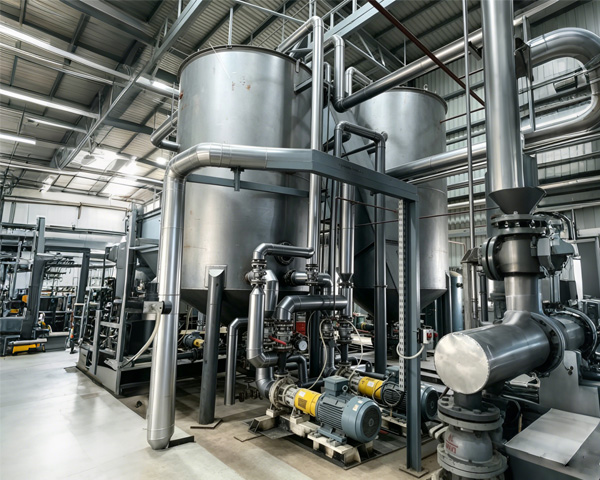
Palm kernel oil, as a vital vegetable oil, is widely used in food processing, personal care products, and biofuel sectors. Whether you operate a palm oil mill with an attached crushing plant or source palm kernels externally for processing, mastering efficient extraction techniques and equipping your facility with professional palm kernel oil processing equipment is crucial for maximizing oil yield and product quality. This article provides an in-depth comparison between traditional extraction methods and modern mechanical processes, outlining a comprehensive mechanized palm kernel oil processing workflow.
I. Traditional Palm Kernel Oil Extraction: The Labor-Intensive Manual Era
In the past, palm kernel oil extraction relied entirely on manual labor and empirical knowledge. Workers first had to crack each palm nut individually using stones to separate the kernel from the hard shell—a purely manual operation with extremely low efficiency. Subsequently, for further shell removal, a “mud bath” was commonly employed. This method utilized the density differential of a thick clay-water mixture to sink the shells while allowing the lighter kernels to float. The floating kernels were then skimmed off, washed, and sun-dried before proceeding to the next step.
In the oil extraction phase, traditional methods often involved frying the kernels in open fires or direct heating of dried kernels. The heated material was then pounded in a mortar or ground into a paste using a simple mill. Water was added to the paste and heated slowly to release the oil, which was periodically skimmed from the surface. This approach was not only labor-intensive and challenging from a hygiene perspective, but it also resulted in low oil yields and crude oil with high impurity content, failing to meet the demands of modern large-scale production.
II. Mechanized Palm Kernel Oil Extraction: A Precise and Efficient Modern Process
Modern oil processing plants universally adopt automated palm kernel oil processing equipment production lines. The entire process is seamlessly integrated, progressing smoothly from pretreatment to finished oil filtration. Below are the core steps of mechanized extraction:
1. Pretreatment Stage: Fiber Removal and Kernel-Shell Separation
Raw palm fruits are often covered with significant amounts of fiber. The first step involves passing the material through a fiber separator to remove these outer strands, which could otherwise interfere with downstream separation. The cleaned material then proceeds to the magnetic separation stage, where a magnetic separator removes any potential metal impurities (a critical step for protecting the costly downstream oil press equipment). Subsequently, a grading sieve and a kernel-shell separation system are used for crushing and sorting. By leveraging centrifugal force and gravity principles, the system efficiently separates kernels from shells, with modern equipment achieving separation efficiencies of over 95%.
2. Crushing and Conditioning: Creating Optimal Conditions for Pressing
Palm kernels are exceptionally hard; pressing them directly would significantly reduce the service life of the machinery. Therefore, before entering the oil expeller, the kernels must be crushed using a roller crusher to increase the surface area for better oil extraction. Immediately following this, the material is fed into a cooking kettle for conditioning. Precise control of temperature and moisture softens the kernel meat and ruptures cell walls, a step that markedly enhances both the quality of the extracted oil and the resulting cake meal. The palm shells and fiber waste generated during this stage can be recycled as boiler fuel, further reducing operational energy costs.
3. Core Pressing: Application of Screw Press Technology
The conditioned palm kernel meal is conveyed and fed into a professional screw oil press. Given the high hardness and oil content of palm kernels, we recommend using a specialized palm kernel oil press equipped with a round-bar cage and a short double-stage pressing worm. This design not only prevents material clogging and adhesion within the pressing chamber but also features a forged and carburized 45# steel worm shaft capable of withstanding high torque, ensuring stable and durable operation. Driven by a robust four-pole motor, the residual oil rate in the cake can be consistently maintained at approximately 6-7%.
4. Filtration and Refining: Obtaining High-Purity Finished Oil
The crude oil expressed from the press is immediately pumped into a plate and frame filter press. Multi-layer filter cloths intercept fine meal particles and moisture, resulting in a clearer crude oil suitable for short-term storage. If the goal is to produce high-grade edible oil or industrial-grade oil, a palm kernel oil refining equipment setup is required. Through four key processes—degumming, deacidification, decolorization, and deodorization (RBD)—phospholipids, free fatty acids, pigments, and odors are thoroughly removed. The final product is a golden, clean, and flavor-neutral Refined, Bleached, and Deodorized (RBD) palm kernel oil.
III. Four Key Advantages of Mechanized Palm Kernel Oil Processing Equipment
Compared to traditional manual extraction, implementing a full suite of mechanized palm kernel oil processing equipment delivers immediate and tangible benefits to production enterprises:
1. Cost Reduction and Efficiency Gains: Automated production lines drastically reduce manual intervention. From feeding to oil discharge, the process is machine-controlled, exponentially increasing daily processing capacity.
2. Higher Oil Yield, Maximum Utilization: Through precise control of temperature, moisture, and pressure, mechanized pressing minimizes residual oil content. For the same quantity of raw material, the oil yield is significantly higher than traditional methods.
3. Superior Oil Purity and Consistent Quality: Enclosed pipeline transport and high-efficiency filtration systems prevent external contamination. The purity and storage stability of the resulting oil meet rigorous industrial standards.
4. Continuous Production and Faster ROI: The equipment supports 24/7 uninterrupted operation with high processing speeds, enabling enterprises to rapidly process raw materials during peak harvest seasons and seize market share quickly.
From rudimentary manual cracking to precision mechanical pressing, the technological evolution of palm kernel oil processing equipment is reshaping the landscape of the edible oil industry. For oil processing enterprises aiming for long-term growth, investing in a reliable palm kernel crushing and refining production line is not merely a hardware upgrade for quality improvement, but a critical step toward reducing overall costs and achieving sustainable development. For further information on equipment selection and pricing, please feel free to contact our technical team.