
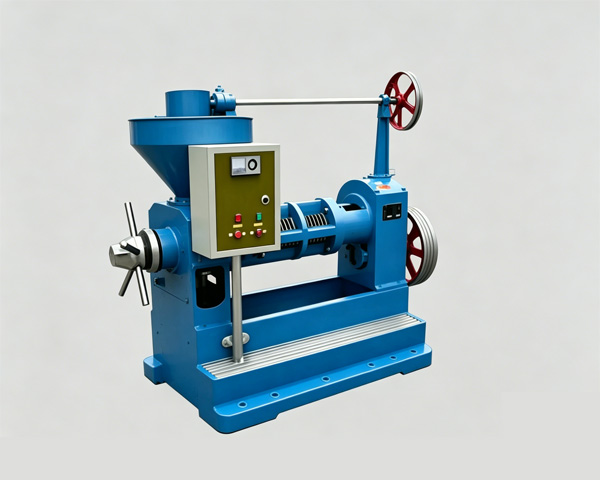
For newly established small oil processing workshops, family farms, or entrepreneurs focusing on high-end niche oils, the first step is often the most difficult—how do you buy the “right” machine within a limited budget and space?
Choosing the wrong machine not only wastes capital but also results in low oil yield and poor oil quality. Choosing correctly means this oil press machine becomes the first lever to pry open your market. Based on professional oil equipment manufacturing experience, this article will break down the core logic for small business owners when selecting between a screw oil press and a hydraulic oil press.
1. Understand Your “Raw Material”: Not All Oil Presses Are Universal
The advantage of a small business lies in flexibility and focus. First, clarify your core selling point: are you producing aromatic sesame oil, nutrient-rich walnut oil, or trendy oils like avocado oil or coconut oil?
According to available data, different oil press machines are designed to process specific types of oilseeds or nuts. Here is a key decision point:
– If you process soft materials with high oil content, such as sesame, peanuts, or rapeseed: you may want to consider a screw oil press. This type of equipment operates continuously through physical extrusion, offering higher efficiency and is suitable for small workshops with certain daily output requirements.
– If you focus on high-value hard nuts like walnuts, almonds, or sacha inchi, and pursue extreme cold-press quality: then a hydraulic oil press equipped with a hydraulic system is a better choice. Although it typically operates in batches, it maximizes the retention of the oil’s natural nutrients and flavor, providing a competitive premium advantage in the high-end market.
Keyword Placement Hint: When introducing raw materials, you can link to website pages for [Sesame Oil Press Machine] or [Nut Cold Press Machine] .
2. Do the Math: Balancing Production Capacity and Oil Yield
Small businesses often fall into the trap of thinking “bigger is better.” In reality, for startups, cash flow turnover and inventory management are more important than mere hourly throughput.
– Capacity Misconception: An industrial oil press processing hundreds of kilograms per hour is impressive, but for a small business, raw material procurement, storage, and sales channels for the oil cake all create pressure. What you need is a small oil press machine that matches your current order volume.
– Oil Yield is the Lifeline: Regardless of machine size, oil yield directly determines your profit margin. When selecting a machine, pay close attention to the pressure design of the pressing chamber and whether a heating system is available to assist extraction. Preheating certain oilseeds before pressing can significantly improve efficiency, but this requires the machine to have precise control panel and temperature control functions.
Calculation Suggestion: Use the formula Expected Daily Output / Machine Hourly Capacity = Required Operating Hours to work backward. If you only want to work 4 hours a day to process orders, do not buy a machine that requires 8 hours of full-load operation.
Keyword Placement Hint: This section can internally link to pages for [High Cost-Performance Commercial Oil Press] or [Oil Press Machine Yield Comparison] .
3. Hidden Costs: Space, Power, and Operational Thresholds
Beyond the purchase price of the oil press equipment itself, small businesses must address “invisible infrastructure costs.”
3.1 Footprint: Is your workshop in a garage, a storefront, or a small factory building? An upgraded version of a compact home oil press might only need a corner, whereas a larger machine with a separate feeding hopper and oil filter requires dedicated workflow planning.
3.2 Power Source: Most small commercial machines are motor driven. Confirm in advance whether your site uses single-phase or three-phase power. If power supply is limited, choosing a model with a compatible single-phase motor is crucial.
3.3 Automation Level: Do you prefer fully automatic “one-button oil extraction,” or do you trust manual mechanical control more? For small teams with limited staff, an automatic oil press machine may have a higher initial investment but significantly reduces labor training costs and reliance on operator experience. The quality of the machine’s gearbox and the material of the screw shaft also determine future maintenance frequency.
4. Four-Step Selection Checklist for Small Businesses
Summarizing the logic above, we have created a streamlined selection process to help you accurately find the right machine:
Step 1: Determine Type Based on Raw Material
> Confirm main raw material → Choose suitable model (Select Screw for soft seeds, Hydraulic for hard/high-value nuts).
Step 2: Determine Size Based on Space and Power
> Measure available workshop area → Verify voltage requirements → Eliminate oversized large oil equipment.
Step 3: Determine Configuration Based on Budget
> Within budget, prioritize spending on the durability of the pressing system and the cleanliness of the filtration system over superficial appearance.
Step 4: Determine Peace of Mind Based on After-Sales Service
> Ask the supplier about the replacement cycle and purchase convenience for oil press machine parts (such as pressing worms and bars).
For small oil businesses, selecting an oil press machine is not just about buying equipment; it is about choosing a production model and business logic. You do not need the most expensive industrial oil production line, but you certainly need the most stable professional oil press machine best suited to your current raw material characteristics.
Remember, a well-functioning oil extraction equipment that produces clear oil is the foundation of your brand reputation. Before making a decision, examine the structure of the pressing chamber and ask about the residual oil rate of the oil cake. We hope this guide helps you stay clear-headed in a complex market and extract the first “pot of gold” for your business with minimal investment.