
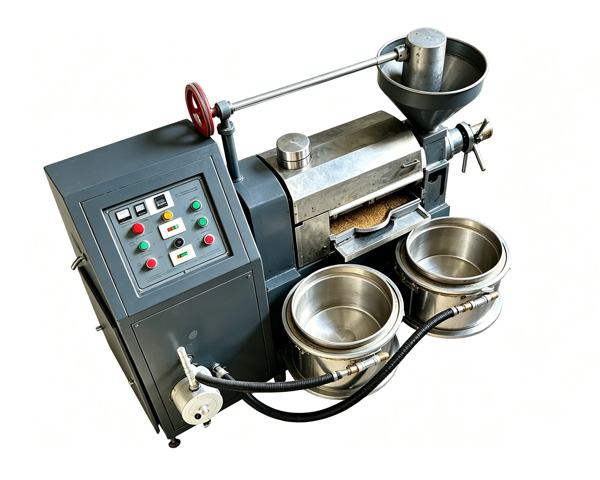
“How often do screw oil press parts need to be replaced?” This is a top concern for every edible oil processing plant manager and operator. The actual service life of components directly impacts spare parts procurement budgets and, more importantly, determines whether the production line can avoid unplanned downtime. The sobering reality is that in many plants, the replacement frequency of worm gear sets, cone sleeves, and drive pinions far exceeds design expectations — when pressing mustard seeds, a worm gear set may even need replacement after just one week. This is not “bad luck” but rather the result of the equipment being forced to operate under abnormal working conditions. This article dives into the failure mechanisms of these core wear parts and provides practical engineering solutions to help your oil equipment achieve truly long-term, stable operation.
1. Understanding Wear Parts and Structural Components in a Screw Oil Press
In daily maintenance, screw oil press parts are divided into two major categories. Wear parts are consumable components requiring regular inspection and replacement, mainly including the pressing shaft, press worm, collar, bushing, feed worm, cake ring, scraper, and press bar. Meanwhile, structural components such as the machine frame, pressing cage, and gearbox body are designed for a service life of over ten years and typically do not require frequent replacement. The problem precisely lies in the premature failure of wear parts — when your oil press spare parts exhibit abnormal wear, excessive slag ejection at the cake outlet, or a significant drop in output, the replacement cycle has already been drastically shortened.
2. The Real Impact of Different Oilseeds on Parts Replacement Intervals
Many users understand that pressing soft oilseeds like peanuts — where the kernel hardness is low — results in less machine wear and relatively longer replacement intervals. In contrast, pressing hulled oilseeds like sunflower seeds and mustard seeds significantly intensifies wear inside the pressing chamber. However, the actual replacement frequency under real operating conditions remains alarming:
– Mustard Seeds: Worm gear set approx. 1 week
– Sunflower Seeds: 10-12 days
– Peanuts, Cottonseed, Castor Seeds: Approximately 15 days
This short-cycle replacement pattern essentially means the machine is enduring uneven loading and unstable operating conditions. Factoring these replacement costs into the overall equation, the operating expenses of your oil processing plant equipment are multiplied significantly. Therefore, understanding “why” is far more crucial than “what” to replace.
3. The Five Major Culprits Behind Premature Worm Gear Set Failure
The worm gear set (worm and worm wheel) is the component most prone to becoming the weak link in the drive system. Its damage is not sudden but accumulates gradually under the repeated influence of impact loads, high temperatures, poor lubrication, and misalignment.
3.1 Impact Loads Caused by Uneven Feeding
Discontinuous feeding — material clumping, unstable flow, or sudden blockages — induces repeated torque spikes on the gearbox. These impact loads far exceed the design capacity of the worm gear set and are the primary cause of its rapid wear. Equipping the line with a stable pre-treatment seed roaster can effectively balance the moisture and hardness of the material entering the press, fundamentally smoothing out these shocks.
3.2 Over-Reliance on Throttle Pressure to “Push” Output
Tightening the choke mechanism may temporarily increase pressing chamber pressure. However, if conditioning is poor or press worm gaps have widened, excessive throttling primarily generates more heat and higher torque. All this extra load is ultimately shouldered alone by the worm gear set.
3.3 Lubrication Negligence — Not Just Insufficient Oil
Using the wrong type of lubricant, delaying oil changes, oil contamination, and ignoring minor leaks all force the gearbox to run under severely insufficient lubrication. This is fatal for the drive system of any oil equipment.
3.4 The Vicious Cycle of High Temperature and Poor Oil Drainage
When material moisture fluctuates or oil drainage channels are blocked, the pressing chamber operating temperature rises. Heat transfers into the gearbox, causing the lubricating oil to oxidize and degrade rapidly. Degraded oil accelerates wear, and wear generates even more heat — a classic destructive cycle.
3.5 Misalignment and Vibration
Slight coupling misalignment, foundation deformation, or residual vibration after maintenance imposes continuous abnormal stress on the gear tooth surfaces, progressively destroying the contact pattern and accelerating the wear process.
4. Cone Sleeve Wear: The Second Most Frequent Spare Part Problem
The cone sleeve is another wear item with an extremely high turnover rate. Many plants replace it every 4-5 months under normal operating conditions. When cake discharge is unstable, press worm wear increases clearance, or the choke mechanism is improperly tightened, cone sleeve wear accelerates dramatically. Solving this problem cannot rely solely on replacing the cone sleeve itself; it must involve assembly precision, the condition of all oil press spare parts, and stable operating practices.
5. Hidden Gearbox Costs: The Annual Replacement Agony of the Drive Pinion
A widespread complaint among many users is that the internal gearbox drive pinion (18-22 teeth) requires replacement almost every year, sometimes even more frequently. This is closely linked to internal gearbox stress patterns and real-world operating conditions involving impact loads, thermal cycling, and misalignment.
Engineering Solution: External Gearbox Configuration
To fundamentally eliminate recurring pinion failures, professional oil equipment manufacturers have offered external gearbox options (helical or planetary gears). This design distributes loads better, enhances reliability, and simplifies maintenance, resolving numerous gearbox-related issues in one step. Many new plants explicitly prioritize this external gearbox solution when selecting their screw oil press configuration to minimize long-term downtime losses.
6. From Reactive Replacement to Proactive Prevention: A Practical Action Plan
Truly extending parts life should never begin with “waiting until it fails to replace it.” Establishing the following preventive operating habits can largely bring an end to repetitive failures:
– Stable Feeding is Priority One: Uniform and continuous feeding creates stable pressure and predictable torque, drastically reducing impact loads. Ensure the upstream process and matching seed roaster are running stably.
– Optimize Conditioning, Don’t Force Squeezing: Adjust the incoming material moisture and cooking effect to make the screw oil press run smoother, lowering operating temperature and gearbox stress.
– Use the Choke Mechanism Correctly: To improve oil yield, start with pretreatment, wear part condition, and reasonable clearance, rather than simply tightening the choke valve.
– Treat Gearbox Lubricant as a Critical Production Material: Check the oil level daily, address any leaks immediately, strictly adhere to the oil change interval, and regularly use an oil filter machine or portable filtration device to maintain oil cleanliness, observing whether there are any metal particles in the oil.
– Regular Alignment and Vibration Monitoring: Eliminate sources of continuous stress.
If you notice the gearbox becoming abnormally hot, noise levels increasing, or the oil showing a metallic sheen or particles, do not push production just to “finish this batch.” Reduce the load immediately, check the oil condition and alignment, and schedule an inspection under controlled conditions.
Uptime Is the Real Competitive Advantage
The screw oil press will remain the core equipment for vegetable oilseed processing. However, what truly sets a plant’s profitability apart is not the capacity figure on the nameplate, but the actual performance of stable daily operation with fewer shutdowns. A worm gear set failing in one week, a cone sleeve replaced every few months, and an annual pinion change — these are by no means inevitable. They are primarily the combined results of impact loads, high temperatures, lubrication deficiencies, misalignment, and forcing the machine while neglecting pre-treatment issues. When you control these factors and select engineering-optimized oil press spare parts and drive solutions, your entire oil processing plant equipment will run cooler, smoother, and longer, with a corresponding improvement in total operating costs.
If you wish to proactively avoid premature spare part failures in new projects, or to evaluate your existing production line, please feel free to contact [KMEC] for a detailed selection manual. Learn about different capacities, gearbox configurations, and recommended operating practices for the screw oil press specific to your oilseed varieties.