
Choosing the right edible oil processing equipment is the first critical step in the investment decision for any oil processing plant. From low-temperature physical pressing to high-temperature continuous operation, different types of oil press machines vary significantly in terms of suitable oilseeds, oil output quality, production capacity, and operating costs. Faced with the common options on the market — cold press machines, hot press machines, screw oil press machines, and hydraulic oil press machines — many investors find it difficult to decide. Choosing the wrong machine model can lead to substandard oil yields, or worse, compromise the economic benefits of the entire production line. This article will analyze these four mainstream machine types one by one, helping you match the most suitable oil equipment solution based on your oilseed varieties and business positioning.
1. Cold Press Oil Machine: Preserving Nutrients and Natural Flavor
The cold press machine adopts a low-temperature pressing process, with the working temperature generally controlled below 60°C. This “gentle” processing method makes it the ideal partner for high-value, soft oilseeds.
1.1 Suitable Oilseeds: Sesame, olive, almond, walnut, and other heat-sensitive oilseeds.
1.2 Core Advantages: It preserves the natural nutrients (such as vitamin E and sterols) and original flavor of the oilseeds to the greatest extent possible. The finished oil can meet edible standards without excessive refining, aligning with current healthy consumption trends.
1.3 Limitations: Single-machine production capacity is relatively low, process control requirements are more stringent, and equipment investment and operating costs are relatively high. For specialty oil producers pursuing high added value, configuring a high-quality cold press machine is key to creating differentiated products.
2. Hot Press Oil Machine: An Economical Choice for High Oil Yield
In contrast to cold pressing, the hot press oil machine typically operates at temperatures above 80°C. By cooking the oilseeds at high temperatures, the cell walls are broken down, making the oil easier to release.
2.1 Suitable Oilseeds: Conventionally mass-planted oilseeds such as soybeans, peanuts, cottonseed, and rapeseed.
2.2 Core Advantages: It significantly improves the oil yield and pressing chamber throughput, making it the most common configuration in large-scale oil processing plant equipment. The residual oil rate in hot-pressed cake meal is low, which is beneficial for subsequent comprehensive utilization.
2.3 Limitations: High temperatures can destroy some heat-sensitive nutrients, and the crude oil has a darker color, often requiring a complete set of oil refining equipment for degumming, decolorization, and deodorization to meet finished oil standards.
3. Screw Oil Press Machine: The Most Widely Used Continuous Pressing Solution
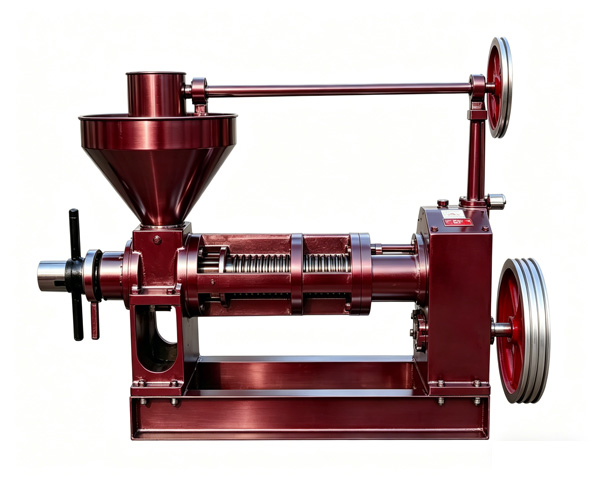
The screw oil press machine uses the principle of a rotating screw shaft advancing within a pressing cage to generate extrusion force to extract oil. It is currently the most versatile mainstream model in the oil industry.
3.1 Suitable Oilseeds: Covers the vast majority of oilseeds such as soybeans, peanuts, cottonseed, rapeseed, and sunflower seeds, making it almost a standard configuration for medium and large-scale oil processing equipment.
3.2 Core Advantages: Compact structure, convenient operation, and stable continuous production capacity. A well-designed screw oil press machine can maintain a low failure rate during high-load, day-to-day operation.
3.3 Usage Requirements: It requires relatively high pre-treatment of raw materials, which typically need to go through processes such as dehulling, crushing, flaking, and cooking with a matching seed roaster to achieve the ideal state for pressing. Additionally, the regular replacement of oil press spare parts such as press worms and pressing cages is a necessary investment to maintain equipment performance.
4. Hydraulic Oil Press Machine: A Precision Choice for High-Pressure Static Pressing
The hydraulic oil press machine uses the immense static pressure generated by a hydraulic system to “squeeze” oil out of oilseeds. It is a time-honored pressing technique that has been revitalized in the modern specialty oil sector.
4.1 Suitable Oilseeds: Oilseeds with extremely high flavor requirements or particularly high oil content, such as sesame oil, walnut oil, and sunflower seed kernel oil.
4.2 Core Advantages: The working process is stable, without intense shearing or frictional heating. The expressed crude oil is clear and pure, with well-preserved natural flavors. It is relatively simple to operate and suitable for small to medium-scale boutique oil mills.
4.3 Limitations: The batch-type operation limits single-machine capacity, and the equipment cost and hydraulic system maintenance costs are relatively high. The risk of hydraulic oil leakage needs strict control; especially when producing organic food-grade oils, food-grade hydraulic oil must be selected.
5. Emerging Technologies: Supercritical Extraction and Microwave-Assisted Extraction
In addition to the traditional machine types mentioned above, new technology equipment such as the supercritical extraction oil machine and the microwave-assisted extraction oil machine are gradually moving from the laboratory to industrial applications. These new types of oil equipment have shown unique advantages in improving oil yield and retaining active substances, but currently, the equipment cost is high, and they are mainly used for the extraction of high-value-added functional oils, representing a frontier direction for technological reserve and industrial upgrading.
There Is No Best Machine, Only the Most Suitable Choice
The cold press machine guards nutrition, the hot press oil machine pursues production capacity, the screw oil press machine seeks a balance between scale and versatility, and the hydraulic oil press machine specializes in flavor and quality — every type of edible oil processing equipment has its unique technical positioning and applicable boundaries. Before making a purchasing decision, it is essential to clarify your core oilseed varieties, target production capacity, finished oil positioning, and the supporting requirements of the entire oil processing plant equipment. If you are still unsure which machine type is best for your project, please feel free to contact KMEC. Our engineering team will provide a customized selection plan based on your specific situation.