
Rice bran oil is known as “nutritious golden oil”, rich in gamma-oryzanol, vitamin E, and phytosterols. However, its refining is much more difficult than soybean or rapeseed oil. The biggest challenge is excessively high free fatty acid (FFA) content. High acidity not only gives the oil a pungent smell but also accelerates oxidative rancidity, directly affecting the taste and shelf life of the finished oil.
Therefore, deacidification is one of the most critical steps in rice bran oil refining. But traditional alkali deacidification causes a significant loss of precious tricin (up to 60%). So, is there a deacidification method that effectively lowers acidity while maximising nutrient retention? This article explains three mainstream deacidification processes – physical, alkali, and esterification – and shows how pretreatment equipment can extend the shelf life of rice bran, fundamentally reducing deacidification difficulty.
I. Why Is Rice Bran Oil Deacidification So Difficult?
Fresh rice bran contains highly active lipase, which rapidly hydrolyses oil at room temperature, generating large amounts of free fatty acids. Studies show that within 24 hours of harvesting, the acidity of rice bran can spike to an inedible level. Therefore, preserving rice bran freshness is the first line of defence against high acidity. If the rice bran has excessive acidity, any subsequent deacidification method will increase refining losses and reduce nutrient retention. High‑quality rice bran oil starts with fresh rice bran.
II. Comparison of Three Mainstream Rice Bran Oil Deacidification Methods
| Method | Principle | Advantages | Disadvantages | Suitable For |
| Physical deacidification | Uses volatility difference between FFA and triglycerides; steam distillation under high temperature and vacuum | No chemical residues, relatively low nutrient loss, no soapstock | High equipment investment, high energy consumption, requires high‑quality crude oil (degumming needed) | High‑acidity oils, large refineries |
| Alkali deacidification | Adds alkali to neutralise FFA into soapstock, then separates by centrifugation | Mature process, simple equipment, thorough deacidification | High nutrient loss (tricin loss up to 60%), produces soapstock and wastewater | Low‑to‑medium acidity oils where specific nutrient retention is not critical |
| Esterification deacidification | Uses catalyst to esterify FFA with glycerol, monoglycerides, etc., forming triglycerides | No neutral oil loss, no soapstock, can handle extremely high acidity | High catalyst cost, complex process, not yet widely industrialised | High‑acidity oils; a future direction |
> Key conclusion: For rice bran oil, although alkali deacidification is efficient, it causes heavy loss of valuable tricin (which has antioxidant and anti‑inflammatory bioactivity). Therefore, physical deacidification or a physical + chemical combination is more suitable to balance acidity reduction and nutrient retention.
III. Core Equipment for Deacidification
Depending on the method, the required core equipment differs:
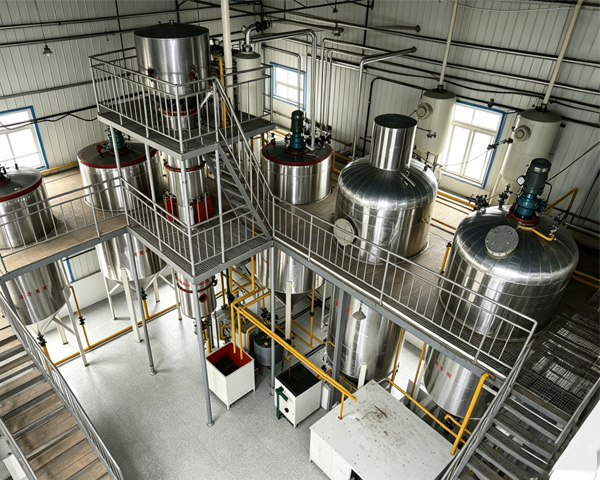
– Physical deacidification: Physical refining deacidification tower, vacuum system, fatty acid trap, heater.
– Alkali deacidification: Alkali refining kettle (neutralising tank), centrifuge separator (for soapstock), washing tank.
– Esterification deacidification: Esterification reactor, catalyst addition system, separation equipment.
We provide customised solutions from single deacidification towers or alkali refining kettles to complete rice bran oil refining lines.
IV. Controlling Acidity at the Source: The Key Role of a Rice Bran Extruder
Traditional rice bran storage life is extremely short (usually less than 24 hours) before acidity rises sharply. We recommend using a rice bran extruder: fresh rice bran is instantly extruded under high temperature and pressure, deactivating lipase and forming porous expanded pellets. After extrusion, the shelf life of rice bran extends from 24 hours to 30 days, significantly reducing the rate of acidity increase and relieving pressure on downstream deacidification.
Advantages of using a rice bran extruder include: inhibiting lipase activity, improving extraction efficiency, lowering refining difficulty and cost, and retaining more nutrients (tricin, gamma-oryzanol, etc.). Thus, the rice bran extruder is the “first line of defence” for a high‑quality rice bran oil production line. We offer rice bran extruders with capacities from 1 to 10 tonnes per hour.
V. Practical Suggestions for Choosing a Deacidification Process
For rice bran oil processing, select a process based on the crude oil acidity level:
– Acidity < 10 (mg KOH/g): Alkali or physical deacidification both work; alkali loss is acceptable.
– Acidity 10–30: Physical deacidification is preferred – alkali would cause excessive nutrient loss.
– Acidity > 30: Physical deacidification + extrusion pretreatment recommended. High acidity must be controlled at the source.
Recommended combined process: Fresh rice bran → Rice bran extruder → Extraction → Crude oil → Degumming → Physical deacidification tower → Bleaching → Deodorisation → Finished rice bran oil. This process maximises retention of active components like tricin and gamma-oryzanol while reducing acidity to below 0.2 mg KOH/g.
VI. Our Rice Bran Oil Deacidification Equipment and Services
We offer complete rice bran oil refining equipment, including: rice bran extruders, physical deacidification towers, alkali refining kettles, centrifuge separators, vacuum systems, and more. We can customise batch or continuous deacidification lines, supply full sets from extrusion to refining, and provide free process guidance and investment analysis.
Deacidification is a critical step in rice bran oil refining. For high‑acidity rice bran oil, physical deacidification is superior to alkali deacidification, while the rice bran extruder is a powerful tool to control acidity at the source. Contact us today to get the most suitable deacidification equipment and process solution.
Enquire now – make your rice bran oil more valuable!