
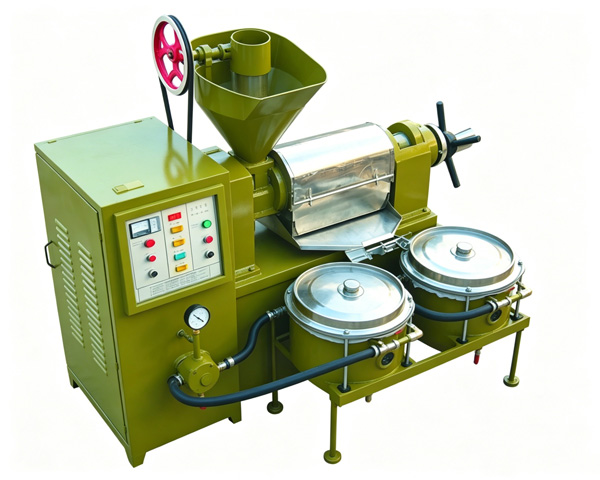
With the growing demand for vegetable oils, peanut oil pressing equipment is becoming increasingly popular in the oil processing industry. Among them, the integrated peanut oil press has gradually become a top choice for medium and large‑sized oil enterprises due to its integrated design and high efficiency. So, what are the exact advantages and disadvantages of this equipment? Is it suitable for your production needs? This article provides a comprehensive analysis.
I. Main Advantages of the Integrated Peanut Oil Press
1. Compact Structure and Easy Operation
The integrated peanut oil press adopts an all‑in‑one design that combines pressing, filtering, settling, centrifuging, and drying into one machine. The overall structure is compact, occupies little floor space, is easy to install, and features a user‑friendly interface. Ordinary workers can operate it after simple training.
2. High Production Efficiency – Ideal for Large‑Scale Production
The equipment is optimized in key stages such as pressing, filtering, and settling. It can continuously and stably complete the entire oil pressing process, significantly improving production efficiency. It is very suitable for peanut oil plants with large daily processing capacities.
3. Pure Oil with Fewer Impurities
During the pressing process, the integrated machine effectively removes impurities and fine particles from the peanuts, ensuring the oil is clear and pure, meeting the market demand for high‑quality peanut oil.
4. Energy‑Saving and Environmentally Friendly
Using advanced technology and energy‑efficient motors, the machine consumes less energy and emits fewer pollutants, meeting current environmental requirements for the oil processing industry and helping enterprises reduce energy costs.
II. Disadvantages of the Integrated Peanut Oil Press
1. High Initial Investment
Because the equipment integrates multiple functions and has a complex structure, its price is relatively high. This may pose a financial burden for small‑scale processors or individual operators with limited capital.
2. Higher Maintenance Costs
The internal structure is relatively sophisticated and requires regular maintenance and care. Maintenance costs are higher than those of traditional separate‑unit equipment. Enterprises need to have professional maintenance staff or establish a long‑term service relationship with the manufacturer.
3. High Technical Requirements for Operators
Although the interface is user‑friendly, operators still need special training to fully utilize the machine’s performance. Technical skill requirements are relatively high.
4. Still Requires Considerable Floor Space
Despite the integrated design saving some space, the machine still occupies a fairly large area due to the many functional modules. This may be inconvenient for businesses with limited workshop space.
5. Relatively Limited Scope of Application
The equipment is more suitable for medium to large‑scale production. It is less adaptable to small‑batch, multi‑variety production models. Individual operators or family‑run workshops should make their choice carefully.
III. Who Is the Integrated Peanut Oil Press Suitable For?
In summary, the integrated peanut oil press offers clear advantages in large‑scale, high‑efficiency, and high‑quality production scenarios. If your enterprise has sufficient capital, adequate floor space, and a professional technical team, this machine is an excellent choice to boost production capacity and oil quality.
Conversely, if you are a small‑scale processor or a start‑up entrepreneur, it is advisable to consider the return on investment comprehensively, or first choose a more basic, lower‑cost machine.