
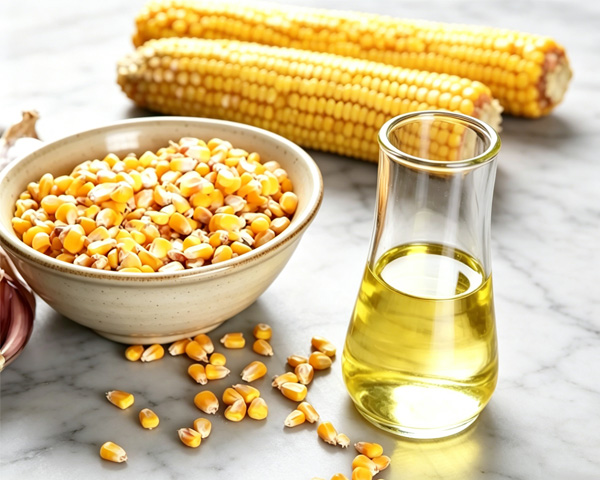
Corn oil is clear, transparent, and has a high smoke point (232°C). It is a common frying oil in homes and the food service industry. Rich in linoleic acid, vitamin E, and phytosterols, it is often promoted as “heart‑healthy.”
But is corn oil really the perfect choice? How is it produced? And what equipment lies behind it?
This article will objectively break down corn oil’s nutritional profile, health benefits, culinary uses, potential risks, and the oil pressing equipment needed to go from corn kernels to finished oil.
I. What’s Actually in Corn Oil?
Per tablespoon (15 ml) of corn oil:
– Calories: 122
– Fat: 14 grams (of which polyunsaturated fatty acids account for 30%–60%)
– Vitamin E: 13% of the Daily Value (DV)
– Contains no protein, carbohydrates, or cholesterol
Vitamin E is a powerful antioxidant that helps the body fight free radicals, reducing the risk of heart disease, diabetes, and certain cancers.
In addition, corn oil contains phytosterols (especially β‑sitosterol) in higher amounts than peanut oil, olive oil, and canola oil. Phytosterols help reduce cholesterol absorption and have anti‑inflammatory properties.
II. Three Key Health Benefits of Corn Oil
1. Lowers Cholesterol
Linoleic acid in corn oil helps break down cholesterol into bile acids that are excreted from the body. A review of studies involving over 300,000 people found that replacing 5% of calories from saturated fat with linoleic acid reduced the risk of heart attack by 9% and heart‑related death by 13%.
2. Slows Skin Aging
Vitamin E moisturises the skin, reduces oxidative damage, and helps delay ageing.
3. Protects the Eyes
Corn oil contains zeaxanthin, vitamin A, and carotenes, which help prevent retinal disorders and relieve eye strain.
> Note: Some studies were funded by corn oil manufacturers (e.g., Mazola), so results may have bias.
III. Culinary Uses of Corn Oil
Its high smoke point (approx. 232°C) is corn oil’s biggest cooking advantage. It is suitable for:
– Deep‑frying (crispy without burning)
– Stir‑frying
– Salad dressings and marinades
– Baking (cakes, breads, etc.)
Corn oil is also used industrially: as a cleaning agent, lubricant, biodiesel feedstock, and in cosmetics, liquid soaps, and shampoos.
IV. How Is Corn Oil Produced? – From Corn Kernel to Finished Oil
Corn has a natural fat content of only 1%–4%, so it must go through a complex process to extract the oil. This requires professional corn oil processing equipment.
Step 1: Germ Separation
The corn kernel must first be separated into its oil‑rich germ (only 7%–14% of the kernel weight, but containing over 80% of the oil). Common methods:
– Dry, wet, or semi‑wet methods (semi‑wet is recommended for lower energy consumption and less pollution)
Step 2: Pressing or Solvent Extraction
– Pressing method: Uses a screw oil press for physical pressing; suitable for small and medium‑sized oil mills.
– Solvent extraction method: Uses an extractor and solvent recovery system (with hexane as solvent); oil yield can reach 97%, suitable for large factories.
Step 3: Refining (Removal of Impurities, Odours, and Colour)
Crude corn oil must go through multiple refining equipment steps to become clear, odourless finished oil:
| Process | Equipment | Function |
| Degumming | Degumming tank, centrifuge separator | Removes phospholipids |
| Deacidification | Alkali refining kettle / deacidification tower | Removes free fatty acids |
| Bleaching | Bleaching tank, filter (with activated clay) | Adsorbs pigments |
| Deodorisation | Deodoriser tower, vacuum system | Removes odours |
| Winterisation | Winterisation crystalliser, filter | Removes waxes, prevents clouding at low temperatures |
> During refining, some vitamins and minerals are lost, and trace solvent residues or harmful substances may be present (see next section).
V. Potential Drawbacks of Corn Oil – Four Issues You Should Know
1. Excessively High Omega‑6 Ratio
Corn oil has an omega‑6 to omega‑3 ratio as high as 46:1. The ideal healthy ratio is about 4:1. Too much omega‑6 promotes inflammation and is linked to obesity, depression, and heart disease.
👉 Suggestion: Limit corn oil intake and eat more omega‑3 rich foods (e.g., fatty fish, chia seeds).
2. Mostly Made from GMO Corn
About 90% of corn grown in the US is genetically modified (insect‑resistant, glyphosate‑tolerant). Glyphosate is classified by the WHO as “probably carcinogenic,” but current evidence is insufficient. Long‑term effects remain unclear.
👉 Suggestion: Choose Non‑GMO Project verified corn oil.
3. Highly Refined – May Introduce Harmful Substances
– Hexane residues: The extraction solvent hexane may be harmful to the nervous system.
– Oxidation risk: Refining makes the oil more prone to oxidation, increasing levels of oxidized compounds in the body.
– Acrylamide: Produced during high‑temperature frying; classified as a “probable carcinogen” and linked to nerve, hormone, and muscle dysfunction.
4. Nutrient Loss During Heating
Prolonged heating (e.g., repeated deep‑frying) destroys vitamin E and accelerates oil oxidation.
VI. How to Choose and Use Corn Oil Wisely
| Scenario | Suggestion |
| High‑temperature frying | Acceptable, but do not reuse oil repeatedly |
| Cold / low‑temperature cooking | Olive oil or avocado oil are better |
| Controlling omega‑6 intake | Reduce corn oil use, increase fatty fish |
| Worried about GMOs | Buy “Non‑GMO” certified products |
| Storage | Cool, dark, sealed; use within six months |
VII. What Corn Oil Production Equipment Do You Need? (Equipment List)
If you plan to build a corn oil production line, the following equipment is essential:
| Process | Recommended Equipment |
| Germ separation | Corn germ separator (semi‑wet: moisture conditioning unit, dehuller, crusher, flat sieve) |
| Pressing | Screw oil press (pressure > 69 MPa) |
| Solvent extraction | Extractor, evaporator, condenser, solvent recovery system |
| Degumming | Degumming tank, centrifuge separator |
| Deacidification | Alkali refining kettle / deacidification tower |
| Bleaching | Bleaching tank, filter |
| Deodorisation | Deodoriser tower, vacuum system |
| Winterisation | Winterisation crystalliser, filter |
We provide complete corn oil processing equipment – from germ separation, pressing/extraction, to refining and winterisation – and can customise solutions based on your raw material (conventional or non‑GMO), capacity, and budget.
VIII. Conclusion: To Use or Not to Use Corn Oil?
Pros: High smoke point, rich in vitamin E and phytosterols, helps lower cholesterol.
Cons: High omega‑6 ratio, often GMO, refining process may introduce risks.
Corn oil is neither a “poison” nor a “superfood.” The key is using it in moderation, cooking properly, and choosing high‑quality products. Pair it with other oils like olive oil and coconut oil to balance your dietary fatty acid profile.
If you are looking for reliable, efficient corn oil production equipment, please contact us. Our engineering team will provide you with one‑stop solutions – from single machines to complete plants.