
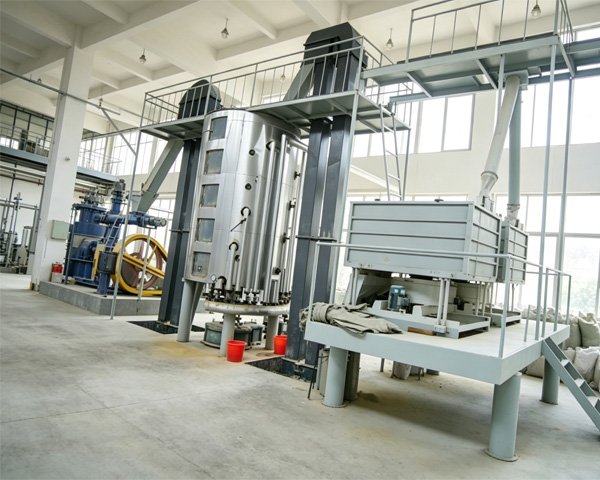
In the rice bran oil processing industry, investors often ask: Exactly how many kilograms of rice bran are needed to produce one kilogram of rice bran oil?
The answer is not fixed; it depends on the oil content of the rice bran itself, the processing technology selected, and the technical level of the rice bran oil extraction equipment. This article provides precise calculations and explains in depth how to optimize equipment and processes to get the most oil from each kilogram of rice bran.
1. Direct Answer: Rice Bran Consumption Under Different Processes
Based on our company’s years of production data and experimental research, we have reached the following conclusions:
– Using the expansion solvent extraction method: 1 ton (1000 kg) of rice bran yields approximately 190 kg of rice bran oil.
Conversion formula: 1000 kg ÷ 190 kg ≈ 5.26 kg of rice bran → 1 kg of rice bran oil
– Using the traditional direct pressing method: 1 ton of rice bran yields only about 130 kg of oil.
Conversion formula: 1000 kg ÷ 130 kg ≈ 7.69 kg of rice bran → 1 kg of rice bran oil
That is to say, using the advanced expansion solvent extraction process, only about 5.26 kg of rice bran is needed to produce 1 kg of rice bran oil, whereas the old pressing method requires 7.69 kg. The difference is 2.43 kg of rice bran saved per kilogram of oil produced. For a plant processing 50 tons of rice bran per day, this means nearly 10 tons more oil every day – a very significant profit gap.
2. Why Is There Such a Big Difference? – Three Factors Affecting Oil Yield
The oil yield of rice bran is not fixed; it is mainly affected by the following three aspects:
2.1 Oil Content of the Rice Bran Itself
The oil content of rice bran typically ranges from 14% to 25%. The higher the oil content, the more oil can theoretically be extracted. Oil content is influenced by rice variety, origin, storage time, and other factors. In addition, rice bran has strong post-ripening activity and high lipase enzyme activity. It is recommended to process within 10 days after harvest; otherwise, free fatty acids increase significantly, reducing oil yield and deteriorating oil quality.
2.2 Choice of Processing Method
– Direct pressing method: Oil is squeezed out by physical pressure, leaving about 7% residual oil in the cake/meal. This means 70 kg of oil per ton of rice bran is not extracted, causing huge waste.
– Expansion solvent extraction method: The rice bran is first expanded (extruded) and then soaked with solvent for extraction. The residual oil in the meal can be controlled below 1%. Only 10 kg of oil is lost per ton of rice bran, greatly improving extraction efficiency.
It is this 6 percentage point difference in residual oil that directly leads to the consumption gap of “5.26 kg vs. 7.69 kg” of rice bran.
2.3 Process Precision of Rice Bran Oil Extraction Equipment
Beyond the method, the equipment’s control capability is also crucial. Our company has found through extensive experiments that the oil yield is maximized when the following parameters reach optimal values:
– Rice bran grinding fineness: 60 mesh
– Moisture content: 7%
– Temperature: 60°C
– pH value: 6
If your rice bran oil extraction equipment can stably control these parameters within the optimal range, you can ensure the oil yield approaches the theoretical maximum. Conversely, outdated equipment with unstable control will significantly reduce the oil yield.
3. How to Achieve “5.26 kg Rice Bran → 1 kg Oil”? – Complete Process and Equipment Configuration
To achieve this high efficiency, you need a complete rice bran oil production line, mainly including three major stages: pretreatment & expansion, solvent extraction, and refining.
Step 1: Pretreatment and Expansion
First, the rice bran passes through a cleaning screen to remove impurities, then enters a conditioner to adjust moisture and temperature. Next, the rice bran is fed into an extruder. Under high temperature and pressure, the rice bran instantly expands, becoming loose and porous. This step is critical because expanded rice bran greatly increases the contact area with the solvent, dramatically improving extraction efficiency.
Our rice bran pretreatment equipment offers the following advantages:
– High expansion quality, uniform cooking of rice bran
– Low labor and operating costs
– Small footprint, suitable for plant layout
– 15% lower energy consumption than similar products
Process flow:
`Raw rice bran → Cleaning → Conditioning → Expansion (extruder) → Solvent extraction`
Step 2: Solvent Extraction
The expanded rice bran is fed into an extractor. We use food-grade solvent (e.g., hexane) to continuously wash the rice bran, dissolving the oil. The mixture then goes through evaporation and stripping to separate the solvent from the crude rice bran oil. The solvent is recycled, and the residual oil in the meal is below 1%.
Currently, 90% of the oil processing volume in developed countries uses this extraction process. Our rice bran oil extraction equipment is safe, technologically advanced, and suitable for large-capacity continuous production. Although the initial investment is slightly higher than pressing, the additional 60 kg of oil per ton of rice bran typically recovers the extra investment within 6–12 months.
Step 3: Refining
The crude oil obtained from extraction contains gums, free fatty acids, pigments, waxes, and odors, and cannot be consumed directly. The refining workshop transforms it into clear, stable finished oil through the following steps:
Crude rice bran oil → Degumming → Deacidification → Bleaching → Deodorization → Dewaxing → Grade 1 rice bran oil
Our rice bran oil refining equipment supports three refining methods: chemical refining, physical refining, and combined chemical/physical refining. Whether you need to meet national Grade 1 standards or export standards, we can provide the corresponding equipment configuration.
> Want to know equipment models and prices for different capacities? Welcome to browse our [oil extraction equipment] product catalog, or speak directly with an engineer.
4. Frequently Asked Questions
Q1: I only have rice bran and no other equipment. Can I directly press oil?
Yes, but the direct pressing method has a low oil yield – you need 7.69 kg of rice bran to produce 1 kg of oil. If you want to achieve the high efficiency of 5.26:1, you must adopt the expansion + solvent extraction process and equip professional rice bran oil extraction equipment.
Q2: What happens if rice bran is stored for more than 10 days?
Lipase enzymes in rice bran rapidly break down the oil, producing free fatty acids. Not only does oil yield drop, but the acid value rises, and subsequent refining difficulty and cost increase significantly. In severe cases, the oil develops a rancid smell and becomes inedible. Therefore, be sure to process within 10 days, or equip low-temperature storage facilities.
Q3: What equipment is suitable for a small-scale processing plant?
If the daily processing capacity is below 10 tons, you can consider a small extruder plus batch-type extraction equipment. Our company can provide customized rice bran oil extraction equipment solutions based on your capacity and budget to ensure a return on investment.
5. Use Good Equipment to Get More Oil from Each Kilogram of Rice Bran
Back to the original question: How many kilograms of rice bran can produce one kilogram of rice bran oil?
– Using traditional pressing: 7.69 kg
– Using expansion solvent extraction: 5.26 kg
The difference is 2.43 kg of rice bran. For a plant processing 10,000 tons of rice bran annually, choosing advanced technology and equipment can produce about 460 more tons of rice bran oil each year, which at current market prices means millions in additional profit.
Our company provides complete rice bran oil extraction equipment – from pretreatment, expansion, extraction to refining – and can design the optimal plant layout and process flow based on your land situation, raw material characteristics, and capacity goals. Our engineering team provides full technical support, from installation and commissioning to personnel training, ensuring your production line runs stably and efficiently.
If you want to further reduce raw material consumption per kilogram of rice bran oil, or are planning to build a new rice bran oil processing plant, please contact us today. We will provide you with a free preliminary proposal and return on investment analysis.