
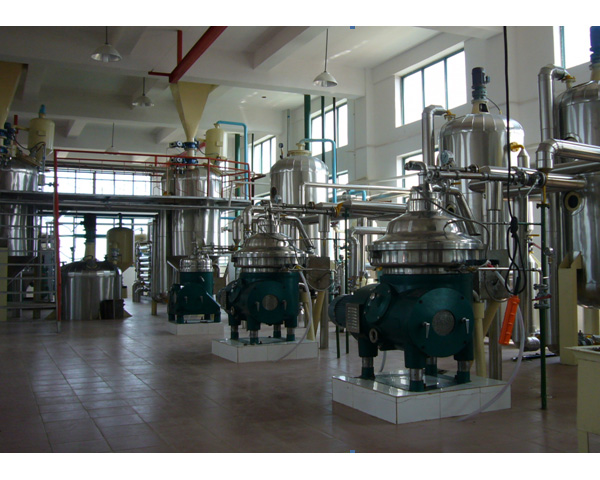
In the edible oil processing industry, the refining process not only determines the final oil quality but also directly impacts plant energy consumption and production costs. Facing increasingly stringent environmental regulations and fierce market competition, how to effectively reduce energy consumption during refining without sacrificing oil yield and quality has become a key concern for many oil processing enterprises.
This article explores practical strategies to lower energy consumption in edible oil refining and introduces how advanced edible oil refining equipment can help achieve energy savings and efficiency gains. If you are looking for solutions to improve your production line efficiency, feel free to learn more about our oil processing plant – optimizing crude oil quality from the source to lay a solid foundation for subsequent refining.
I. Why Does Edible Oil Refining Consume So Much Energy?
Conventional edible oil refining processes typically include degumming, deacidification, bleaching, and deodorization. Each step consumes significant amounts of heat, electricity, and water. For example, deodorization requires heating the oil to above 240°C and using high‑vacuum steam stripping, resulting in huge steam consumption. Additionally, the frequent heating‑cooling cycles in batch‑type processes cause substantial energy waste.
Therefore, optimizing refining processes and upgrading equipment are key to reducing energy consumption and increasing profitability.
II. 5 Core Strategies to Reduce Refining Energy Consumption
1. Prioritize Physical Refining Processes
Chemical refining (alkali refining) consumes large quantities of chemicals and hot water for washing. Physical refining, in contrast, uses high temperature and high vacuum to directly strip free fatty acids, eliminating the alkali refining and water washing steps. This method not only reduces chemical usage but also significantly cuts water and steam consumption while minimizing neutral oil entrapment losses.
Our continuous physical refining system features high‑efficiency packed columns and distributors, improving stripping efficiency by over 20% and reducing steam consumption to below 150 kg per ton of oil.
2. Replace Batch Processes with Continuous Refining
Batch refining equipment requires repeated heating and cooling between batches, resulting in low thermal efficiency. Continuous refining uses piped, automated designs that eliminate intermediate waiting and repeated heating stages, allowing more complete heat exchange. Continuous systems can achieve heat recovery rates above 70%, reducing overall steam consumption by more than 30% compared to batch processes.
Our continuous refining line is equipped with multi‑stage heat exchangers and heat recovery systems, using countercurrent heat exchange between cold and hot streams to significantly shorten heating time. This helps customers achieve a 12%–15% reduction in unit power consumption.
3. Install Energy‑Efficient Core Refining Equipment
– High‑efficiency bleaching tower: Conventional bleaching towers often suffer from channeling, leading to poor contact between bleaching earth and oil. Our new high‑efficiency bleaching tower uses multi‑layer agitation and central flow‑guide design, achieving the same bleaching effect in a shorter residence time, thereby reducing stirring power consumption.
– Waste heat recovery system: The high‑temperature oil and hot condensate discharged from the deodorization section contain substantial waste heat. Using plate heat exchangers to recover this heat for preheating crude oil or generating low‑pressure steam can greatly reduce boiler fuel consumption.
Our energy‑saving bleaching tower and waste heat recovery modules have been successfully installed in many large‑scale oil plants. Measured data show a 10%–15% reduction in steam consumption and an 8%–10% reduction in electricity consumption.
4. Introduce Intelligent Control Systems
Manual operation often relies on experience, leading to over‑processing (e.g., over‑bleaching, over‑deodorization) that wastes both energy and oil. Intelligent control systems use online sensors to monitor parameters such as temperature, pressure, flow rate, and acid value in real time, automatically adjusting actuators (steam valves, vacuum pump speeds, etc.) to keep each section operating at its optimum range.
Our PLC/DCS control system for oil refining precisely controls deacidification temperature within ±1°C and deodorization steam flow within ±2%, preventing oil loss from excessive stripping (reducing loss by 0.2%–0.5%) while avoiding unnecessary energy consumption.
5. Improve Upstream Processes to Enhance Crude Oil Quality
The higher the content of impurities (phospholipids, moisture, solids) in crude oil, the greater the energy consumption and losses during refining. Therefore, using high‑performance oil press equipment for pre‑treatment and pressing can effectively reduce gums and solid residues in crude oil, easing the burden on downstream refining.
III. Comprehensive Benefits: Energy Saving, Loss Reduction, Profit Increase
By implementing the above process and equipment optimizations, edible oil refineries can achieve significant economic and environmental benefits:
– Steam consumption reduced by 10%–15%
– Electricity consumption reduced by 10%–15%
– Refining oil loss reduced by 0.2%–0.5% (equivalent to recovering 2–5 extra tons of finished oil for every 1,000 tons processed)
For a refinery with an annual capacity of 100,000 tons, this translates into annual savings of over 500,000 RMB in steam costs, about 300,000 RMB in electricity costs, plus hundreds of tons of additional oil – a substantial overall profit increase.
Reducing energy consumption in edible oil refining is not only a response to environmental responsibility but also an effective way to enhance your company’s competitiveness. By choosing physical refining processes, continuous production lines, energy‑efficient core equipment, and intelligent control systems, you can easily achieve cost reduction and efficiency improvement.
If you are looking for cost‑effective edible oil refining equipment or wish to retrofit your existing line for energy savings, please contact us. From oil processing plant to complete refining lines, we offer one‑stop solutions to help your plant move toward a high‑efficiency, green, and sustainable future.