
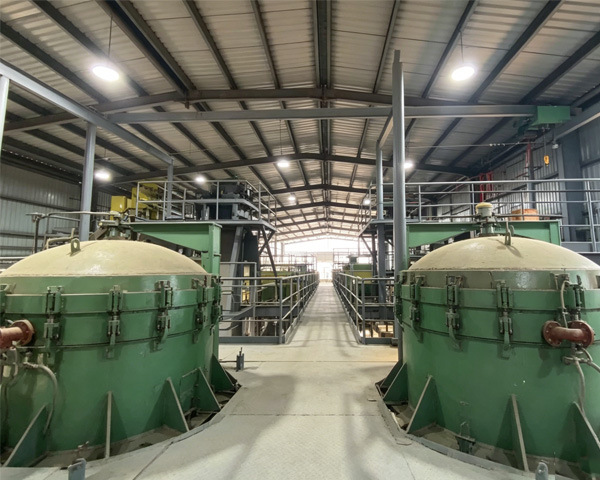
In the field of edible oil production, ensuring high oil yield while reducing production costs and achieving large-scale operation is a core concern for every oil processing enterprise. The emergence of the Edible Oil Automatic Solvent Extraction System is the key to addressing this challenge. Using the principle of chemical extraction, it efficiently extracts oil from oilseed materials and is currently the mainstream process adopted by large-scale edible oil processing plants.
This article provides a detailed overview of the core components and working principles of the edible oil Automatic Solvent Extraction System, helping you understand how this modern equipment achieves high efficiency in production.
Overview of the Edible Oil Extraction Process
The edible oil extraction process uses organic solvents such as light gasoline as extracting agents to soak pretreated oilseed materials (e.g., soybean flakes, rapeseed flakes), allowing the oil to fully dissolve and form a miscella. The solvent is then separated from the oil through evaporation and stripping processes, yielding crude oil. This method not only achieves a high oil yield but also enables continuous and stable industrial production through the automated control of edible oil extraction equipment.
The Five Core Units of an Automatic Solvent Extraction System
A complete edible oil Automatic Solvent Extraction System typically consists of the following five closely integrated subsystems:
1. Solvent Extraction System
The extraction system is the starting point of the entire process. Pretreated flakes are transported via a scraper conveyor to a buffer hopper. A sealing valve at the bottom of the hopper automatically controls the material level to prevent solvent vapor from escaping. The material is then fed sequentially into extraction units, where different concentrations of miscella and fresh solvent are sprayed to fully extract the oil from the flakes. A negative pressure environment inside the extractor further ensures operational safety. After extraction, the miscella is sent to the evaporation system, while the wet meal moves on to the next stage.
2. Wet Meal Desolventizing System
After extraction, the meal contains a significant amount of solvent and is referred to as “wet meal.” The desolventizing system (such as the DTDC desolventizer-toaster) separates and recovers the solvent through multi-stage heating and steam treatment. During the desolventizing process, the material undergoes preheating, direct steam percolation, hot air drying, and cooling. This not only removes the solvent thoroughly but also ensures the quality of the final meal by adjusting its moisture content. The system also utilizes the secondary steam generated during desolventizing as a heat source for other processes, enabling cascaded energy use.
3. Miscella Evaporation System
The miscella from the extractor must undergo separation of solvent from oil. It first enters a primary evaporator, where it is heated using secondary steam from the desolventizing system. It then passes through a heat exchanger into a secondary evaporator, where indirect steam further concentrates the miscella. Finally, the miscella enters a stripping column, where residual solvent is removed under negative pressure using direct steam, resulting in crude oil.
4. Solvent Vapor Condensation System
To reduce production costs and ensure environmental safety, solvent recycling is essential. The condensation system uses multiple condensers to cool and recover mixed vapors from the evaporators, stripper, and extractor. All solvent vapors, non-condensable gases, and free vapors from various storage tanks ultimately enter a final condenser, where cooling water recovers the majority of the solvent. The remaining trace amounts of solvent vapor are then directed to the mineral oil recovery system.
5. Mineral Oil Recovery System
As the final barrier for solvent recovery, the mineral oil system ensures the cleanliness of exhaust gases. Low-temperature lean oil (mineral oil free of solvent) comes into countercurrent contact with the exhaust vapors in an absorption tower. Pall rings inside the tower maximize contact area, efficiently absorbing residual solvent from the tail gas. The solvent-laden rich oil is then heated and stripped to regenerate lean oil for reuse, while the purified air is safely discharged into the atmosphere.
Advantages of the Automatic Solvent Extraction System
Compared to traditional pressing processes, the edible oil Automatic Solvent Extraction System offers significant advantages. If you are looking for a physical pressing solution suitable for small to medium-scale operations, you may explore our oil pressing equipment, which is also a fundamental choice for producing high-quality edible oils.
For large-scale processing plants focused on high capacity and efficiency, edible oil extraction equipment is undoubtedly the ideal choice:
- High Capacity and Yield: Chemical extraction maximizes oil recovery from oilseed materials, resulting in very low residual oil content.
- High Degree of Mechanization: Fully automated processes reduce manual intervention and ensure consistent production stability.
- Lower Production Costs: Solvent recycling and cascaded energy use significantly reduce unit energy consumption and overall costs.
- Environmentally Friendly: The closed-loop system and multi-stage recovery mechanisms ensure that solvent emissions meet environmental standards.
The edible oil Automatic Solvent Extraction System integrates chemical extraction, heat recovery, and environmental protection into a cohesive whole, representing a core technology in the modern oil industry. From solvent extraction to wet meal desolventizing, and from miscella evaporation to solvent recovery, every step reflects a combination of high efficiency and low energy consumption.
If you have any questions regarding equipment selection, process design, or investment planning for an edible oil Automatic Solvent Extraction System, please feel free to contact us for more professional guidance.