
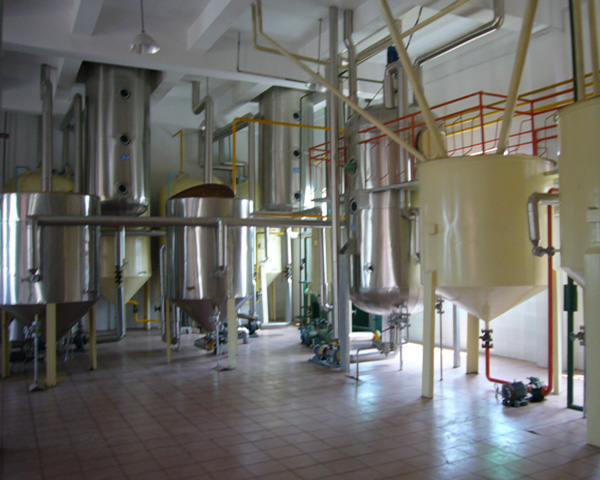
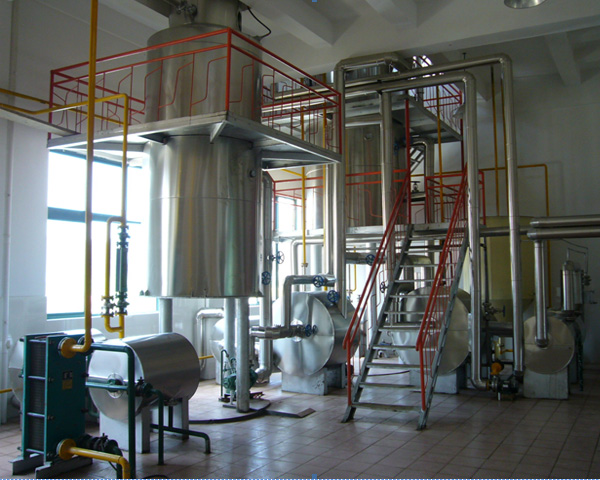
In the oil processing industry, physical refining technology is gradually replacing traditional chemical refining as the mainstream choice for vegetable oil refining due to its advantages of high efficiency, environmental protection, and energy saving. Physical refining uses a high-temperature steam distillation process to effectively remove free fatty acids, oxidation by-products, and volatile impurities without the need for chemical reagents such as acids and alkalis. It is particularly suitable for refining high-acid oils like palm oil, sunflower oil, and soybean oil. This article will detail the core components, working principles, technical advantages, and application areas of physical refining equipment.
Components and Working Principles of Physical Refining Equipment
A complete physical refining production line typically consists of three core units: the steam distillation tower, the cooling and stabilization system, and the filtration and polishing unit. These components work together to ensure the oil meets food-grade or industrial-grade standards.
- Steam Distillation Tower
- The steam distillation tower is the core equipment of physical refining. Its interior features a structure with horizontally and vertically staggered compartments to increase the contact area between the oil and steam. Under high vacuum (typically below 5 mbar), high-temperature steam (200–260°C) is directly injected into the oil, causing volatile substances such as free fatty acids, aldehydes, ketones, alcohols, and pigments to be stripped and carried away with the steam. This design not only ensures deacidification and deodorization but also minimizes neutral oil loss. Modern distillation towers are equipped with precise steam distributors and temperature sensors to ensure uniform and controllable distillation throughout the process.
- Cooling and Stabilization System
- After distillation, the oil temperature is high and must be rapidly cooled. The cooling system typically consists of multi-stage heat exchangers and holding tanks, using circulating cooling water or thermal oil to lower the oil to a suitable temperature. During this process, residual impurities such as waxes, phospholipids, trace metals, and polymers naturally precipitate and are removed by centrifugal separation or sedimentation. This stage also prevents thermal degradation at high temperatures, protecting natural antioxidants (such as vitamin E and phytosterols) and essential fatty acids in the oil.
- Filtration and Polishing Unit
- To ensure the clarity and purity of the final product, the refined oil undergoes precision filtration. Common equipment includes plate and frame filters, candle filters, or self-cleaning filters, with filtration accuracy up to 1–5 microns, effectively removing fine particles and residual gums. Some high-end production lines are also equipped with polishing towers that use adsorbents (such as activated clay and activated carbon) for further decolorization and deodorization, resulting in clear, odorless oil that meets high-end market requirements.
Technical Advantages of Physical Refining Equipment
Compared with traditional chemical refining, physical refining equipment offers the following significant advantages:
- High Deacidification Efficiency and Increased Yield
- Physical refining is particularly suitable for crude oils with acid values as high as 5–10%. Neutral oil loss during deacidification can be controlled within 1%, and the refining yield is 2–5% higher than that of chemical methods. This is because physical refining does not generate soap stock, avoiding the entrainment loss of neutral oil.
- Zero Wastewater Discharge, Environmental Protection and Energy Saving
- Chemical refining produces large amounts of alkaline wastewater that requires complex treatment systems. Physical refining involves no water throughout the process, generates no wastewater, and allows for recovery of steam consumption, reducing overall energy consumption by 20–30%, in line with national “dual carbon” policy requirements.
- Automated Control, Stable and Reliable
- Modern physical refining equipment is equipped with PLC/DCS control systems that monitor parameters such as temperature, vacuum level, steam flow, and liquid level in real time, automatically adjusting valves and heaters to ensure consistent product quality batch after batch. The system also records production data for traceability and quality management.
- Broad Applicability, Flexible Configuration
- The equipment can process a variety of vegetable oil raw materials, including sunflower oil, peanut oil, sesame oil, rapeseed oil, cottonseed oil, and rice bran oil. Depending on customer capacity requirements, single-line processing capacity can range from 10 tons/day to 500 tons/day, and modular designs are available to facilitate plant expansion or upgrades.
Wide Range of Applications to Meet Diverse Needs
The high-purity oils produced by physical refining equipment are widely used in the following industries:
- Food Industry
- Used as base oils for cooking oils, frying oils, baking fats, seasoning oils, etc., ensuring products are free from chemical residues and comply with international food safety standards such as EU and US FDA. For example, physically refined palm oil has good frying stability and is less prone to polymer formation, extending frying life.
- Cosmetics and Personal Care
- Physically refined oils (such as sunflower oil and jojoba oil) serve as natural emollients in skincare products, conditioners, baby oils, lip balms, etc. Their mild and non-irritating nature makes them suitable for sensitive skin formulations.
- Pharmaceutical and Industrial Fields
- Used in the production of pharmaceutical-grade oils (such as soybean oil for injections), bio-based lubricants, eco-friendly waxes, printing inks, and more. Physical refining preserves the natural characteristics of oils, giving them unique advantages in biodegradable products.
Physical refining equipment is not only key to improving oil quality but also an important force in promoting the green transformation of the oil processing industry. Its high efficiency, economy, and environmental friendliness make it an indispensable core asset for modern oil refineries. Whether building a new production line or upgrading an existing one, choosing physical refining equipment is a wise move to achieve sustainable development and enhance market competitiveness. For more equipment parameters or customized solutions, please contact us for professional support.