
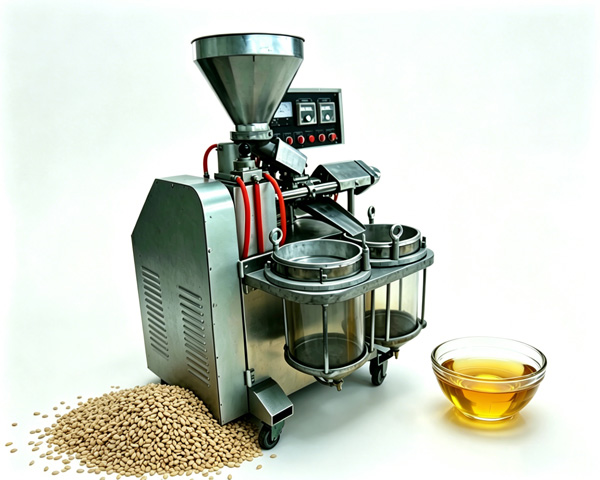
Sesame oil holds a unique place in kitchens around the world — it is an indispensable cooking oil in Asia and is widely used as a flavor enhancer in Africa and the Middle East. However, behind this clear, golden oil, a quiet iteration of processing technology is taking place. The traditional hydraulic pressing method, due to outdated equipment and low production efficiency, can no longer meet the dual demands of modern sesame oil processing for both capacity and quality. The screw oil press machine, as a new type of extraction equipment, is replacing the old process with comprehensive technical advantages and has become the mainstream choice in the sesame oil production industry. This article will delve into the working principle, temperature control logic, and complete process flow from raw material to finished oil of the screw-type sesame oil press machine.
1. The Process Transformation in Sesame Oil Extraction: From Hydraulic to Screw
For a long time, hydraulic pressing was the primary means of extracting sesame oil. But its drawbacks are obvious: batch-type operation limits production capacity, and although low-temperature static pressing preserves some nutrients, it struggles to fully release the unique roasted aroma of sesame seeds. In contrast, the screw oil press machine adopts a continuous mechanical extrusion principle, enabling highly efficient oil extraction under precisely controlled temperature conditions. The pressure distribution inside the pressing chamber is more uniform, and the residual oil rate in the cake is also lower. For modern oil processing equipment seeking a balance between production capacity and flavor, screw pressing is currently the best overall solution.
2. The Key to Flavor: Precise Temperature Control and Electric Heating Design
The core competitiveness of sesame oil lies in its unique roasted aroma. The new sesame oil press machine prioritizes “flavor preservation” in its design, with the key technical approach being the integration of electric heating tubes on both the pressing cage and the main shaft. The value of this design lies in:
– Controllable Feed Temperature:
Appropriately raising the temperature of the sesame seeds before they enter the pressing chamber can stimulate and lock in characteristic flavor compounds such as sesamol, while simultaneously accelerating the separation of oil from the cake residue, thereby further improving the oil yield rate.
– Customizable Installation Position:
The layout of the heating tubes can be flexibly adjusted according to the user’s actual process conditions, ensuring uniform heating without localized overheating.
– Strict Management of Temperature Upper Limits:
During operation, it is crucial to note that excessively high temperatures will cause the sesame oil color to darken and produce a burnt flavor. Generally, the roasting temperature for sesame seeds should be controlled at around 110-120°C. During the initial pressing stage, the rotation speed of the oil press should be slightly reduced, waiting until the pressing chamber temperature stabilizes at around 80°C before resuming the normal rhythm. Experienced operators can judge whether the moisture content of the sesame seeds is appropriate by observing the thickness of the cake, its degree of hardness, and the condition of the oil bubbles.
3. The Complete Production Process of the Screw Sesame Oil Press Machine
Sesame seeds have a high oil content, reaching 45%-63%, making them a high-oil-content oilseed. The screw oil press machine typically employs a hot pressing process, with the standard flow as follows:
Sesame Seeds → Cleaning → Softening → Flaking → Pressing → Filtration
A fully functional sesame oil processing equipment production line mainly includes the following core equipment:
– Cleaning Machine:
Removes impurities such as soil and stones from the sesame seeds; clean raw material is the foundation for producing good oil.
– Hot Air Roaster (Seed Roaster):
Roasts the sesame seeds to stimulate aroma and adjust moisture content. Heat control is the soul of the process — insufficient temperature results in a weak aroma, while excessive heat scorches the cake and darkens the oil.
– Sesame Oil Press Machine Main Unit:
Uses a screw oil press machine for continuous pressing, with cake thickness typically controlled at around 1.5-2 millimeters.
– Filter Machine (Oil Filter Machine):
Removes solid impurities from the crude oil, improving the clarity of the finished oil.
Under normal circumstances, a basic set of sesame oil pressing equipment with the above configuration is sufficient to start production. However, depending on the final product positioning, we can also provide matching sesame oil refining equipment to upgrade the crude oil to first-grade finished oil through processes such as degumming, neutralization, decolorization, and deodorization, meeting the market entry standards for the high-end packaged oil market.
4. Sesame Oil Refining: The Upgrade Path from Crude Oil to First-Grade Oil
For producers targeting the premium retail and export markets, a sesame oil refinery plant is a necessary investment to enhance added value. The refining process is divided into two routes: physical refining and chemical refining, with the main stages including degumming, neutralization, decolorization, and deodorization. A well-designed set of oil refining equipment can process crude oils from a wide range of oilseeds — from sesame, sunflower, and peanut to soybean — maintaining production line flexibility amid seasonal fluctuations in raw material supply.
5. Why Is Sesame Oil Continuing to Sweep the Globe?
The market popularity of sesame oil is rooted in its unique nutritional and functional properties. It is rich in unsaturated fatty acids and possesses multiple health benefits such as anti-inflammatory, antioxidant, and blood sugar regulating effects. In Indian Ayurvedic medicine, it is even referred to as the “healing oil.” Beyond culinary uses, the application of sesame oil in the skincare, haircare, and pharmaceutical industries is growing rapidly — opening up a market space far broader than the edible oil shelf for sesame oil processors.
Starting from a precisely temperature-controlled sesame oil press machine, to the matching oil filter machine and oil refining equipment, every link in sesame oil processing has a bearing on the final product’s flavor, quality, and shelf competitiveness. If you are planning a new sesame oil production line or upgrading an existing one, please feel free to contact [KMEC] — our engineering team will combine your capacity goals and end-market positioning to provide a complete technical solution, from equipment selection to plant layout.