
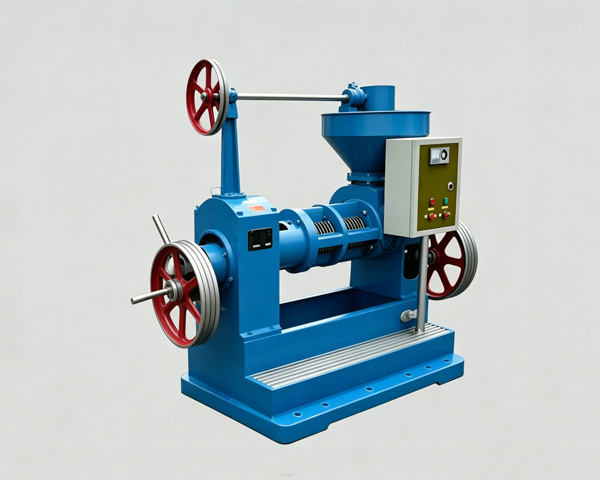
After using a Screw Oil Press for a period of time, many oil processors encounter a frustrating problem: while the machine produced clear and bright oil when it was new, the amount of sediment and fine residues in the oil gradually increases after several months of operation.
This inevitably raises doubts: Is it an issue with the equipment’s build quality, or has daily operation and maintenance gone awry? In reality, excessive impurities in the expressed oil are rarely caused by a single factor. Instead, they are a comprehensive result involving pressing chamber parameters, raw material pre-treatment, and wear of key components. As professional oil equipment engineers, we recommend you perform systematic troubleshooting following these five steps.
I. Precise Adjustment of Core Pressing Chamber Parameters
The pressing chamber is the heart of the Screw Oil Press. The delicate balance of its internal clearance and pressure directly determines the purity of the output oil.
1. Calibrating the Clearance Between the Screw Shaft and the Cage
If the clearance between the screw shaft and the inner wall of the pressing cage is too large (typically the standard should be within 0.3-0.5 mm), incompletely pressed cake crumbs will be squeezed out along with the oil flow. You can stop the machine and measure the clearance using a feeler gauge. If the clearance is out of tolerance, you can fine-tune the cake thickness by adjusting the Cake Forming Mechanism (recommended to maintain at 1-2 mm), thereby inversely reducing the internal clearance of the pressing chamber.
*Special Note:*
Smaller clearance is not always better. For instance, pressing high-oil-content peanuts requires a slightly larger clearance to prevent blockage, while pressing rapeseed demands a tighter fit. Excessively reducing the clearance can easily lead to material blockage and seizure of the Oil Press Worm Shaft.
2. Optimizing Pressing Pressure and Feed Rate
– Insufficient Pressure:
If the gearbox speed is too high, causing excessive feed rate, the material does not stay in the pressing chamber long enough. The cake cannot be fully compacted, resulting in high residual oil content in the meal and contamination of the oil. You can increase the chamber pressure by reducing the feed rate via a Variable Speed Gearbox or increasing the pitch gradient of the Press Worm.
– Sudden Pressure Spikes:
If the temperature is uncontrolled, leading to material carbonization, hard charred particles will mix directly into the crude oil. It is recommended to stabilize the pressing temperature between 80-120°C (adjusted slightly based on the specific oilseed) using the Temperature Control System. This not only prevents charring but also improves oil yield.
II. Strict Control of Raw Material Pre-treatment: Eliminating Impurities at the Source
Often, the root cause of impurity issues lies not within the Oil Press Equipment itself, but in the condition of the raw material entering the machine.
1. Controlling Moisture Content and Crushing Particle Size
– Moisture Imbalance:
Excessive moisture in raw materials (e.g., peanut moisture >10%) increases the plasticity of the press material, forming a paste that clogs the screen. Conversely, insufficient moisture makes the cake brittle and powdery, allowing large amounts of fine particles to penetrate the filter screen. It is recommended to use a Dryer or a tempering screw with water spray to strictly control the input moisture content between 6% and 8%.
– Uneven Particle Size:
Inconsistent raw material particle size leads to uneven pressure distribution during pressing. It is recommended to pre-treat soybeans, cottonseeds, etc., using a Flaking Mill or Crusher to ensure uniform particles (e.g., cracking soybeans into 2-4 pieces). This is crucial for the stable operation of the subsequent Pre-press Machine.
2. Enhancing Raw Material Cleaning
Foreign materials like sand, stones, and metal scraps mixed in the raw material are not only the primary cause of ash impurities in the oil but also invisible threats to the Oil Expeller Worm and Cage Bar. They accelerate wear, leading to irreversible enlargement of clearances. It is imperative to thoroughly remove these hard foreign objects using a Vibrating Cleaning Sieve and Magnetic Separator before feeding.
III. Inspection and Maintenance of Key Equipment Components
If the problem persists after adjusting the parameters, please focus on inspecting the following wear parts:
1. Wear Assessment of Worm Shaft and Pressing Cage
After long-term use, wear on the thread edges of the Worm Shaft or enlargement of the gaps in the Cage Bar Lining will compromise the sealing integrity of the pressing chamber, causing meal leakage. If noticeable groove wear is observed on the surface, promptly replace the Alloy Worm Shaft or Wear-Resistant Cage assembly. Additionally, always clean the hardened oil scale from the cage gaps after each shutdown to prevent it from flaking off and mixing into the new oil.
2. Efficiency Upgrade of the Filtration System
– In-Machine Filtration:
Inspect the Crude Oil Filter Tank or built-in filter screen for damage. It is recommended to replace the screen with an 80-120 mesh Stainless Steel Filter Mesh based on the desired finished oil grade.
– Secondary Fine Filtration:
The rough filtration equipped with the oil press alone is often insufficient to meet commercial oil standards. To thoroughly eliminate suspended impurities, it is recommended to add a Centrifugal Oil Residue Separator or Plate and Frame Filter Press at the back end of the production line. This is a fundamental step within the Oil Refining Equipment process and significantly enhances the clarity and brightness of the oil.
IV. Adherence to Standard Operating Procedures
1. Uniform Feeding Principle
Avoid the common pitfall of blindly increasing feed volume to chase higher output. Control the feed gate to ensure the Screw Conveyor supplies material evenly. This prevents “starvation-saturation” fluctuations inside the pressing chamber, thereby reducing the generation of fine residues.
2. Mandatory Shutdown Cleaning Protocol
After prolonged continuous operation, residual charred material in the dead corners of the pressing chamber can form hard lumps. It is recommended to run a small amount of high-oil-content meal through the machine as a “cleaning agent” at the end of each shift or before a shutdown exceeding 4 hours. Upon stopping, thoroughly clean the Oil Press Chamber and the cake outlet.
V. When Routine Adjustments Fail: Considering Equipment Selection and Upgrades
If you have strictly implemented all the steps above yet the oil quality remains inconsistent, you may need to analyze the situation from an equipment compatibility perspective. Specialty oilseeds with high fiber content (such as tea seeds or olives) may require a Specialty Screw Oil Press with a specific compression ratio.
As a professional oil engineering solutions provider, KMEC offers a complete range of equipment from standalone Small Home Oil Press machines to large-scale Automatic Oil Press Production Lines, encompassing Steam Cookers, Screw Presses, Flaking Mills, Decanter Centrifuges, and Complete Oil Refining Plants. Leveraging mature European technology standards, we provide clients with one-stop turnkey project services, including plant planning, equipment installation, commissioning, and operator training.