
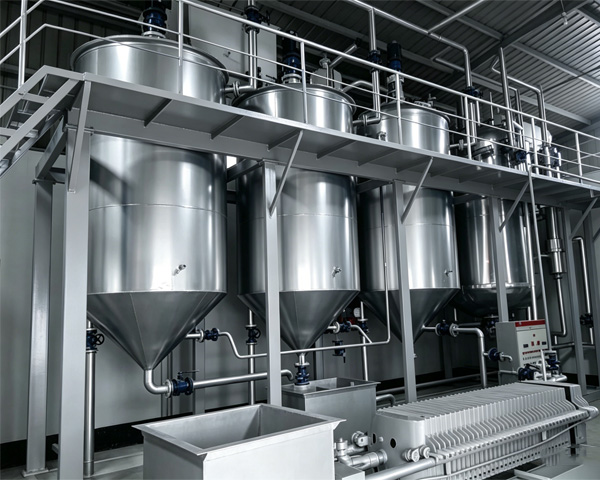
For investors new to the palm oil processing industry, one core question frequently arises: Why does palm oil need refining?
Crude Palm Oil (CPO) extracted from palm fruit bunches, while nutrient-rich, contains significant amounts of impurities, moisture, and free fatty acids. It has a deep red color and is highly susceptible to oxidation and spoilage, making it unsuitable for direct circulation as commercial edible oil or for long-term storage. Therefore, palm oil refining is not only a necessary step for enhancing edible oil safety but also a value-adding bridge connecting upstream oil mill equipment production with downstream deep-processing markets.
The Core Purpose of Palm Oil Refining: Removing the Dross While Keeping the Essence
As is widely known, crude palm oil contains numerous impurities, has a dark color, and is unsuitable for long-term storage. The fundamental purpose of palm oil refining is “removing the dross while keeping the essence.” Through professional oil refining production line processing, we can precisely remove components harmful to food storage and industrial production—such as Free Fatty Acids (FFA), gums, proteins, phospholipids, mucilage, and moisture—thereby significantly improving the oil’s stability and smoke point. Meanwhile, the refining process does not blindly remove all substances; it skillfully retains beneficial “impurities” like Vitamin E and sterols, ultimately yielding standard edible oil (RBD Palm Oil) with a clear, bright color and pure flavor.
From Crude Oil to Premium Product: Analyzing the Palm Oil Refining Process
A mature palm oil refining equipment setup typically includes the following four critical steps, each playing a decisive role in the final oil quality:
1. Degumming:
Utilizing physical or hydration methods to remove phospholipids and gums from the oil. This step significantly improves oil clarity and prevents precipitate formation during subsequent processing, laying the groundwork for the efficient operation of downstream edible oil processing equipment.
2. Deacidification:
Removing free fatty acids through chemical neutralization or physical distillation. This is the core step for extending the shelf life of palm oil and eliminating the risk of rancidity.
3. Decolorization (Bleaching):
Using adsorbents like activated bleaching earth to remove pigments (such as carotenoids) from the oil. After bleaching treatment, the originally dark red crude oil transforms into a golden, translucent color that better aligns with international market consumption aesthetics.
4. Deodorization:
Removing odor molecules through steam stripping under high temperature and high vacuum conditions. This step ensures that palm oil does not produce unpleasant “greasy” or earthy smells during cooking.
For startups or regional suppliers, investing in a highly automated small palm oil refinery machine is an ideal choice for entering high-value-added markets. This type of equipment coordinates with the front-end pressing workshop’s screw oil press to form a complete closed loop from fruit pressing to finished product filling.
Market Drivers: Why is Global Demand for Refined Palm Oil Surging?
Beyond technical necessity, the economic dynamics of the global market are the main drivers behind the growth of the refining business. As mentioned in the context of Southeast Asian and African markets:
* Southeast Asia (Indonesia, Malaysia):
As major exporters of crude palm oil, an increasing number of enterprises have chosen to establish local refineries in recent years. The reason is that the profit margin from converting crude oil into RBD refined oil far exceeds that of selling raw materials directly. For factory owners, adding refining equipment downstream of an existing palm oil press line enables product premium realization and hedges against raw material price fluctuation risks.
* Africa (e.g., Nigeria):
Driven by local consumption upgrades and policy support, investors are keenly aware of the higher value of refined palm oil. Even though local crude palm oil remains marketable, introducing a small edible oil refinery machine allows them to produce packaged oil products that meet modern supermarket standards, thereby securing a competitive advantage in a fierce market.
Palm oil is one of the world’s highest-yielding vegetable oils, and its refining business holds immense potential. Whether aiming to meet stringent food safety standards or pursue higher commercial returns, extending operations from a simple oil press manufacturer to an oil refining equipment service provider is an inevitable industry trend. If you are interested in configuring a cost-effective palm oil refining line or wish to obtain quotes for small-scale refining equipment of various capacities, please feel free to contact us for professional technical support.