
Indonesia and Malaysia remain the world’s leading palm oil producers, with mature plantation systems and well-established processing infrastructure. However, land resources are becoming limited, environmental regulations are growing stricter, and compliance requirements are increasing – all of which are placing greater constraints on new plantation expansion in these regions.
An increasing number of investors are turning their attention to Brazil. Brazil currently accounts for approximately 1% of global palm oil production but holds significant growth potential. The Brazilian palm oil market was valued at approximately US$709.3 million in 2024 and is projected to reach US$940.7 million by 2030.
So, what exactly makes Brazil so attractive to global palm oil investors? This article analyses the three core advantages of Brazilian palm oil investment from three dimensions: land, policy, and market.
Advantage 1: Abundant Land Resources at Lower Costs
1. Vast Available Land Area
Brazil possesses an enormous potential planting area. According to agricultural ecological zoning studies conducted by the Brazilian government, the land area suitable for oil palm cultivation in Brazil is as high as 31 million hectares. Currently, Brazil’s oil palm planted area is only approximately 220,000 hectares – meaning that over 99% of the potential planting area remains undeveloped.
The Brazilian government stipulates that oil palm can only be planted on pastureland that had been degraded before 2008. This policy ensures that oil palm cultivation does not encroach on the Amazon rainforest, while simultaneously providing investors with abundant, legally developable land at favourable prices.
2. Per-Hectare Yields Comparable to Southeast Asia
The state of Pará is currently Brazil’s largest palm oil producing region, accounting for 97% of national production. Pará has approximately 204,600 hectares of oil palm planted area, with an annual fresh fruit bunch (FFB) output of approximately 3.22 million tonnes. Based on these figures, Brazil’s oil palm yield per hectare is approaching the level of major Southeast Asian producing regions.
Brazil has over 600 active palm oil producers and has developed a complete industrial chain from seedling cultivation and plantation management to processing and export.
3. Mature Labour and Regulatory Framework
Brazil possesses a relatively mature labour and regulatory framework in the agricultural sector. Compared to parts of Southeast Asia, Brazil’s legal system is more transparent, and land ownership is clearer – providing institutional safeguards for long-term investment.
Advantage 2: More Favourable Policies – Biodiesel Driving Growth and Industry Incentives
1. Biodiesel Mandate Continues to Rise
Brazil is a pioneer in the global biodiesel sector. From August 2025, the mandatory biodiesel blend ratio in diesel fuel has been increased from 14% (B14) to 15% (B15). The government plans to gradually raise this ratio to 20% (B20) by 2030.
Brazilian palm oil currently meets approximately 10%–15% of the country’s biodiesel demand. As the blend ratio continues to rise, the application potential for palm oil in the biodiesel sector will expand further.
2. RenovaBio Carbon Credit Mechanism
Brazil officially implemented the “Fuel of the Future Law” in 2024, integrating the RenovaBio programme that had been in place since 2016. RenovaBio encourages the production and consumption of low-carbon biofuels through carbon intensity targets and carbon credit (CBios) mechanisms.
By 2025, approximately 339 biofuel plants across Brazil had received RenovaBio certification, with a total of approximately 29.8 million CBios issued. Palm oil processors can generate additional carbon credit revenue by participating in the RenovaBio programme.
3. Government Industry Incentives
The Brazilian government has established the Brazilian Palm Oil Producers Association (Abrapalma) to promote the development of the palm oil industry and provides incentives for industry investment. Producing states such as Pará also offer ICMS tax incentives.
The National Energy Policy Council (CNPE) has also established a dedicated working group focused on diversifying biofuel feedstocks and strengthening the participation of family farmers and small-scale producers in biofuel production.
Advantage 3: Closer to European and American Markets, Lower Logistics Costs
1. Geographic Advantage: Proximity to European and North American Consumer Markets
Brazil is located on the South American continent, facing the Atlantic Ocean. Compared to Southeast Asian palm oil producing regions, Brazil offers significantly shorter shipping distances and transit times to European and North American markets.
For palm oil processors exporting to the European market, shipping from Brazil can save several weeks of sea transit time compared to shipping from Indonesia or Malaysia. This not only reduces logistics costs but also means lower in-transit inventory capital requirements and faster capital turnover.
2. A Natural Gateway to the Americas
Brazil is not only a palm oil producer but also a natural gateway to the entire Americas market. Brazil has signed trade agreements with numerous countries in the Americas, allowing palm oil products to enter these markets more easily. For investors looking to establish palm oil processing capacity in the Americas, Brazil is the optimal location.
3. Strong Domestic Demand
Brazil itself is one of the world’s largest edible oil consumer markets. With population growth and rising consumption, domestic demand for palm oil in Brazil continues to climb. Palm oil consumption in Brazil grew significantly in 2025. This strong domestic demand provides a stable market guarantee for palm oil processing plants, reducing reliance on export markets and mitigating related risks.
Key Planning Considerations for Palm Oil Processing Projects in Brazil
For investors planning to build a palm oil processing plant in Brazil, the following factors require particular attention:
1. Processing Timeliness
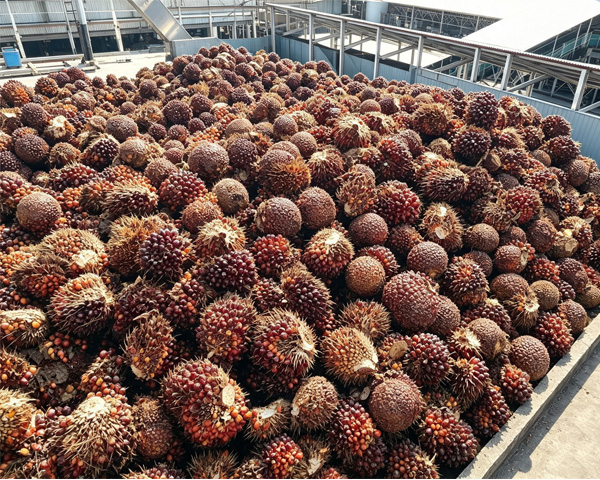
Fresh fruit bunches (FFB) should be processed as soon as possible after harvesting to maintain crude palm oil quality. Delays in transport or sterilisation increase free fatty acid (FFA) content, affecting oil quality and refining efficiency. Locating your palm oil mill close to major plantation areas is critical for ensuring continuous operations.
2. Equipment Configuration
A complete set of palm oil processing equipment typically includes: palm fruit steriliser (for controlling FFA and improving oil yield), palm fruit thresher (for separating fruits from empty fruit bunches), twin-screw palm oil press (for maximising oil recovery), clarification system, vacuum dryer, and palm kernel recovery system. A well-designed palm kernel recovery system can significantly improve the long-term economic performance and return on investment of the project.
3. Environmental Compliance
Palm oil mill effluent (POME) must be properly treated before discharge or reuse. Modern palm oil mills typically integrate wastewater treatment systems and, where appropriate, biogas recovery systems to improve resource utilisation.
4. Utility Planning
Reliable steam, water, electricity, and transport are essential for continuous production. Many commercial palm oil mills use biomass such as palm fibre and shells as boiler fuel, reducing reliance on external energy sources.
Land resources in Indonesia and Malaysia are tightening, and environmental regulations are becoming more stringent. Meanwhile, Brazil offers 31 million hectares of potential planting land, a steadily increasing biodiesel blend ratio (B15→B20), and a natural geographic advantage close to European and American markets.
For investors seeking new directions for palm oil investment, Brazil offers not a “replacement” but a “complement” – a diversified option that balances cost, regulatory, and supply chain risks.
If you are considering building a palm oil processing plant in Brazil, or need more information on palm oil processing equipment configurations, please contact us. We can provide complete equipment solutions – from palm fruit steriliser, thresher, and twin-screw palm oil press to complete refining systems – based on your capacity requirements and budget.
Contact us today – seize the opportunity in Brazilian palm oil investment!