
Crude palm oil (CPO) straight from the press is deep red in colour and contains free fatty acids (FFA), phospholipids, pigments, and odorous compounds – it cannot be consumed directly. To become the clear, stable cooking oil found on supermarket shelves, it must undergo refining.
But when it comes to choosing a refining process, the palm oil industry stands apart from other vegetable oils in one significant way – nearly all palm oil refineries in Malaysia use physical refining rather than chemical refining. Why? This article examines the key differences between the two processes, the advantages that make physical refining the preferred choice, and the specific scenarios where chemical refining is still the better option.
I. The Fundamental Difference Between the Two Processes
The core difference between physical refining and chemical refining lies in how free fatty acids (FFA) are removed.
Chemical refining (alkali refining): An alkali (such as sodium hydroxide) is added to neutralise the free fatty acids, forming soapstock which is then removed by centrifugal separation. The process sequence is: degumming → alkali neutralisation → water washing → drying → bleaching → deodorisation.
Physical refining (steam distillation): This process does not include an alkali neutralisation step. Instead, free fatty acids are distilled off and removed directly under high temperature (250–270°C) and high vacuum using steam as a stripping agent. The process sequence is: degumming → bleaching → high-temperature deodorisation (which simultaneously completes deacidification). Physical refining is essentially a streamlined version of chemical refining – eliminating the alkali neutralisation and water washing stages.
II. Why Do Malaysian Palm Oil Refineries Prefer Physical Refining?
Malaysia’s palm oil refining industry began in 1972 with just four refineries, all using chemical refining. By the late 1970s, however, physical refining began to gain favour. Today, all palm oil refineries in Malaysia use the physical refining method.
This shift is driven by five key advantages:
1. Higher Oil Yield
During chemical refining, the neutralisation reaction produces soapstock that carries away some neutral oil, resulting in oil loss. Physical refining produces no soapstock, so oil losses are significantly lower. For high-acid-value palm oil (FFA can reach 5%), the neutral oil loss in chemical refining is almost directly proportional to FFA content – making the advantage of physical refining most pronounced in precisely this scenario.
2. Lower Operating Costs
Physical refining eliminates the need for alkali and consumes fewer chemicals overall. While the deodorisation stage requires higher temperatures (250–270°C versus lower temperatures for chemical refining) and a more powerful vacuum system, the overall operating costs are still lower because the neutralisation, water washing, and wastewater treatment stages are eliminated.
3. Reduced Environmental Burden
Chemical refining generates soapstock and alkaline wastewater, requiring wastewater treatment facilities. Physical refining produces no soapstock and generates very little wastewater – a significant advantage as environmental regulations become increasingly stringent.
4. A Valuable By-product – Palm Fatty Acid Distillate (PFAD)
The free fatty acids distilled off during the deodorisation stage of physical refining can be directly recovered as high-purity Palm Fatty Acid Distillate (PFAD) – a valuable by-product used in soaps, animal feed, and oleochemicals. The soapstock from chemical refining requires acidulation to recover fatty acids, which is more costly and yields a lower-quality product.
5. Better Suited to Palm Oil’s Characteristics
Chemical refining is better suited to oils with high phospholipid content, such as soybean oil. Palm oil, however, has naturally low phospholipid content, which means the degumming stage in physical refining can effectively remove impurities without relying on alkali neutralisation.
Data from Malaysian refineries: Guaranteed physical refining capacity in Malaysia is approximately 12,075 tonnes per day, while chemical (alkali) refining capacity is only 4,949 tonnes per day – physical refining capacity is nearly 2.5 times that of chemical refining. This clearly reflects the industry’s actual preference.
III. When Is Chemical Refining Still the Better Choice?
Despite physical refining’s dominance in palm oil processing, chemical refining remains the better option in certain specific scenarios:
1. Processing Oils with High Phospholipid Content
Chemical refining is suitable for oils with high phospholipid content, such as soybean and cottonseed oils. For these oils, alkali neutralisation effectively removes phospholipids and pigments, whereas the degumming stage in physical refining struggles to achieve the same results.
2. Crude Oil with Unstable Quality or Complex Impurities
If crude oil quality fluctuates significantly or contains complex impurities that are difficult to remove by physical methods, chemical refining offers greater adaptability. The alkali neutralisation stage in chemical refining removes free fatty acids and pigments more thoroughly.
3. Small or Older Refineries
Chemical refining typically requires lower initial equipment investment, making it suitable for smaller projects with limited capital. Additionally, some older refineries built in the 1970s still operate using chemical refining processes.
4. When PFAD Is Not Required
If there is no need to recover high-purity PFAD, or if there are convenient local channels for processing soapstock, chemical refining can still be a viable option.
IV. Comparison Overview of the Two Processes
| Comparison Dimension | Physical Refining | Chemical Refining (Alkali) |
|---|---|---|
| FFA removal method | Steam distillation (high temp + vacuum) | Alkali neutralisation → soapstock |
| Neutralisation stage | None | Yes |
| Water washing stage | None | Yes |
| Deodorisation temperature | 250–270°C | Lower |
| Oil yield | Higher | Lower (soapstock carries oil away) |
| Operating cost | Lower | Higher (chemicals + wastewater treatment) |
| Wastewater discharge | Minimal | Higher |
| Main by-product | PFAD (high value) | Soapstock (requires acidulation) |
| Equipment investment | Higher (high temp/pressure) | Lower |
| Best suited for | Palm oil (low phospholipid, high FFA) | Soybean oil, cottonseed oil (high phospholipid) |
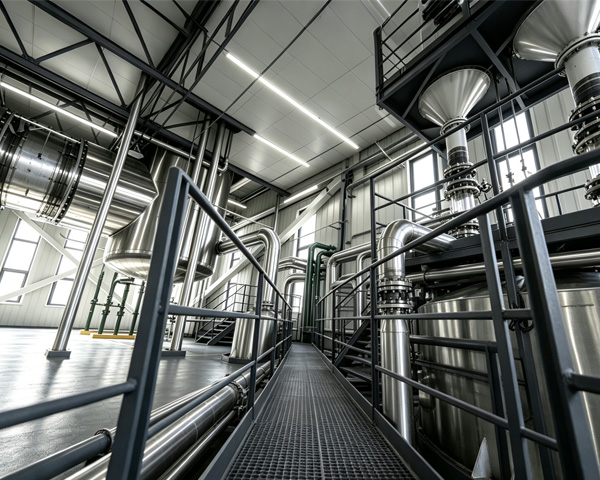
V. Core Equipment for Palm Oil Refining
Whichever process is chosen, palm oil refining requires a range of specialised equipment:
Degumming system: Degumming tank, phosphoric/citric acid dosing system – removes phospholipids and gums
Bleaching system: Bleaching tank, leaf filter, vacuum system – adsorbs pigments and impurities
Deodorisation system: Deodorisation tower, vacuum system, fatty acid trap – in physical refining, this stage also accomplishes deacidification
Auxiliary systems: Thermal oil heater, vacuum pumps, piping and valves, electrical control systems
For physical refining, the deodorisation tower must withstand higher temperatures and vacuum levels, requiring more demanding equipment materials and design.
Conclusion
Malaysian palm oil refineries’ preference for physical refining is no accident – higher oil yield, lower operating costs, reduced environmental burden, and the valuable PFAD by-product make it the superior choice for palm oil processing.
But physical refining is not a “one-size-fits-all” solution. For oils with high phospholipid content, crude oil with unstable quality, or smaller projects with limited capital, chemical refining still has its place.
Our palm oil refining equipment solutions cover both physical and chemical refining processes, tailored to your raw material quality, capacity targets, and budget – from degumming tanks, bleaching towers, and leaf filters to deodorisation towers and vacuum systems, covering the entire refining process.
Contact us today for a customised palm oil refining equipment solution and quotation!