
A Counterintuitive Physical Fact: Denser Material Lets Solvent Flow More Freely
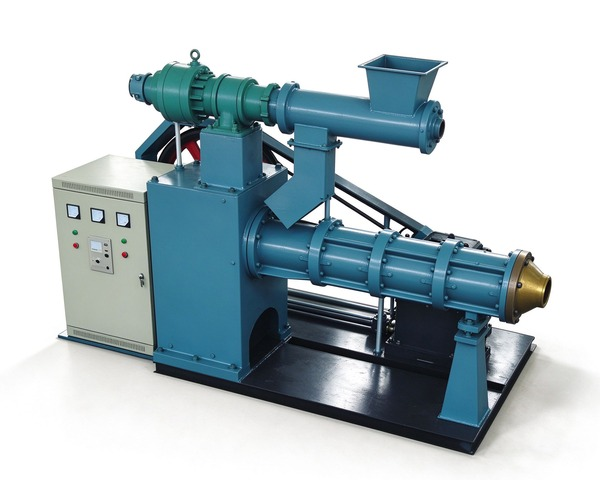
The oilseed expander (also called an extruder) is often misread as a “stronger extraction device” sitting in the extraction plant. Its actual function is to convert flaked material into dense, internally connected collets between the flaking stage and the extractor.
The numbers behind that transformation are specific: raw flakes have a bulk density of 0.32–0.40 g/cm³; finished collets reach 0.56 g/cm³. Extractor capacity rises by up to 50%. Solvent hold-up in marc drops by 40%, solvent content in miscella falls by 20%, and residual oil can go as low as 0.6%.
Intuitively, denser material should be harder to penetrate. But the density gain in expanded collets comes from packing efficiency between particles, not from densifying the interior of each particle. The collet itself is porous, with interconnected voids, so solvent moves freely both inside and between particles. Flakes offer a large surface area, but the gaps between flakes readily form channelling — solvent follows the path of least resistance through the bed, bypassing part of the material. The regular shape and internal porosity of expanded collets make bed permeability more uniform and reduce the dead zones where “solvent passes through but oil doesn’t come out.”
An expander does not change pressing intensity — it changes how solvent flows through the material. That distinction determines where the machine sits in the process chain, how it should be specified, and how the investment return should be calculated. KMEC has over two decades of experience configuring oilseed pretreatment and extraction equipment. The sections below examine the physical mechanism, the process sequence, the quantified impact, energy consumption and quality effects.
1. From Flake to Collet: Flaking Builds Surface Area, Expansion Builds Permeability
1.1 Flakers and Expanders Do Two Different Jobs
A flaker presses conditioned oilseed into thin flakes of 0.25–0.35 mm, with the goal of maximising surface area. An expander works in the opposite direction: a screw with steam injection heats, shears and compresses flaked or cracked material, forcing it through a die. As the material exits, the pressure drop causes injected moisture to flash, creating a pore network inside the particle; on cooling and solidifying, it becomes a porous collet.
1.2 An Expander Cannot Replace a Flaker
An expander needs flaked or at least cracked material as feed to form a uniform collet structure. Whole seeds fed directly into an expander will not produce a stable particle. The correct sequence is: conditioning → flaking → expansion → extraction. Skipping expansion is technically possible, but the cost is constrained extractor capacity and higher solvent consumption per tonne of seed. For extraction plants processing commodity oilseeds such as soybean, rapeseed and cottonseed and chasing extractor utilisation, the expansion stage usually pays back through capacity gain and solvent savings.
2. Quantified Impact: The Knock-On Effects on Capacity, Solvent Hold-Up and Residual Oil
2.1 Extractor Capacity: 50% More Material Through the Same Machine
With expanded material, the extractor can accept 50% more material at unchanged bed depth and residence time. For an existing extraction plant, adding an expander is equivalent to debottlenecking the extractor by 50% without replacing the extractor body. Early industrial practice recorded capacity gains of 50–100%, depending on feedstock and extractor type.
2.2 Solvent Hold-Up: Relief at Both Ends
A 40% reduction in solvent hold-up in marc directly lightens the desolventising load on the DTDC. A 20% reduction in solvent content in miscella means the evaporation and stripping systems carry a correspondingly lower load. Together, these two reductions cut steam consumption and cooling load across the solvent recovery system — and solvent recovery is one of the most energy-intensive parts of an extraction plant.
2.3 Residual Oil: 0.6%
Residual oil in expanded collets can reach as low as 0.6%, placing it in the good-performance band for solvent extraction. For processors targeting low residual oil and high-protein meal quality, this has direct economic value.
3. Revisiting Energy: The Expander Saves Power Downstream, Not Just at the Motor
3.1 Specific Energy of the Expander Is Far Below Screw Pressing
Patent literature gives a clear comparison: screw pressing to reduce oil content to 15–25% consumes 0.9–2.0 HpD/ton; a typical expander consumes only 0.2–0.5 HpD/ton. A 225 hp expander can reach a capacity of 450–1,125 tonnes/day, far above a screw press of the same power.
3.2 Why the Expander Uses Less Power
Material inside an expander stays at higher moisture, which lowers abrasiveness and reduces mechanical wear and power draw. The expander also uses a fixed die rather than an adjustable choke, making it less sensitive to feed variation and requiring less operator intervention. What belongs in the energy ledger is the downstream reduction in desolventising and solvent recovery load — a 40% cut in solvent in marc and a 20% cut in miscella typically save more steam and cooling load than the expander itself consumes. Anderson’s manual likewise states that the expander “reduces plant energy consumption and extractor load.”
4. Speed and Maintenance: High RPM Does Not Mean High Wear
4.1 Speed Range
Typical expander shaft speeds are 220–440 RPM, compared with 35–100 RPM for screw presses. The higher speed, combined with lower specific energy, lets a relatively low-cost expander achieve far higher throughput than a screw press of comparable cost. Speed is not the only variable, though: a twin-screw extruder achieved 98% oil extraction (residual oil below 3%) on sunflower seed at around 185 rpm, showing that screw configuration and operating conditions matter more than raw RPM alone.
4.2 Maintenance Priorities
The main wear parts are the screw, shear pins and barrel liners. Tramp metal and stones damage the screw and shear pins, so magnetic separation and destoning ahead of the feed are essential. Barrel liners must be replaced on a wear schedule; otherwise wear can progress from the liner to the barrel body itself, causing far greater downtime. When configuring an oil extruder machine, KMEC matches the upstream cleaning and magnetic separation capacity to the expander’s feed requirements and builds in replacement windows and spare-part plans for wear items.
5. Side Effects on Oil Quality: Phospholipids and Cottonseed Detoxification
5.1 Phospholipids: Higher Total Phosphorus, but More Hydratable and Easier to Degum
The thermal treatment in expansion deactivates phospholipase, reducing the formation of non-hydratable phospholipids. Soybean oil data show total phosphorus of 985 ppm in expanded crude oil versus 840 ppm in conventional crude oil — but the phospholipids in expanded oil are more hydratable. After degumming, phosphorus fell by 93.2% and 78.6%, respectively. For the refinery, this means lower degumming burden and acid consumption, not higher.
5.2 Cottonseed: Expander Extraction and Free Gossypol Control
Expansion has a documented detoxification effect on cottonseed meal. One study showed free gossypol in cottonseed meal falling from 1.24 g/kg to 0.40 g/kg — a reduction of about 68% — with expanded cottonseed meal usable at up to 10% in laying hen diets. For cottonseed, which carries antinutritional factors, expansion improves extraction efficiency and participates in meal detoxification, opening the meal to a wider ruminant and poultry feed market.
6. Selection and Configuration: From “Do We Need Expansion?” to “Where Does the Expander Sit?”
For a new extraction plant, the decision on the expansion stage should rest on extractor design capacity, target residual oil, feedstock type and meal market positioning. If the extractor was sized for unexpanded material, adding an expander can raise throughput by 50% without replacing it. If the target is low residual oil (0.6% level) or cottonseed meal detoxification, the value of the expansion stage goes beyond capacity alone.
For capacity expansion at an existing plant, the expander is often the most direct debottlenecking measure — it leaves the extractor body unchanged, does not add heat load to the solvent recovery system, and actually lightens the downstream burden by cutting solvent hold-up in marc and miscella. KMEC’s oilseed expander configurations determine screw geometry, steam injection rate and die configuration from the feedstock’s oil content, hull content and pretreatment conditions, and align capacity and material form with the upstream flaker machine and downstream solvent extraction plant — rather than specifying the expander as an isolated black box.
7. FAQ
Q1: Can an expander and a flaker replace each other?
No. They are sequential stages. A flaker presses oilseed into flakes of 0.25–0.35 mm to maximise surface area; an expander turns flaked material into porous collets, raising bulk density and permeability. The expander needs flaked or cracked feed; skipping flaking and feeding whole seed directly will not produce a uniform collet structure.
Q2: How much does an expander improve extraction efficiency?
Extractor capacity can rise by up to 50% at unchanged bed depth and residence time; solvent hold-up in marc drops by 40%, solvent content in miscella by 20%; residual oil can reach 0.6%. These effects come from the porous collet structure and higher bulk density, not from “stronger pressing.”
Q3: Does an expander raise or lower total plant energy consumption?
The expander’s own specific energy is low (0.2–0.5 HpD/ton), far below screw pressing (0.9–2.0 HpD/ton). More importantly, lower solvent hold-up in marc and miscella directly reduces steam and cooling load in the DTDC and solvent recovery system. The net effect on total energy is usually a reduction.
Q4: How does expansion affect crude oil quality?
The thermal treatment deactivates phospholipase and reduces non-hydratable phospholipids. Total phosphorus in crude oil may be slightly higher (985 ppm vs 840 ppm), but the phospholipids are more hydratable and degumming removes more of them (93.2% vs 78.6% reduction). For cottonseed, expansion reduces free gossypol in meal from about 1.24 g/kg to 0.40 g/kg.
Q5: Which feedstocks suit an expander?
Soybean, rapeseed, cottonseed, sunflower, rice bran and pre-pressed cake all suit expansion. For low-oil feedstocks (soybean, rice bran), expansion directly improves extraction efficiency; for high-oil feedstocks (cottonseed, sunflower), expansion re-forms pre-pressed cake and restores its permeability. Feedstocks above roughly 30% oil content usually go through screw pressing first to bring oil down to 15–25% before entering the expander.
Q6: What are the maintenance priorities for an expander?
Wear parts include the screw, shear pins and barrel liners. Magnetic separation and destoning ahead of the feed are basic protection against tramp metal damaging the screw. Liners must be replaced on a wear schedule to prevent wear progressing to the barrel body. Confirm spare-part availability and replacement windows at the selection stage.
References
- Anderson International Corp., Solvex Expander brochure, 2024 — raw flakes 0.32–0.40 g/cm³, finished collet 0.56 g/cm³; up to 50% extractor capacity increase; 40% reduction in solvent hold-up in marc; 20% reduction in miscella; residual oil as low as 0.6%.
- US Patent 4,901,635, Apparatus and method for the continuous extrusion and partial deliquefaction of oleaginous materials — screw pressing 0.9–2.0 HpD/ton; extrusion 0.2–0.5 HpD/ton; expander shaft 220–440 RPM vs screw press 35–100 RPM; higher moisture reduces abrasiveness and wear.
- Zhang, F., Koseoglu, S.S. & Rhee, K.C., “Effects of expander process on the phospholipids in soybean oil,” Journal of the American Oil Chemists’ Society, 71(10), 1994 — expander-processed oil phosphorus 985 ppm vs conventional 840 ppm; phospholipids more hydratable; degumming reduced phosphorus by 93.2% and 78.6%, respectively.
- Expanded cottonseed meal free gossypol reduction — expanded process decreased free gossypol in cottonseed meal from 1.24 g/kg to 0.40 g/kg (about 68% reduction); ECSM usable at up to 10% in laying hen diets.
- Pragya India, “Expander vs Extruder: What’s the Difference in Oil Seed Processing,” 2026 — bulk density increase 40–50% (0.4–0.5 to 0.6–0.7 kg/L); solvent consumption reduced 15–25%; expander requires flaked or cracked feed.
- FAO AGRIS, “Twin-screw extruder for oil processing of sunflower seeds” — 185 rpm screw rotation speed, 98% oil extraction yield, residual oil below 3%.
- Oil Mill Equipment, Oil Extruder Machine product page — TXP series capacities; extruder disrupts cell structure and improves solvent permeability.
- Anderson International Corp., “The Keys to Proper Oilseed Extruder Maintenance,” 2024 — barrel liner wear can progress to barrel body if not replaced.
- Embrapa, Expander-extruder in soybean processing — porous collets do not restrict percolation as fragile flakes may; solvent drains more completely; less energy for desolventizing.
- Oil Processing Technology, “How an Oil Expander Works: Extrusion to Collets” — collets have higher bulk density, better permeability and drainage, more ruptured oil cells than raw flakes; raw flakes prone to channelling.
For oil extruder machine specification, oilseed expander configuration for new or existing extraction plants, or expansion-stage debottlenecking assessments, contact the KMEC engineering team.