
What Really Drives Argentina’s Crush: Not How Much Gets Planted, but How Flexibly Capacity Can Be Reallocated
Argentina’s oilseed crush debate usually starts with production figures. The 2026 data, though, points to something more fundamental: how flexibly the same crushing capacity can be redirected between sunflower and soybean as feedstock availability and margins shift. That flexibility is built into the equipment, not into the market.
In January 2026, Argentina’s sunflower crush jumped 78% year on year to 323,000 tonnes, while soybean crush slid to 2.72 million tonnes, an 11-month low. From January through May, sunflower crush totaled 2.32 million tonnes, the highest for the period since 2000, pushing sunflower’s share of combined soy and sunflower crush to 12.9%, the highest since 2008. This is not a simple story of sunflower replacing soybean. It is the same installed capacity being redirected as the economics of each crop change.
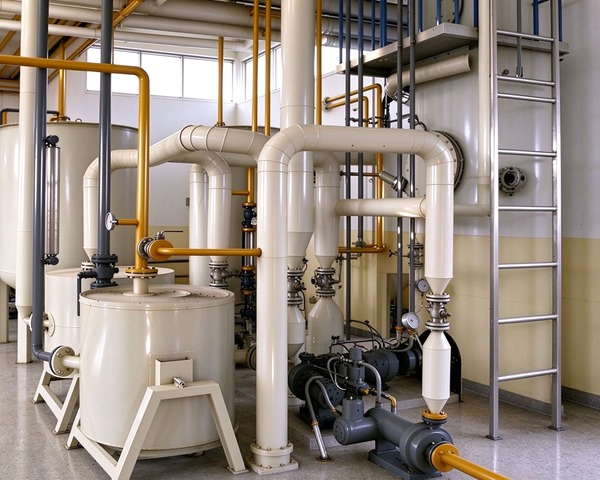
That redirection rests on equipment that can handle both oilseeds. LDC’s USD 400 million plant at Bahía Blanca shows what it looks like in practice: up to 4,000 tonnes a day of sunflower seed or soybeans, with preparation systems for cleaning, dehulling, conditioning and flaking, high-capacity presses, and high-efficiency solvent extraction. LDC describes the design goal as “year-round operational optimization, greater flexibility to process multiple crops.” The plant is neither a sunflower-only line nor a soybean-only line. It is a dual-feedstock platform, and that distinction drives almost every equipment decision downstream.
For equipment buyers, that distinction comes down to three choices:
- Line design: a sunflower-dedicated dehulling, pre-pressing and extraction line, or a soybean-led line flexible enough to run sunflower when margins justify it?
- Investment logic: does the case rest on closing a sunflower capacity gap, or on using soybean as base load with sunflower as margin upside?
- Equipment priorities: is the capital better spent on dehulling precision and hull-and-kernel separation, or on extractor turndown and energy control?
KMEC has more than two decades of experience configuring oilseed pretreatment, pressing and extraction equipment. The sections that follow cover market structure, the tax schedule that sets crush margins, the equipment implications of dual-feedstock operation, and a phased path for investment.
1. Market Structure: Sunflower Growth and Soybean Scale Are Different Opportunities
1.1 Sunflower: Record Output, Record Crush
USDA’s July 2026 update put Argentina’s 2025/26 sunflower crop at a record 7 million tonnes, with a national average yield of 2.3 t/ha, also a record. For 2026/27, USDA forecasts 6.8 million tonnes on 3.3 million hectares, with yields returning to a more normal 2.06 t/ha. Crush is forecast at 6 million tonnes, sunflower oil output at 2.53 million tonnes, and exports at 2 million tonnes.
The drop from 2.3 to 2.06 t/ha does not reverse the direction of growth, but it does mean the equipment has to absorb year-to-year variation in feedstock. A line sized for 2.3 t/ha runs below capacity in a weaker year; a line sized too conservatively sits idle in a bumper crop.
1.2 Soybean: The Base Load That Keeps the Plant Running
Soybean is still the base load for Argentine crushing capacity. USDA forecasts 2026/27 soybean crush at 44.8 million tonnes, the second-highest on record, with 34 million tonnes of meal output and 30.5 million tonnes of exports. That gap between sunflower crush (6 Mt) and soybean crush (44.8 Mt) is what defines the dual-feedstock design logic: soybean sets the utilization floor, and sunflower provides the margin upside. A dedicated sunflower line risks running well below capacity whenever feedstock tightens or margins compress. A soybean-based line with sunflower capability can move between the two as crush economics dictate.
1.3 Capacity Concentration: The Rosario Hub Holds About 80%
Argentine crush capacity is highly concentrated: the Greater Rosario region accounts for roughly 80% of national oilseed crush capacity, led by Molinos Agro (San Lorenzo, 20,000 t/d), COFCO (Timbúes and Puerto San Martín, more than 16,000 t/d combined) and Bunge (Puerto San Martín, 8,000 t/d). For a new entrant, the benchmark is not the industry average but the scale efficiency and logistics cost of the Rosario hub. LDC’s choice of Bahía Blanca is itself a differentiation play: it sits close to sunflower-growing areas, has deep-water port access, and adds dual-feedstock capability as a hedge against single-crop feedstock risk.
2. Export Taxes: Policy Tailwinds Are Narrowing, Not Disappearing
2.1 The June 2026 Rate Cut and the Path Through 2028
Argentina’s Decree 423/2026, in force since 4 June 2026, sets a permanent export-tax structure for soybeans and by-products. Through the end of 2026, soybeans are taxed at 24.00% and soybean meal and oil at 22.50%, holding the gap between raw and processed exports at 1.5 percentage points. The decree then cuts rates on a monthly schedule through 2028: by December 2028 soybeans fall to 15.00% and by-products to 14.00%, narrowing the gap to 1.0 percentage point.
For a crusher, the direction of travel matters more than today’s rate. The 1.5-point differential that has long pulled investment into Argentine crushing is scheduled to shrink to 1.0 point by the end of 2028. As that policy cushion narrows, margins depend less on the tax code and more on equipment efficiency: energy per tonne, oil recovery and downtime.
2.2 Sunflower Margins: A Real but Cyclical Premium
The case for sunflower is not only about policy. It is about margin. Industry estimates for 2026 put sunflower crush returns at up to EUR 165–170 per tonne, “substantially above typical soybean margins,” and high enough to push sunflower lines toward full utilization. A separate estimate puts processing margins at USD 100–180/t.
That premium, however, is cyclical rather than structural. It rests on tight global sunflower supply and strong EU import demand, and either can soften if Black Sea supply recovers. A sunflower-only business case that assumes EUR 165–170/t margins will last indefinitely is exposed to a sharp reversal. Dual-feedstock capability turns that exposure into an operating option: when sunflower margins compress, the plant switches to soybean and keeps the capacity running.
3. Equipment: What Dual-Feedstock Operation Really Requires
3.1 Sunflower: Dehulling Is the First Capacity Constraint
Hull makes up 24–28% of sunflower seed weight, depending on variety and origin. Poor dehulling sends hull into the press and the extractor, where it absorbs oil, raises meal fiber and cuts extraction efficiency. The operating target is hull content in the kernel below 10%, with as little kernel loss as possible in the hull stream.
Oil content in Argentine sunflower varies widely by hybrid. Breeding programs target oil content above 42% for the premium market, and tested hybrids range from 41.7% to 56.9%. Equipment cannot be configured around a single “Argentine oil content”; pre-pressing and extraction parameters have to be set against the varieties actually being crushed.
On a pre-pressing plus solvent extraction route, the pre-press takes cake residual oil down to 15–20%, and extraction then brings it to 0.5–1.1%, typically under 1% with good pretreatment. LDC’s equipment list treats conditioning and flaking as separate systems from pressing and extraction, which suggests that at high capacity, thermal treatment and flake thickness control matter as much as the press itself.
3.2 Soybean: The Extraction Line’s Turndown Defines the Base Load
Soybean crushing puts the constraint on pretreatment precision and extractor turndown rather than on dehulling. Flake thickness directly affects extraction rate and solvent consumption. A pretreatment package that holds flake thickness and conditioning temperature lets the plant raise throughput without enlarging the extractor. Where dehulling capacity already exists, running it reduces meal fiber and raises protein concentration, which captures premiums in export markets.
3.3 Switching Feedstock: Four Engineering Decisions
LDC’s stated goal, “flexibility to process multiple crops,” turns into specific equipment choices. The four points below are engineering practice for multi-seed crushing lines, not LDC’s proprietary specifications.
First, the dehulling line has to be bypassable. Sunflower needs efficient hull-and-kernel separation; soybean can skip dehulling and go straight to flaking. On a dual-feedstock plant the dehulling module must be isolatable, so that soybean runs do not send material through equipment that adds only wear and losses. The 4,000 t/d nameplate covers both feedstocks, but the dehulling circuit is the first unit that has to change over.
Second, the pre-press needs a variable compression ratio. Sunflower kernel carries more oil and behaves differently in the press than soybean. A screw press set up for soybean can slip, or leave high residual oil, on sunflower. The specification should allow screw geometry or compression ratio to be adjusted when the feedstock changes.
Third, the extractor has to perform across two operating windows. Sunflower cake and soybean flakes differ in bulk density, permeability and solvent retention. Between feedstocks, the extractor’s solvent ratio, residence time and temperature window have to be reset, not simply fine-tuned. LDC’s choice of “high-efficiency solvent extraction” points to an extractor built for that turndown rather than one optimized for a single seed.
Fourth, the thermal energy strategy is tied to the feedstock. LDC’s plant runs its thermal load entirely on renewable biomass (sunflower husks) to cut energy cost and operational carbon. In sunflower mode the hull stream is the fuel; in soybean mode the plant draws on stored hull or an alternative fuel. The utilities design has to handle both.
For anyone buying a sunflower crushing plant Argentina, dual-feedstock capability is not an optional extra. It is the operating hedge that protects the business case when sunflower margins compress or feedstock tightens. KMEC’s sunflower oil processing plant and soybean oil extraction plant packages set dehulling, pre-pressing and extraction parameters per feedstock, and reserve bypass and changeover interfaces at the layout stage instead of forcing both seeds through one fixed parameter set.
4. Phased Investment: Soybean Base Load First, Sunflower Module Second
4.1 Phase One: Soybean Extraction as the Cash-Flow Foundation
For a greenfield project, Phase One should be soybean-based. Soybean supply is large, extraction technology is mature, and meal and oil export channels already exist. The equipment scope centers on a soybean oil extraction plant: cleaning, cracking, flaking, extraction and DTDC, with space and utility connections reserved for a sunflower dehulling and pre-pressing module later. The case for this phase is not “going into sunflower” but building the base load and proving out feedstock logistics, port access and export channels.
4.2 Phase Two: Adding the Sunflower Dehulling–Pre-Pressing Module
Once cash flow is positive and feedstock supply is steady, add the sunflower dehulling line and pre-pressing module. Dehulling capacity should run slightly ahead of pre-press capacity to absorb variation in hull content, and screw geometry should be specified for sunflower kernel’s oil content and fiber profile. The existing extractor is reused, but its solvent ratio and residence time have to be re-verified for sunflower cake.
Returns in this phase come from the combination of sunflower’s margin premium and the soybean base load, not from sunflower alone. LDC’s Bahía Blanca plant, announced in June 2026 with construction starting by year-end, shows the time horizon involved: a dual-feedstock platform is judged over a full crop cycle, not a single season.
4.3 Phase Three: Refining and Dewaxing for Export
If the target market is sunflower oil export, and India is the main destination at 467,000 tonnes in January–May 2026, refining and dewaxing capacity becomes necessary. Sunflower oil carries more wax than soybean oil, and incomplete dewaxing causes cloudiness at low temperatures and fails export quality checks. The edible oil refining equipment scope should include dewaxing as a standard module on the sunflower line, with bleaching and deodorization conditions set separately for sunflower and soybean rather than forced into one parameter set.
5. FAQ
Q1: Is there still room to expand sunflower crush capacity in Argentina?
Yes, but most of the growth is coming from new dual-feedstock projects. Sunflower crush hit 2.32 Mt in January–May 2026, the highest since 2000, while soybean crush dropped to an 11-month low in January. That pattern suggests existing capacity is being redirected rather than newly built. LDC’s 4,000 t/d plant at Bahía Blanca is a genuine capacity addition, with construction due to start by the end of 2026.
Q2: Why does dual-feedstock capability matter for an Argentine crush project?
Because the sunflower and soybean cycles, and their margin windows, do not line up. In 2026, sunflower crush surged while soybean crush fell on tight supply. A dedicated sunflower line has no exit when feedstock tightens or margins compress; a dual-feedstock line can move between the two and keep capacity utilized.
Q3: What is the current export tax on Argentine soybeans and by-products?
As of 4 June 2026, soybeans are taxed at 24.00% and soybean by-products (meal and oil) at 22.50%, a gap of 1.5 percentage points. The decree schedules steady reductions through December 2028, when soybeans reach 15.00% and by-products 14.00%, narrowing that gap to 1.0 point.
Q4: How large is the sunflower crush margin premium over soybean?
Industry estimates for 2026 put sunflower crush returns at EUR 165–170/t, well above typical soybean margins. A separate estimate gives a USD 100–180/t range for processing margins. The premium is real but cyclical: it depends on tight global sunflower supply and EU demand, and either can soften.
Q5: Can sunflower and soybean dehulling equipment be shared?
Not directly. Sunflower dehulling is a core process that needs efficient hull-and-kernel separation (hull content in the kernel below 10%); soybean dehulling is optional and turns on protein premiums. A dual-feedstock plant should design the dehulling line as a bypassable module that is isolated during soybean runs instead of being forced through one parameter set.
Q6: What are the three highest-priority equipment decisions for a dual-feedstock Argentine plant?
First, dehulling-line bypass capability, which decides whether soybean runs avoid unnecessary wear and losses. Second, pre-press compression-ratio flexibility, because sunflower kernel and soybean need different screw geometry. Third, extractor turndown across two solvent-ratio and residence-time windows. All three are locked in at the layout and specification stage and cannot be retrofitted economically after commissioning.
References
[1] USDA FAS / CropGPT / Tridge, Argentina oilseed crush and sunflower export data, 2026 — January 2026 sunflower crush 323,000 t, +78% y/y; soybean crush 2.72 Mt, 11-month low; Jan–May sunflower crush 2.32 Mt, highest since 2000; sunflower share of combined crush 12.9%, highest since 2008; 2026/27 soybean crush 44.8 Mt, second-highest on record; sunflower processing margins USD 100–180/t.
[2] EFISC-GTP / oilseed pretreatment references — sunflower hull 24–28% of seed weight; ideal dehulling target kernel hull content below 10%; insufficient dehulling starves pre-press, excessive dehulling creates fines that worsen cake permeability.
[3] USDA FAS, Argentina: Oilseeds and Products Update, July 2026 — 2025/26 sunflower production record 7 MMT, yield 2.3 t/ha; 2026/27 production 6.8 MMT, area 3.3 MHA, yield 2.06 t/ha; Greater Rosario ~80% of national crush capacity; head operators Molinos Agro 20,000 t/d, COFCO >16,000 t/d combined, Bunge 8,000 t/d.
[4] GAFTA Circular GN/2026/100, “Argentina announces export tax reductions for agri products from 4th June,” 3 June 2026 — Decree 423/2026; soybeans 24.00%, by-products 22.50% through end-2026; gradual monthly reduction 2027–2028 to soybeans 15.00% and by-products 14.00% by December 2028.
[5] CMB News / Commodity Board, “Argentina sunflower seeds: expanding acreage, tight stocks and strong crush margins,” April 2026 — sunflower crush returns up to EUR 165–170/t, substantially above typical soybean margins; domestic seed prices above EUR 370–380/t for June–August delivery.
[6] Tridge Insights, “Louis Dreyfus Company Advances $400 Million Sunflower and Soybean Processing Plant in Argentina,” July 2026 — USD 400 million investment; construction scheduled to begin end-2026; daily grinding capacity up to 4,000 t; plant does not qualify for Argentina’s large-investment incentive regime.
[7] LDC Press Release, “LDC to Build New Sunflower & Soy Processing Plant in Bahía Blanca, Argentina,” 8 June 2026 — USD 400 million; up to 4,000 t/day sunflower seeds or soybeans; preparation systems for cleaning, dehulling, conditioning and flaking; high-capacity presses; high-efficiency solvent extraction; thermal energy fully from renewable biomass (sunflower husks); “year-round operational optimization, greater flexibility to process multiple crops.”