
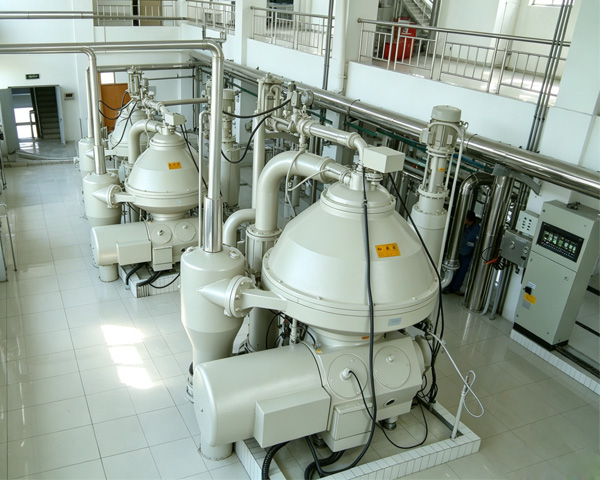
The edible oil obtained during pressing or solvent extraction is usually called crude edible oil (commonly known as “crude oil”). Many people ask: Why can’t crude edible oil be eaten directly?
The answer is that, apart from fatty acid glycerides (neutral oil), crude oil contains various “impurities” that are harmful to human health or affect storage quality. These impurities can be divided into three categories:
– Mechanical impurities: such as cake residues, sand, metal powder, etc.
– Fat‑soluble impurities: such as free fatty acids, pigments, waxes, sterols, etc.
– Water‑soluble impurities: such as phospholipids, proteins, sugars, etc.
These impurities cause crude oil to have a dark colour, be prone to oxidation and rancidity, smoke and foam when heated, and even affect digestion and absorption. Therefore, crude edible oil must undergo impurity removal and refining before it can become clear, stable, and safe finished oil.
So, how are impurities removed? There are four main methods: settling, filtration, centrifugation, and deep refining (degumming, deacidification, bleaching, deodorization). This article explains each of them.
I. Settling: The Simplest Natural Separation
Settling uses the density difference between impurities and oil to allow suspended impurities to sink under natural static conditions, achieving solid‑liquid separation. The equipment used is simple, but the settling time is long and efficiency is low. It is rarely used alone in actual production and is usually only a pre‑treatment step.
II. Filtration: Using a Medium to Trap Impurities
Filtration uses gravity, pressure, vacuum or centrifugal force, together with filter cloth or mesh at a certain temperature, to separate solid impurities from oil. Common filtration equipment includes plate‑and‑frame filters and leaf filters. Filtration is suitable for removing mechanical impurities and part of the colloidal substances from crude oil. It is simple to operate and is a common primary purification step before oil refining.
III. Centrifugation: Efficient and Continuous Separation
Centrifugation uses centrifugal force to accelerate the settling or filtration of oil residues. It offers good separation effect, continuous production, and high processing capacity. Common centrifuge separators include disc stack centrifuges and horizontal decanter centrifuges. This method is particularly suitable for removing moisture and fine suspended impurities from crude oil and is widely used in large‑scale oil refining workshops.
IV. Refining: The Core to Obtain High‑Quality Finished Oil
After the preliminary treatments described above, the crude oil still contains free fatty acids, pigments, gums, and odorous substances. It must undergo deep refining in an edible oil refining machine. Refining usually includes four main processes: degumming, deacidification, bleaching, and deodorization.
1. Degumming
Degumming is the process of removing colloidal substances such as phospholipids from crude oil. Gums reduce the stability and flavour of the oil and can form char during subsequent deodorization. The common method is water degumming: hot water or dilute acid is added to the crude oil, causing the phospholipids to hydrate, swell, agglomerate and precipitate, which are then removed by centrifugation. The core equipment for degumming is the degumming tank and centrifuge separator.
2. Deacidification
Crude oil usually contains a certain amount of free fatty acids. Removing free fatty acids is called deacidification. Common deacidification methods include alkali refining, distillation, and solvent extraction. Among them, alkali refining (adding alkali to neutralise free fatty acids) is the most widely used and is suitable for most vegetable oils; distillation (physical refining) is suitable for high‑acid value oils such as palm oil. Deacidification equipment mainly includes alkali refining kettles or deacidification towers.
3. Bleaching
Bleaching aims to remove pigments (e.g., chlorophyll, carotenoids) and other residual impurities from the oil, making the oil colour lighter and improving quality. The most widely used method in industry is adsorption bleaching: the oil is mixed and heated with adsorbents (such as activated clay or activated carbon), and after pigment adsorption, the adsorbent is removed by filtration. The core equipment for bleaching is the bleaching tower (or bleaching tank) and a filter.
4. Deodorization
Deodorization is the final step of refining. It removes odour‑causing substances (such as aldehydes, ketones, free fatty acids, etc.) and also decomposes residual peroxides, improving the stability and sensory quality of the oil. The most widely used method is vacuum steam deodorization: under high temperature and high vacuum, live steam is passed through the oil, carrying away volatile odour components. The core equipment for deodorization is the deodorization tower (or deodorizer) and a vacuum system.
V. Complete Equipment List for an Edible Oil Refining Production Line
Based on the above processes, a complete edible oil refining production line typically includes the following equipment:
| Process | Equipment Name | Function |
| Filtration | Plate‑and‑frame filter / Leaf filter | Remove mechanical impurities |
| Centrifugation | Disc stack centrifuge separator | Remove moisture and fine suspended matter |
| Degumming | Degumming tank + centrifuge separator | Remove phospholipids and gums |
| Deacidification | Alkali refining kettle or deacidification tower | Remove free fatty acids |
| Bleaching | Bleaching tower + filter | Remove pigments and adsorbent |
| Deodorization | Deodorization tower + vacuum system | Remove odours and volatiles |
Back to the original question – Why can’t crude edible oil be eaten directly? Because it contains various impurities that not only affect flavour and storage but may also harm health. How are impurities removed? From simple settling and filtration, to efficient centrifugation, and then to deep refining including degumming, deacidification, bleaching, and deodorization – every step relies on professional edible oil refining equipment.
We provide customised solutions from filtration and centrifugation to complete refining production lines. Our engineers can configure the most efficient and economical refining process based on your raw material characteristics and capacity requirements. For more equipment details or a quotation, please feel free to contact us.