
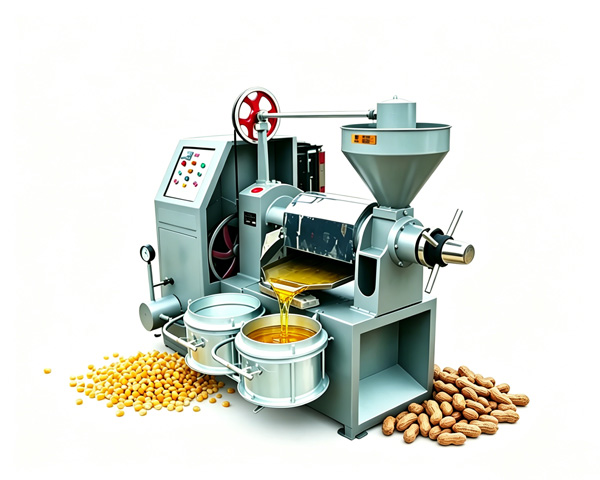
Peanut oil and corn oil are both popular vegetable oils on the market, each with its own unique health benefits and cooking characteristics. Peanut oil has a rich aroma and is high in monounsaturated fatty acids; corn oil has a light, neutral flavour and is rich in unsaturated fatty acids and vitamin E. So, what exactly is the difference between peanut oil and corn oil? Which one is better for you?
This article provides a comprehensive comparison from multiple perspectives including extraction processes, nutritional value, health benefits, side effects and uses, and also introduces the oil pressing equipment and refining equipment needed to produce these two oils.
I. Differences in Extraction Processes
1. Peanut Oil Extraction Process
The production of peanut oil is divided into unrefined oil and refined oil:
– Unrefined peanut oil: Obtained by pressing peanut kernels into cakes and then crushing them. This process retains the natural flavour of peanuts, but the oil contains more impurities and has a shorter shelf life.
– Refined peanut oil: After pressing, the crude oil is heated to a very high temperature (up to 232°C) and undergoes additional filtration, bleaching, deodorization and other steps, finally producing a golden‑yellow liquid with a light colour and mild aroma. This process requires pressing equipment, filtration equipment and refining equipment (degumming tank, deacidification tower, bleaching tower, deodorization tower, etc.).
2. Corn Oil Extraction Process
Corn oil refers specifically to corn germ oil. The first step in producing corn oil is to extract the corn germ from dried corn kernels, and then press oil from the germ. The germ is usually extracted by steam distillation or water extraction. The germ then undergoes solvent extraction (commonly using solvents such as hexane or chloroform) to obtain a higher proportion of oil.
The resulting crude corn oil needs to go through the following refining steps:
– Degumming: Treated with phosphoric acid or citric acid, then washed with water to remove free fatty acids and gums. The core equipment is the degumming tank.
– Neutralisation: Sodium hydroxide (caustic soda) is added to remove free fatty acids, then washed with water to remove soaps. The equipment used is an alkali refining kettle or neutralisation tank.
– Bleaching: Bleaching clay is added to adsorb pigments, giving the oil a light yellow colour. The equipment used is a bleaching tower and a filter.
Thus, corn oil is always refined oil, while peanut oil can be either unrefined (pressed) or refined.
II. Nutritional Value Comparison
| Nutritional components (per tablespoon, approx. 14g) | Peanut Oil | Corn Oil |
| Calories | About 120 kcal | About 119 kcal |
| Total fat | 14g (2g saturated fat) | 13.56g (1g saturated fat) |
| Cholestero | 0 | 0 |
| Vitamin E | Slightly higher | Slightly lower |
| Magnesium, potassium, zinc | Lower | Higher |
Both are good sources of vitamin E, niacin, folate, magnesium, potassium and zinc, but peanut oil contains slightly more vitamin E, while corn oil is richer in magnesium, potassium and zinc.
III. Differences in Health Benefits
1. Lowering Cholesterol
The monounsaturated fatty acids in peanut oil help increase “good cholesterol” (HDL) levels while lowering “bad cholesterol” (LDL). Corn oil also lowers LDL, especially when it replaces saturated or trans fats in the diet.
2. Beneficial for Heart Health
Peanuts are rich in polyphenol antioxidants such as resveratrol, which help fight free radicals and cardiovascular disease. One study showed that healthy women who consumed two tablespoons of peanut oil per day for four weeks reduced their risk of heart disease by as much as 30%.
3. Reducing Inflammation
Both oils have anti‑inflammatory effects. Their rich omega fatty acids help reduce systemic inflammation associated with conditions such as arthritis and asthma.
4. May Help Prevent Cancer
Antioxidants in peanut oil can neutralise free radicals, reduce cell damage, and may help prevent certain cancers (e.g., ovarian cancer). Corn oil also contains antioxidants and may offer similar benefits.
5. Beneficial for Skin Health
Peanut oil, rich in vitamin E, is often used in skincare products to moisturise, soften and smooth the skin. Corn oil can also improve symptoms of dry skin, including flaking and roughness.
6. May Aid Weight Loss
Palmitic acid in peanut oil may promote weight loss by increasing fat burning in the body during exercise. However, both oils are high in calories, so portion control is important during weight loss. The weight‑loss effect of corn oil remains controversial.
IV. Side Effects and Risks
– Allergies: Peanut allergy is relatively common and can be severe enough to cause anaphylactic shock; corn allergy is less common. People with allergies should avoid the respective oil.
– Calories and saturated fat: Overconsumption can lead to weight gain. Peanut oil is slightly higher in saturated fat, and excessive intake may increase the risk of heart disease.
V. Culinary Uses and Smoke Points
– Peanut oil: High smoke point (approx. 232°C), suitable for high‑temperature cooking such as deep‑frying.
– Corn oil: Lower smoke point, suitable for low‑temperature cooking such as baking, stir‑frying, making salad dressings or dips.
Both oils can be used as a substitute for butter (1 tablespoon oil = 1 tablespoon butter) to reduce saturated fat intake.
VI. Storage and Shelf Life
– Peanut oil: Can be stored in a cool, dark place for about 6 months.
– Corn oil: Under the same conditions, can be stored for about 1 year.
– Signs of spoilage: The oil becomes cloudy or develops an off‑odour – discard it.
VII. Market Preferences
According to 2016 data from the US National Oilseed Processors Association, peanut oil accounted for approximately 37% of total domestic vegetable oil sales in the United States, while corn oil accounted for only about 16%. Peanut oil is more popular, but corn oil consumption is growing as awareness of its health benefits increases.
VIII. Which One Will You Choose?
Peanut oil and corn oil have similar nutritional profiles. The main differences are:
– Peanut oil has slightly more vitamin E, slightly more saturated fat, a rich aroma, and is suitable for frying.
– Corn oil is richer in magnesium, potassium and zinc, has a light taste, and is suitable for low‑temperature cooking.
Both are high‑quality cooking oils. If you value high‑temperature cooking and a strong aroma, peanut oil is the better choice; if you prefer a mild flavour and want more minerals, corn oil is more suitable.
IX. What Equipment Is Needed to Produce These Two Oils?
Whether for peanut oil or corn oil, from raw material to finished oil, professional oil pressing equipment and refining equipment are essential. Below is a list of key equipment:
| Process | Equipment | Applicable Oil Type |
| Raw material pretreatment | Dehuller, cleaning screen, magnetic separator, destoner | Peanut, corn |
| Pressing | Screw oil press, hydraulic oil press | Peanut (pressing method) |
| Extraction | Extractor, solvent recovery system | Corn (solvent extraction method) |
| Degumming | Degumming tank, centrifuge separator | Both |
| Deacidification | Alkali refining kettle, deacidification tower | Both |
| Bleaching | Bleaching tower, filter (with bleaching clay) | Both |
| Deodorization | Deodorization tower, vacuum system | Both |
| Corn germ extraction | Steam distillation unit, water extraction equipment | Corn (specific) |
If you plan to set up a peanut oil mill or a corn (germ) oil plant, we can provide customised complete equipment solutions – from pressing/extraction to refining – based on your raw materials, capacity and process requirements.
Please feel free to contact us for professional technical support and equipment quotations.