
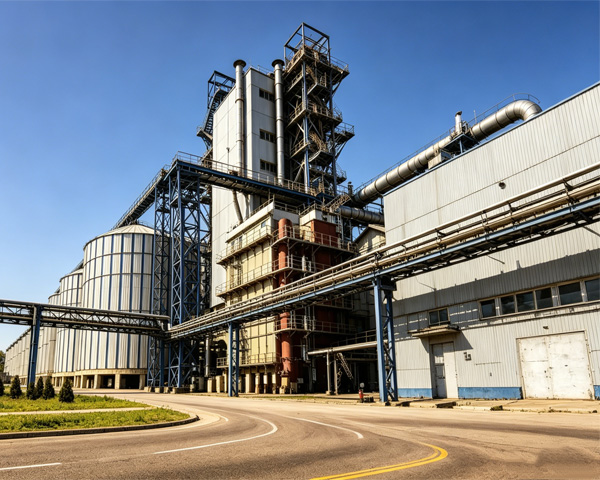
Nigeria is one of Africa’s largest economies. The edible oil sector is projected to reach $2.85 billion by 2025, growing at an 11.54% CAGR. In recent years, more and more investors have turned their attention to Nigeria’s soybean oil processing industry. However, turning an investment idea into a fully operational soybean oil production plant is far more complex than many expect.
Many clients initially believe that building a mill is simply a matter of “buying equipment + buying land.” But in reality, every step – raw material security, land acquisition, power supply, equipment compatibility, and customs clearance – can become a project‑stopping obstacle. This article provides a field‑based perspective on the five most overlooked issues when building a soybean oil processing plant in Nigeria.
1. Raw Material Supply: Where Does the Soybean Come From?
Nigeria’s soybean production has been growing steadily. According to USDA data, Nigeria’s soybean production for 2024/25 is estimated at 1.35 million tonnes, up 14% year‑on‑year, and projected to reach 1.50 million tonnes in 2025/26. Production is concentrated in agricultural states such as Kaduna and Benue in the north‑central region.
Why is this a potential problem?
If you plan to build a 50‑tonne‑per‑day soybean oil processing plant, relying solely on purchases from local farmers is likely to expose you to seasonal fluctuations and procurement challenges. Raw materials are abundant in peak season, but you could face “supply shortages” in the off‑season.
Practical recommendations:
– Sign contracts with local farmers: Establish stable supply relationships through cooperatives, but pay close attention to contract enforcement and advance payment risk.
– Import from neighbouring countries: Niger and Benin are also soybean‑producing regions. Overland transport distances are within 500 km, with freight costs of approximately USD 40–60 per tonne.
– Establish your own farm: An ideal option for long‑term, large‑scale planning. Land is typically leased from state governments for 25‑ to 50‑year terms.
Site selection insight: Locating near production areas but far from consumer markets increases finished oil transport costs. Conversely, locating near major cities like Lagos but far from production areas means competing for expensive raw materials. The optimal site is usually in the south‑central belt of Nigeria, balancing access to both sides.
2. Land and Power: The Invisible Infrastructure Trap
Land acquisition is not as simple as “buying a plot”
Nigeria’s land registration system is not uniform. Land purchase typically involves multiple rounds of negotiation with local chiefs and government officials. Incomplete paperwork can lead to project suspension or even land disputes. Make sure you secure legal land title in advance.
Power supply: less than 5 hours of grid power per day on average
This is the most easily overlooked “hidden killer.” Nigeria’s power grid is highly unreliable, with an average of less than 5 hours of supply per day. This means 95% of factories need backup generators. A single screw oil press line processing 50 tonnes of soybeans per day may require hundreds of thousands of dollars in additional investment just for power infrastructure.
Practical recommendations:
– Plan backup power solutions in advance (diesel generators, solar + storage, etc.).
– Conduct on‑site inspections of water and power availability in your target area before construction.
– Borehole water extraction + purification systems are standard for most factories.
3. Equipment Selection: Don’t Let “Unsuitability” Ruin Your Investment
This is the most critical and error‑prone step. Many investors focus only on price and ignore whether the equipment matches local conditions.
❌ Myth 1: Equipment parameters don’t match local soybeans
Chinese‑made screw oil presses are typically calibrated for Chinese soybeans. Nigerian soybeans often have higher moisture and impurity content, sometimes even mixed with wild or insect‑damaged seeds. Without adjustment, oil yield drops and equipment wear accelerates.
✅ Recommendation: Request test results using Nigerian soybean samples from your supplier, or send samples to the equipment manufacturer for actual testing.
❌ Myth 2: Blind pursuit of high capacity
One client imported an 80‑tonne‑per‑day system, only to find insufficient raw material supply and unstable power on arrival. The result: low utilisation and persistently high per‑unit energy costs.
✅ Recommendation: Choose medium‑capacity, scalable modular designs. Gradually expand production based on seasonal and market conditions – a much safer approach than trying to do everything at once.
❌ Myth 3: Ignoring voltage and spare parts compatibility
Nigeria uses a three‑phase 415V/50Hz power supply, while some equipment is designed for 380V. Although transformers can be used, they add risk. Also, can consumables like filters and seals be sourced locally?
✅ Recommendation: Request a complete spare parts list and replacement schedule from your supplier. Consider purchasing critical spare parts together with your equipment order.
4. Customs Clearance: Equipment Arrives at Port but Can’t Be Released?
Many first‑time investors overlook customs clearance. Equipment can sit at Lagos port for weeks or even months.
Key issues:
– Import duty exemptions: Some agricultural machinery can be imported duty‑free, but the process is complex. You must submit project documents and equipment lists to the Ministry of Agriculture. Budget at standard duty rates – if you qualify for exemption, treat it as a bonus.
– Clearance time: Typically 2–4 weeks. Missing documents or undervaluation can result in demurrage fees of USD 100+ per day.
– Required documents: Certificate of origin, commercial invoice, packing list (in English). Every package should have a unique numbered label.
✅ Recommendation: Engage an experienced local customs broker. Confirm delivery terms with your supplier before ordering, and consider using an all‑in‑one shipping service that covers all customs costs to save time and avoid surprises.
5. Regulatory Compliance and Localisation: The Invisible “Soft Costs”
– Company registration: Company registration in Nigeria typically takes 2–4 weeks. Registering as a limited liability company is recommended for easier bank account setup and compliance.
– Foreign exchange restrictions: US dollar shortages mean the central bank often limits fund transfers. Consider opening an offshore account under your project company for trade settlement.
– Local partners: Some states have unofficial “additional approvals” or “extra fees.” A local advisor or partner familiar with land, utilities, and customs procedures is invaluable.
How KMEC Can Help You
We are more than just a soybean oil processing equipment manufacturer – we provide end‑to‑end support from project planning to commissioning:
– ✅ Raw material testing: We can run actual pressing tests using your local soybean samples to ensure equipment parameters match.
– ✅ Customised equipment solutions: Based on your annual production targets, raw material supply plan, and budget, we recommend the best configuration – from small community oil mills producing a few hundred tonnes per year to industrial‑scale lines producing over 100 tonnes per day.
– ✅ Full‑service support: From equipment supply and installation to operator training, we dispatch engineers for on‑site guidance.
– ✅ Compliance assistance: We provide equipment lists, technical documents, and other materials to support your customs clearance and duty exemption applications.
Building a soybean oil processing plant in Nigeria is about much more than equipment selection. Raw material supply, land acquisition, power infrastructure, customs clearance, and local operations – every step can determine project success or failure. Successful investors are not those who focus solely on equipment price, but those who think through all the “hidden issues” before committing capital. If you are planning to invest in a soybean oil processing project in Nigeria, please contact us. We offer full‑service solutions from market research and equipment selection to installation