
Over 40 million tonnes of cottonseed are produced globally each year. After selling their cotton to ginneries, most cotton farmers either sell the cottonseed to feed mills at low prices or discard it as waste.
But here’s what you may not know: one tonne of cottonseed can yield approximately 150–170 kilograms of cottonseed oil. At current market prices, the value of this oil could be two to three times what you earn from selling the seed directly.
In other words: that pile of “byproduct” on your farm is actually overlooked wealth. You are just one set of oil press equipment away from a second income.
I. Why Is Cottonseed Worth Processing? Look at the Data
One tonne of cottonseed, after processing, can produce:
– Crude cottonseed oil: 150–170 kg – can be refined as edible oil or used as industrial material
– Cottonseed meal: 430–460 kg – high‑protein animal feed, suitable for cattle and poultry
– Cottonseed hulls: 250–280 kg – ruminant feed or fibre material
– Cotton linters: 60–90 kg – used in papermaking, cellulose, and other industries
The global cottonseed oil market is projected to grow from USD 3.39 billion in 2024 to USD 6.16 billion by 2032. Demand is rising, prices are increasing, and the raw material is already in your cotton fields.
II. From Cottonseed to Edible Oil: The Processing Flow and Equipment
Turning cottonseed into oil requires a series of steps, each needing the appropriate cottonseed oil processing equipment.
Step 1: Cleaning and Delinting
Freshly ginned cottonseed has short fibres (linters) attached to the surface that must be removed. A delinter separates these short fibres – which are themselves a valuable industrial raw material.
Step 2: Dehulling and Kernel Separation
Cottonseed has a hard outer hull. A disc sheller or roller crusher breaks the hull, and a kernel‑hull separator separates the kernels from the shells. The shells can be sold as feed material, while the kernels are the core for oil extraction. For large‑scale plants processing over 50 tonnes per day, two‑stage screening is usually required for complete separation.
Step 3: Softening and Flaking
The separated kernels are relatively hard and need to be conditioned in a conditioner to adjust moisture and temperature. They are then sent to a flaking mill to be pressed into thin flakes, which ruptures cell structures and increases surface area for the subsequent pressing stage.
Step 4: Cooking
The flaked material enters a cooker and is heated to approximately 120°C. Cooking further adjusts temperature and moisture, making the oil easier to extract, while also helping to reduce gossypol content – a compound that must be removed from cottonseed oil before it becomes safe for human consumption.
Step 5: Pressing
This is the core operation. The cooked material enters a screw oil expeller, which uses continuous rotation of a screw shaft to generate high pressure, squeezing the oil out of the cottonseed kernels. A cottonseed oil press can handle anywhere from a few dozen kilograms per hour to several tonnes per hour.
The oil obtained after pressing is “crude cottonseed oil” – dark in colour, containing impurities and gossypol, requiring further treatment before it can be consumed. The meal left after pressing (with residual oil of about 6%–7%) can be processed further.
Step 6: Filtration
The crude oil coming from the press contains solids and fine impurities and needs to be filtered through a plate‑and‑frame filter press or a leaf filter.
Step 7 (Optional): Solvent Extraction
For larger processing plants, the pressed meal still contains 6%–7% oil. To maximise oil yield, the meal can be sent to an extractor, where solvents like hexane “wash” out the remaining oil. After extraction, the residual oil in the meal can be reduced to below 1%. The extraction process requires supporting equipment such as an evaporator and a solvent recovery system to separate and recycle the solvent.
Step 8 (Optional): Refining
For crude cottonseed oil to become a cooking oil on supermarket shelves, it must go through refining equipment. Refining typically includes:
– Degumming: removes phospholipids and other gums (degumming tank)
– Deacidification: neutralises free fatty acids (alkali refining kettle)
– Bleaching: adsorbs pigments (bleaching tank, activated clay filter)
– Deodorisation: removes odours (deodorizer tower, vacuum system)
Refined cottonseed oil is clear, odourless, and ready for bottling and sale.
III. Pressing vs. Extraction: Which Process to Choose?
There are two main methods for cottonseed oil extraction: pre‑treatment pressing and solvent extraction.
Pressing is suitable for small to medium‑scale processing. Equipment includes cleaning machines, shellers, kernel‑hull separators, conditioners, flaking mills, cookers, screw oil presses, filters, and more. Investment is lower and operation is simpler, but the oil yield is relatively limited – pressed meal still contains 6%–7% residual oil.
Solvent extraction is suitable for large‑scale production. In addition to pressing equipment, it requires an extractor, evaporator, condenser, and solvent recovery system. Investment is higher, but residual oil in the meal can be reduced to below 1%, extracting nearly every drop of oil.
If your raw material volume is limited and your budget is tight, starting with the pressing method is a wise choice. If you have abundant raw materials and aim to maximise profits, the “pre‑pressing + solvent extraction” combination is recommended.
IV. How Much Investment Is Needed? How Soon Will It Pay Back?
A small‑scale cottonseed oil processing line (processing 1‑5 tonnes per day) typically requires an investment of USD 8,000–35,000. A medium‑sized plant (5‑20 tonnes per day) requires about USD 35,000–120,000.
Take a small plant processing 5 tonnes of cottonseed per day as an example:
– Daily cottonseed processed: 5 tonnes
– Daily crude cottonseed oil output: approximately 750–850 kg (based on 150–170 kg per tonne)
– Monthly revenue (25 days): substantial
– Plus income from byproducts such as cottonseed meal, hulls, and linters
Because cottonseed is a byproduct of the cotton industry, raw material costs are relatively low. Building a mill in a cotton‑growing region means raw materials are sourced nearby with low transport costs. Many small‑scale cottonseed oil mills recover their investment within 6 to 18 months.
V. Why Enter the Market Now?
The global cottonseed oil market is in a growth phase. Consumer demand for high‑smoke‑point, neutral‑flavour cooking oils is rising, and cottonseed oil fits these characteristics perfectly. At the same time, cottonseed oil applications in food processing, cosmetics, pharmaceuticals, and other industries are also expanding.
You don’t need to start growing cotton from scratch – you already have cotton. All you need is a set of cottonseed oil processing equipment to turn cottonseed from a “low‑value byproduct” into a “high‑value commodity.”
VI. How Can We Help You?
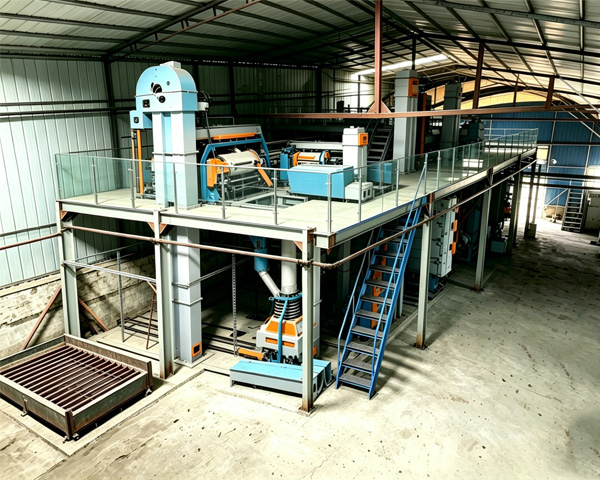
We provide complete equipment from a single screw oil press to a full cottonseed oil production line:
– Pretreatment equipment: Delinter, disc sheller, kernel‑hull separator, conditioner, flaking mill, cooker
– Pressing equipment: Various sizes of screw oil expellers and cottonseed oil presses
– Extraction equipment: Extractor, evaporator, condenser, solvent recovery system
– Refining equipment: Degumming tank, alkali refining kettle, bleaching tank, deodorizer tower, vacuum system
– Filtration equipment: Plate‑and‑frame filter press, leaf filter
Our engineers can tailor the most suitable equipment solution based on your cotton production volume, budget, and site conditions, and provide installation, commissioning, and operator training support.
Growing cotton and selling the fibre while selling cottonseed at low prices is what many cotton farmers have always done. But one tonne of cottonseed can yield 150–170 kg of oil – value far beyond what you might imagine.
You are truly just one set of oil press equipment away from a second income.
If you have a cotton farm, or have reliable access to cottonseed, please contact us. We will provide you with a free investment analysis and equipment proposal.
Contact us today – turn cottonseed from “waste” into “wealth”!