
“How much oil can 100 kilograms of soybeans produce?”
This is the first question every investor in soybean oil processing asks. The answer is not fixed – it depends on how you extract it.
For the same 100 kg of soybeans with 18% oil content, using pressing versus solvent extraction can result in a yield difference of over 30%. So what is the real gap? Let the data tell you the answer.
I. The Bottom Line: A Clear Data Comparison
For the same 100 kg of soybeans with 18% oil content:
| Process Method | Oil Output (kg) | Residual Oil in Meal | Oil Extraction Rate |
| Pressing only | Approx. 11–12 kg | Approx. 6%–7% | Approx. 65%–70% |
| Pressing + Solvent Extraction | Approx. 17–17.5 kg | Below 1% | Over 97% |
Difference: approximately 5 kg per 100 kg of soybeans
Converted to one tonne of soybeans: an extra 50 kg of oil. At market prices, this means hundreds of dollars of additional profit per tonne.
This is why almost all large-scale oil mills worldwide use the “pre-pressing + solvent extraction” combination process – not for complexity’s sake, but to extract every last drop of oil.
II. Why Such a Big Gap? Two Processes, Different Principles
Mechanical Pressing
Core equipment: screw oil press
Principle: Mechanical squeezing forces oil out of soybean cells.
This is a physical separation process. No matter how hard you squeeze, some oil remains trapped within the cell walls. That is why pressed meal still contains 6%–7% residual oil.
Solvent Extraction
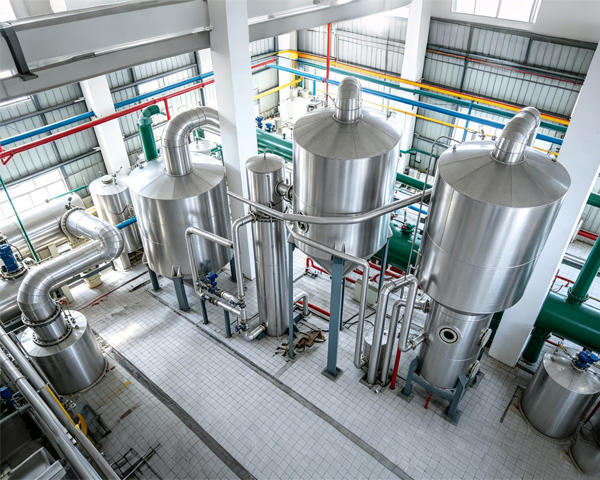
Core equipment: extractor, evaporator, solvent recovery system
Principle: Organic solvents like hexane dissolve the oil, penetrating microscopic pores that mechanical pressing cannot reach, then evaporation separates the solvent from the oil.
Because the solvent reaches places a press cannot, residual oil can be reduced to below 1%.
A simple analogy: Pressing is like wringing out a wet towel – no matter how hard you twist, it stays damp. Solvent extraction is like using detergent to wash the towel – it removes the stains (oil) trapped deep in the fabric.
III. Pretreatment: The “Hidden Driver” of Oil Yield
Beyond the extraction method itself, pretreatment has a huge impact on oil yield. Through a series of steps – cleaning (removing impurities), crushing (reducing particle size), flaking (increasing surface area), and cooking (adjusting moisture and temperature) – the soybean cell walls rupture, oil pathways open, and the material becomes porous and loose. When this pretreated material enters the screw oil press, oil flows out with much less resistance, and the pressing output can double compared to untreated material.
This is why large oil mills invest so much effort in their pretreatment lines – it directly determines the ceiling of the pressing stage.
IV. How to Choose the Right Solution for Your Needs?
| Scenario | Recommended Process | Expected Oil Yield | Investment Level |
| Home / Small workshop | Single screw oil press | Approx. 65%–70% | Low |
| Small to medium oil mill | Pretreatment + multiple presses | Approx. 75%–80% | Medium |
| Large industrial oil mill | Pretreatment + pre-pressing + solvent extraction | Over 97% | High |
V. How Our Equipment Can Help You Maximize Oil Yield
We provide complete solutions from a single screw oil press to a full soybean oil production equipment line:
– Pretreatment equipment: Cleaning screen, crusher, flaking mill, cooker
– Pressing equipment: Various sizes of screw oil expellers
– Extraction equipment: Extractor, evaporator, solvent recovery system
– Refining equipment: Degumming tank, deacidification tower, bleaching tank, deodorizer tower
How much difference is there between pressing and solvent extraction for soybean oil yield? The answer is – an extra 50 kg of oil per tonne of soybeans. The gap is not in the soybean variety, but in the choice of method and equipment.
If you are interested in specific equipment configuration solutions, please contact us. We will recommend the most suitable equipment plan based on your raw materials, capacity, and budget.
Contact us today – and make oil yield no longer a problem!