
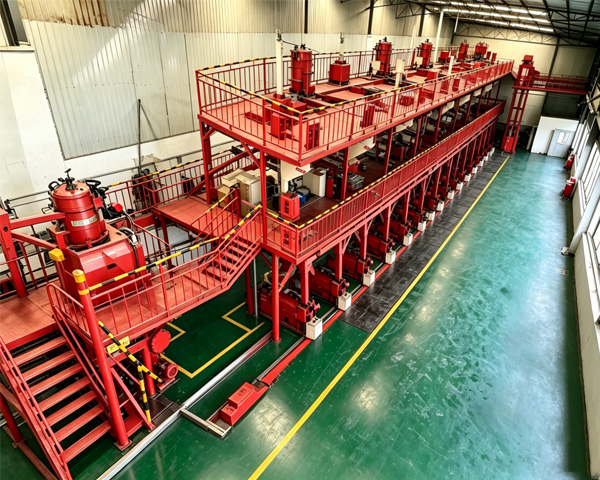
Sunflower oil is the fourth most consumed edible oil in the world, and market demand continues to grow. But many investors face a dilemma: pressing or solvent extraction? Which is better – a small workshop or a large plant? How much does equipment investment cost? How long to recover the investment?
Instead of boring process details, this article starts from investment decisions, comparing the costs, benefits, advantages and disadvantages of different options, to help you choose the most suitable sunflower oil processing equipment.
I. First, Understand the Fundamental Difference Between the Two Processes
| Comparison | Pressing Method | Solvent Extraction Method |
| Principle | Physical squeezing | Chemical solvent extraction |
| Oil yield | About 65% (6-7% residual oil in cake) | Up to 97%+ with pre‑pressing |
| Equipment investment | Low (a few thousand to tens of thousands USD) | High (tens of thousands to hundreds of thousands USD) |
| Raw material waste | Higher | Very low |
| Oil flavour | Retains natural aroma | Needs refining to restore | |
| Solvent required | No | Requires hexane and recovery system |
| Safety requirements | General | Requires explosion‑proof design and solvent recovery |
| Suitable scale | Small to medium | Large, or used together with pre‑pressing |
Conclusion: If you want simplicity, small output and natural flavour, choose pressing. If you pursue high raw material utilisation and industrial‑scale production, you must select the “pre‑pressing + solvent extraction” combination.
II. Comparison of Three Common Investment Options
Option A: Small Pressing Workshop (pressing only, no refining)
– Daily processing capacity: 0.5‑5 tonnes of sunflower seeds
– Core equipment: Cleaning screen + dehuller + flaking mill + cooker + screw oil press + plate‑and‑frame filter
– Oil yield: About 65%
– Equipment investment: Approximately US$5,000 – 30,000
– Plant area required: 100‑300 m²
– Labour: 2‑4 persons
– Power consumption: 10‑30 kWh
– Product: Pressed crude oil (contains impurities, gums, waxes, dark colour, short shelf life)
– Suitable for: Rural oil mills, small‑scale self‑production and self‑sales, direct supply to restaurants
Advantages: Low investment, simple operation, no chemical risk, rich oil aroma.
Disadvantages: Low oil yield, unstable crude oil quality, cannot enter supermarket channels.
Option B: Small Refining Workshop (pressing + simple refining + dewaxing)
– Daily processing capacity: 1‑10 tonnes of sunflower seeds
– Core equipment: Pressing line + batch refining tank (degumming, deacidification, water washing) + bleaching tank + deodorizer tank + dewaxing tank
– Oil yield: About 65% (pressing), refining loss about 5‑8%
– Equipment investment: Approximately US$30,000 – 150,000
– Plant area required: 300‑800 m²
– Labour: 4‑8 persons
– Product: Grade 1 sunflower oil, clear and transparent, ready for bottling and sale
– Suitable for: Regional edible oil brands, supermarket suppliers
Advantages: Oil meets national Grade 1 standard, can be branded, high profit margin.
Disadvantages: Medium investment, requires mastering refining technology.
Option C: Large Industrial Plant (pre‑pressing + solvent extraction + continuous refining + dewaxing)
– Daily processing capacity: 20‑200 tonnes of sunflower seeds
– Core equipment: Cleaning, dehulling, flaking, cooking, screw oil press (pre‑pressing), extractor, evaporator, solvent recovery system, continuous bleaching tower, continuous deodorizer tower, dewaxing crystalliser, automatic filling line
– Oil yield: Over 97% (pre‑pressing + extraction), refining loss about 5%
– Equipment investment: US$200,000 – 2,000,000+
– Plant area required: 2,000‑10,000 m²
– Labour: 20‑100 persons
– Product: High‑quality Grade 1 sunflower oil, high‑protein sunflower meal (animal feed)
– Suitable for: Large oil enterprises, exporters
Advantages: Extremely high raw material utilisation, lowest overall cost, suitable for export and international competition.
Disadvantages: Very large investment, requires professional operators, involves solvent safety regulation.
III. Key Investment Decision FAQs
Q1: I have limited capital. Where should I start?
Suggestion: Start with Option A (small pressing workshop) to gain experience and customers. Once you have stable sales, add a refining tank and dewaxing equipment to upgrade to Option B. Equipment can be purchased in stages.
Q2: Can pressed crude oil be sold directly?
Yes, but only to low‑end markets or for use in fried food factories. Crude oil is dark, contains sediment, and spoils easily. If you want to enter supermarkets or build a brand, you must refine and dewax.
Q3: Why is dewaxing necessary for sunflower oil?
Sunflower seeds contain high levels of wax (especially in the hull and seed coat). Wax crystallises at low temperatures, making the oil cloudy – consumers mistake this for spoilage. Dewaxing is an essential step in sunflower oil refining.
Q4: Is solvent extraction safe?
Yes, it is safe. Modern extraction equipment is equipped with solvent recovery systems and explosion‑proof design. Hexane is thoroughly recovered (residue levels are below national standards). Globally, 90% of soybean oil and rapeseed oil are produced using solvent extraction.
Q5: I have a limited budget but want to produce Grade 1 oil in one step. Is there a compromise?
Yes. You can buy a screw oil press + small continuous refining equipment (processing 1‑5 tonnes of oil per day). Investment is about US$50,000‑80,000, enabling you to produce Grade 1 sunflower oil, though the oil yield remains around 65%. This is suitable for medium‑budget customers.
IV. Estimated Payback Periods (Reference)
– Small pressing workshop (Option A): Total investment about US$15,000, processing 2 tonnes of sunflower seeds per day, producing about 1.3 tonnes of crude oil, daily profit about US$300‑500 → payback period 6‑12 months.
– Small refining workshop (Option B): Total investment about US$80,000, processing 5 tonnes of sunflower seeds per day, producing about 3 tonnes of refined oil, daily profit about US$800‑1,500 → payback period 12‑24 months.
– Large plant (Option C): Total investment US$2 million, processing 50 tonnes of sunflower seeds per day, solid overall profit → payback period 2‑3 years.
V. Our Services and Advantages
We provide customised solutions from a single screw oil press to a complete sunflower oil processing equipment line. Our advantages:
– ✅ Tailor‑made: Recommend the most economical configuration based on your budget, output target and oil quality requirements.
– ✅ Cost‑effective: For the same configuration, our prices are 30‑50% lower than European and American brands, with stable performance.
– ✅ One‑stop service: Provide equipment list, plant layout drawings, installation & commissioning, and operator training.
– ✅ Global service: Exported to more than 50 countries; we offer English documentation, remote support and local service.
There is no “best” solution for investing in sunflower oil processing – only the solution that suits you best. If you have limited capital and want a quick payback, start with a small pressing workshop. If you want to build a brand and retail, upgrade to pressing + refining + dewaxing. If you aim for high volume, export, or supply large food factories, you need a pre‑pressing + solvent extraction + continuous refining line.
Whatever stage you are at, we can match you with the most suitable sunflower oil processing equipment. Contact us for a free project assessment and quotation.
Enquire now and keep your investment on the right track!