
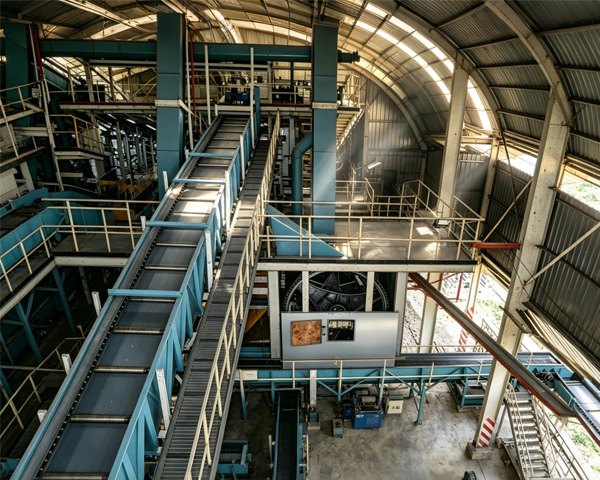
You’ve received the equipment quotation. You’ve calculated the land cost. You’ve added up the numbers and arrived at what you believe is your total investment.
Then construction begins. And the bills keep coming.
This is the reality for the majority of palm oil mill investors. According to a World Bank project review, one oil palm development project saw actual costs reach US$47.8 million, compared to an estimated US$22.5 million at appraisal—an increase of 114% —due largely to high inflation, land compensation costs, and an increase in mill size and capacity. Studies confirm that palm oil mill construction projects frequently face budget overruns due to high complexity, integrated technology systems, and large capital investment.
What caused this massive gap? The answer is simple: investors focused on the big-ticket items and ignored the hidden ones.
Here are the three most commonly overlooked costs that push palm oil mill budgets into the red—and how you can plan for them.
1. Site Preparation and Utilities: The Cost of “Making the Land Ready”
Many investors look at a piece of land and think: “I have the land. Now I just need to build.”
But raw land is not a ready-to-build site. The costs of turning land into a functional palm oil mill site can be staggering:
Land preparation —Site levelling, clearing, and soil compaction are essential before any construction can begin. For a palm oil mill, the site must be prepared for the FFB reception station, main process building, and sterilizer building. In some cases, land clearing and preparation alone have caused significant cost overruns.
Power infrastructure —Palm oil mills are energy-intensive operations. A mill processing 30 tons of fresh fruit bunches (FFB) per hour requires substantial electrical and steam capacity. If the site lacks existing power grid access, you’ll need to invest in transformers, switchgear, cabling—and possibly backup generators. In many regions, 95% of mills need standby generators because grid power is unreliable. This can add US$50,000 to US$200,000+ to your budget.
Water supply —Sterilization, clarification, and boiler operations all require large volumes of water. If municipal water is unavailable, you’ll need to drill boreholes and install water treatment systems. This is not a minor expense.
Access roads —Can heavy trucks carrying FFB and equipment reach your site? If not, you’ll need to build or upgrade roads.
Industry data shows that infrastructure and site costs typically account for 20%–30% of total palm oil mill investment. For a US$1 million project, that’s US$200,000–300,000—not a sum you want to discover halfway through construction.
The lesson: Before you sign a land deal, have a civil engineer assess the site. Factor in every utility connection. Don’t assume the land is “ready.”
2. Contingency Fund: The Money You Hope You’ll Never Use—But Absolutely Need
Every construction project encounters surprises. Delayed equipment shipments. Sudden material price hikes. Labour shortages. Design changes midway.
Palm oil mill construction is particularly vulnerable. One study identified “poor/inadequate planning and scheduling” as one of the most significant causes of delays and cost overruns. Another project experienced delays due to difficulties in acquiring land, lack of labour, and continuous shortages of building materials.
Yet many investors allocate zero dollars for contingencies.
According to industry experts, contingency should be at least 15% of total project cost. This covers:
- Basic contingency: Design changes, quantity adjustments, unexpected site conditions
- Price escalation contingency: Material and labour cost inflation during the construction period
In addition, compliance costs—environmental impact assessments, safety assessments, permits, and certifications—typically add 5%–15% to upfront costs. These are not optional expenses; they are legal requirements in most countries.
A real-world example: In Benin, a medium-sized palm oil mill (100 tons/day) requires approximately US$400,000–750,000 for environmental impact assessment, permit processing, and certification.
The lesson: Budget for the unexpected. A 15%–20% contingency fund is not “wasted money”—it’s insurance against project failure. Investors who skip this line item are playing a dangerous game.
3. Interest During Construction: The Silent Cost That Keeps Growing
This is the cost that almost nobody thinks about—yet it can be one of the largest.
If you’re financing your palm oil mill with a loan, the interest that accrues during the construction period must be paid. And it must be capitalised into your fixed asset cost.
How big can this be? In a major palm oil project, interest during construction amounted to US$58.6 million—a significant portion of the total financing. For a smaller mill, consider this scenario:
- Loan amount: US$1 million
- Interest rate: 8% per annum
- Construction period: 18 months
- Interest during construction: approximately US$120,000
That’s US$120,000 that many investors never included in their budget.
Here’s what makes it worse: Construction delays—which are common in palm oil mill projects—extend the interest-accrual period. Every month of delay adds more interest expense. A project that was supposed to take 12 months but takes 24 months can double your interest costs.
The lesson: If you’re using debt financing, calculate interest during construction and include it in your total investment budget. Build a realistic construction timeline—and then add buffer time. Don’t let your lender be the only one who remembers this cost.
The Bottom Line: Three Costs, One Rule
| Cost Category | Typical Range of Total Investment | Why It’s Overlooked |
|---|---|---|
| Site Preparation & Utilities | 20%–30% | Investors assume land is “ready to build” |
| Contingency Fund | 15% minimum | Viewed as “wasted money” rather than insurance |
| Interest During Construction | Varies by loan size and timeline | Not included in equipment-focused budgets |
These three costs can add 40%–60% to your initial estimate. A palm oil mill project that looks profitable on paper can become a financial burden if these costs are ignored.
How We Can Help You Build a Realistic Budget
We are not just a palm oil processing equipment manufacturer—we are a partner in your project’s success. With over a decade of industry experience, we help investors worldwide plan realistic budgets that account for every cost, not just the obvious ones.
Our services include:
- ✅ Comprehensive cost estimation: Beyond equipment pricing, we help you estimate site preparation, installation, utilities, and contingency
- ✅ Customised equipment solutions: From sterilizers and threshers to twin-screw palm oil presses and refining lines, we recommend the right capacity for your budget
- ✅ Factory layout design: We provide detailed plant layouts that minimise civil works waste and optimise space utilisation
- ✅ Installation and commissioning: Our engineers provide on-site guidance to ensure smooth startup
- ✅ Operator training: We train your team to operate and maintain your palm oil mill equipment efficiently
Contact us today for a free project cost consultation and equipment quotation. We’ll help you build a palm oil mill budget that includes all the costs—not just the ones you remember.
Don’t let hidden costs eat your profits. Plan ahead. Budget wisely. And start your palm oil business on solid ground.