
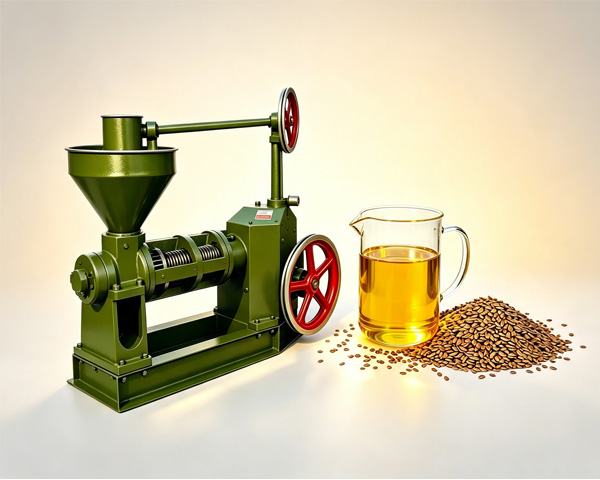
One tonne of flaxseed. One processor extracts 220kg of oil. Another extracts 400kg. That’s nearly double the output.
This isn’t about seed variety – it’s about process and equipment. Flaxseed typically contains 30%–45% oil, but actual yields range from 22%–28% for cold pressing to 35%–40% for hot pressing. Those extra kilograms of oil are pure profit.
So what determines this massive gap? Here are the 5 most critical details.
Detail 1: Seed Moisture Content – 7.8% Is the Sweet Spot
The moisture content of flaxseed directly determines whether oil can be effectively squeezed out.
If the seed is too wet, the oil simply won’t release from the cells. If it’s too dry, the seed burns or creates excessive friction – both of which hurt yield and quality.
The optimal moisture range is 6% to 10%. Industry experience shows that 7.8% moisture is an ideal starting target – the exact number varies slightly by flaxseed variety, but hitting this level puts you ahead of the game.
Recommended equipment: Seed dryer or moisture conditioner to adjust seed moisture before pressing.
Detail 2: Impurity Removal – Protecting Your Press Core
“Dirty flaxseed won’t produce clean oil” – this isn’t just about oil quality, it’s about yield.
Sand, stones, metal filings, and other impurities cause two problems if not thoroughly removed:
First, impurities accelerate wear on the oil press screw shaft and barrel. This wear gradually enlarges the press chamber gap, reducing pressure and allowing oil that should be extracted to remain in the meal. Every drop left behind is lost profit.
Second, impurities end up in the oil, compromising flavour and lowering its market value.
Recommended cleaning process:
- Multi-stage vibrating screen: Different mesh sizes to remove larger impurities
- Gravity destoner: Uses vibration and airflow to separate stones and clods
- Powerful magnetic separator: Removes metal fragments to protect your screw oil press
Detail 3: Pressing Temperature – The Cold vs Hot Press Divide
This is the most direct factor affecting oil yield.
Flaxseed oil extraction generally uses two methods: cold pressing and hot pressing.
| Pressing Method | Temperature Control | Typical Oil Yield | Oil Characteristics |
|---|---|---|---|
| Cold Press | Below 60°C | 22%–28% | Retains nutrients, high Omega-3, premium price |
| Hot Press | 65°C–100°C | 35%–40% | Darker colour, rich roasted aroma |
Hot pressing achieves higher yields because heat reduces oil viscosity, allowing it to flow more freely from the seed. The trade-off? Some heat-sensitive nutrients are lost.
How to choose:
- If your target is the premium cold-pressed market (health foods, high-end restaurants), choose a hydraulic oil press for low-temperature, slow pressing – strictly below 60°C
- If your target is high-volume production focused on yield and cost efficiency, choose a screw oil press with a drum seed roaster for hot pressing at 65°C–100°C
This is a strategic choice: volume or quality?
Detail 4: Fine-Tuning Your Press – Pressure Determines Yield
Buying a good oil press doesn’t automatically give you maximum yield.
Adjusting the gap between the screw shaft and the barrel increases pressure and squeezes out more oil. But careful adjustment is critical – over-tightening can damage the motor.
Different oil pressing equipment suits different applications:
- Screw oil press: Ideal for continuous high-volume production – high yield, high automation
- Hydraulic oil press: Excels at cold pressing with precise temperature control – ideal for premium cold-pressed oils
For high-yield hot pressing, the screw oil press is the more efficient choice. For premium cold-pressed oils, the hydraulic oil press is better suited. Whichever you choose, fine-tuned machine adjustment is essential for achieving maximum yield.
Detail 5: Equipment Maintenance – Lubrication Check Every 50 Operating Hours
This is the most overlooked factor – yet it has the biggest long-term impact on yield.
The golden rule: follow a strict maintenance schedule. Don’t wait for breakdowns.
Producers who consistently achieve high yields follow these practices:
- Daily cleaning: Remove residue to prevent buildup that reduces pressing efficiency
- Lubrication check every 50 operating hours – this simple habit prevents wear and keeps your oil press running at peak efficiency for years
- Annual oil change
A well-maintained screw oil press can operate at 0.94–0.96 efficiency. A neglected machine loses yield year after year – and every percentage point lost is profit gone.
The Economics: What the Yield Gap Means for Your Bottom Line
Take one tonne of flaxseed as an example:
| Process Level | Oil Yield | Oil Output | Value Difference (estimated at market prices) |
|---|---|---|---|
| Basic process | 22% | 220kg | Baseline |
| Optimised process | 40% | 400kg | Extra 180kg of oil value |
This 180kg difference isn’t about the seed – it’s about the combined impact of process, equipment, operation, and maintenance.
Conclusion
22% vs 40% oil yield from the same flaxseed – the difference is in the details.
From controlling seed moisture (7.8% is the sweet spot), to thorough impurity removal (protecting your press core), to the strategic choice between cold and hot pressing, to fine-tuning your press (pressure determines yield), to regular maintenance (lubrication every 50 hours) – every detail deserves attention.
If you’re planning a flaxseed oil production line, or looking to improve the yield of your existing line, we can provide complete equipment solutions – from seed roasters, screw oil presses, and hydraulic oil presses to filtration equipment and refining systems – tailored to your production goals and oil quality targets.
Contact us today – make every flaxseed count.