
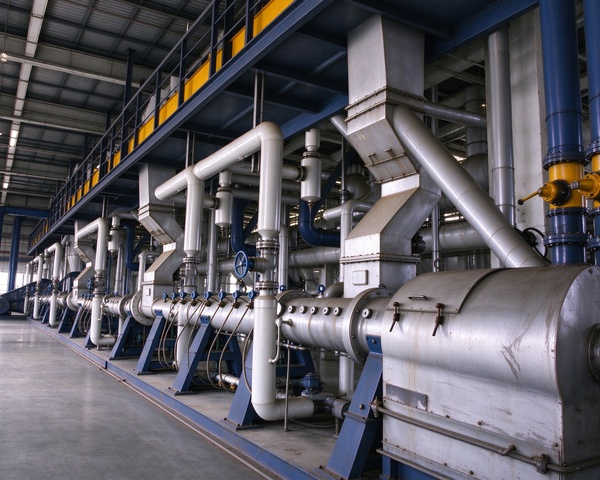
In an oil processing plant, one variable is often overlooked but directly affects oil yield, oil quality, and equipment life: the moisture content of the oilseed.
Too much moisture and the oil can’t flow freely during pressing, driving up residual oil in the cake. Too little moisture and the seed becomes brittle, creating excessive fines that block solvent channels and reduce extraction efficiency. Drying isn’t optional – it’s the critical control point between pretreatment and extraction.
This article covers the optimal moisture windows for different oilseeds, the measurable impact of drying on extraction efficiency, and how flat plate dryers achieve precise moisture control.
I. How Does Moisture Affect Oil Yield? – An Underestimated Variable
Moisture in oilseeds directly influences their mechanical strength and compressibility. Research shows that moisture content is the single most significant factor affecting oil expression.
When moisture is too high:
The seed material becomes plasticised – too soft to build enough friction and compression inside the press chamber. Oil can’t be effectively expelled, so residual oil in the cake rises and yield drops.
When moisture is too low:
Over-dried oilseeds turn brittle and fracture during pressing, generating excessive fines. These fines clog the press cage openings, restrict oil flow, and accelerate equipment wear.
There is an optimal window. Every oilseed has a specific moisture range that delivers maximum oil yield. That window changes with seed type.
II. Optimal Moisture Windows for Different Oilseeds
Sunflower Seed: 6% Is the Critical Point
Multiple studies consistently show that sunflower seed reaches maximum oil yield at 6% moisture content. A mathematical modelling study of sunflower oil expellers found that maximum oil recovery was obtained at 6% seed moisture for all seed types. For whole seed, optimal results came at 6% moisture and 80 MPa pressure. Preheating the seed improved oil recovery at higher moisture levels.
Soybean: 13.4% for Solvent Extraction, 8–9% for Flaking
Soybean’s moisture window differs from sunflower. A study on moisture effects in solvent extraction found the optimum moisture content was 13.4% for soyflakes and 12.6% for soybrokens (wet basis). For flaking and extraction, soybean flakes entering the extractor should sit at 8%–9% moisture. For storage, keep soybean moisture below 12%–13% to maintain mechanical stability.
Rapeseed: A Narrow 7%–8% Window
Rapeseed pressing is highly moisture-sensitive. A study on small-scale pressing determined the optimal seed moisture content (wet basis) was 7%–8%. In practice, the press chamber head needs to reach about 70°C, and preheating can improve throughput – but avoid over-drying, which raises phosphorus content in the oil.
Peanut: 6% for Whole Peanuts, 9% for Blanched
Peanut moisture control matters just as much. A 2025 study in Grasas y Aceites tested different moisture levels and pressing temperatures for whole peanuts (with skin) and blanched peanuts. For whole peanuts, the best results came at 6% moisture and 90°C, while blanched peanuts performed best at 9% moisture and 150°C. Oil yield from whole peanuts was 5% higher than from blanched peanuts under these conditions. Other research confirms that uncooked peanuts at roughly 5%–6% moisture produce the highest-quality protein cake and the lowest residual oil.
Cottonseed: 5%–5.5% in Ordinary Milling
Cottonseed has an optimum moisture range for the meats fed to the press. According to a US patent on cottonseed conditioning, that range is usually 5.0%–5.5% in ordinary milling. Higher moisture makes the meats “crawl” or squeeze out during pressing. Because incoming cottonseed moisture varies widely, meats that are too wet are dried in the cooker, while dry meats get water or steam added.
III. Drying Temperature: Balancing Efficiency and Quality
Drying isn’t just about how much moisture to remove – it’s also about what temperature to use.
High temperatures damage oil quality. A study in the European Journal of Lipid Science and Technology looked at drying temperature effects on yellow-seeded Brassica napus oils. Seeds were dried at 40, 60, 80, 100, and 120°C. At 40°C and 60°C, changes were statistically non-significant, but at 120°C, phytosterol losses reached 29% and tocopherol losses hit 23%. Degradation of phytosterols and tocopherols, along with higher free fatty acids, tracked with rising drying temperature.
Low-temperature drying preserves nutrients. For rapeseed, 80°C is often the sweet spot between efficiency and nutrient retention. For soybean, drying at 80°C keeps oil content (25.89%) and crude protein (35.69%) stable. For sunflower, lower temperatures plus proper storage deliver higher oil recovery and lower acid values.
The trade-off: Higher temperatures dry faster but degrade quality; lower temperatures protect nutrients but take longer. A flat plate dryer finds the balance through precise temperature control and uniform heat conduction.
IV. Flat Plate Dryer: The Key to Precise Moisture Control
The flat plate dryer is a multi-functional pretreatment unit that combines drying, cooking, and softening in one machine. It replaces traditional steam cookers and drum dryers.
How It Works
Material enters through the feed hopper and moves evenly across heated plates via a transmission mechanism. Heat conduction and convection gradually evaporate moisture, delivering controlled drying, softening, or cooking with uniform treatment and precise temperature control. The slow-moving scraper chain and thin material layer prevent crushing, preserving nutrients.
Core Advantages
Multi-functional integration. One flat plate dryer handles both drying and softening in a single pass – simplifying the pretreatment workflow and cutting equipment investment and floor space.
Precise moisture control. The system reduces material moisture by 3%–6% to meet the requirements of downstream solvent extraction, ensuring optimal oil recovery.
Gentle processing. Slow scraper chain movement and a thin material layer prevent crushing, keeping flakes intact – essential for uniform solvent penetration.
Wide applicability. The flat plate dryer handles granular, powdered, flaky, and fibrous materials, making it suitable for soybeans, rapeseed, peanuts, sunflower seeds, and more.
Energy efficiency. By consolidating functions into one machine, the flat plate dryer significantly cuts energy consumption compared to conventional equipment. Indirect heating through plate technology can improve heating efficiency by up to 90% over direct heating by reducing stack losses.
V. How Does Drying Affect Downstream Extraction?
Drying isn’t just about “removing water.” It affects every downstream step.
On pressing: Properly dried oilseeds compress optimally in the screw oil press, letting oil flow freely from the cells with minimal residual oil in the cake.
On solvent extraction: Moisture in the material entering the extractor directly affects solvent penetration. Too much moisture blocks solvent contact with the oil; too little causes shattering and fines that clog solvent channels. For soybean flakes entering a Rotocel extractor, moisture is typically 8.0%–9.0%; for a loop extractor, the range can go to 10%–12%.
On oil quality: The right drying temperature inactivates endogenous enzymes (like lipase and phospholipase), preventing free fatty acid rise and non-hydratable phospholipid formation – which cuts refining losses. But too much heat degrades beneficial components like tocopherols and sterols.
VI. Frequently Asked Questions (FAQ)
Q1: What is the optimal moisture content for oilseeds before extraction?
It varies by seed: sunflower 6%, rapeseed 7%–8%, whole peanut 6%, blanched peanut 9%, cottonseed 5%–5.5%, and soybean flakes 8%–9% for solvent extraction. Match the target to your seed type and extraction process.
Q2: What happens if moisture is too high or too low?
Too much moisture makes the seed too soft to build friction during pressing, lowering oil yield. Too little makes it brittle, creating fines that block solvent channels and wear equipment faster.
Q3: How is a flat plate dryer different from conventional drying equipment?
It integrates drying, cooking, and softening in one machine, replacing traditional steam cookers and drum dryers. A scraper chain moves material slowly across heated plates in a thin layer, preventing crushing while delivering precise moisture control.
Q4: How should drying temperature be selected?
Balance efficiency and quality. Above 120°C, phytosterol losses can reach 29% and tocopherol losses 23%. Lower temperatures preserve nutrients but slow drying. For rapeseed, 80°C is a good balance.
Q5: How can I verify oilseed moisture is within spec after drying?
Use a calibrated moisture meter on samples from the dryer discharge at regular intervals. Target 8%–9% for soybeans entering solvent extraction, 7%–8% for rapeseed pressing, and 6% for sunflower pressing. Log readings against your process spec and adjust dryer temperature or residence time as needed.
Q6: What drying equipment does KMEC provide?
KMEC supplies flat plate dryers with capacities from hundreds of kilograms per hour to several tonnes per hour, customised to material characteristics, initial moisture, and final moisture targets. They suit soybeans, rapeseed, peanuts, sunflower seeds, and other oilseeds.
Final Thoughts
Oilseed drying may not be the most visible step in oil processing, but it’s the bridge between pretreatment and extraction. How precisely you control moisture directly shapes the oil yield of the screw oil press, the extraction efficiency of the extractor, refining losses, and the final quality and stability of the finished oil.
If you’re optimising your pretreatment section or planning a new oil processing line, contact KMEC. Our engineers can build a customised solution – from flat plate dryers to complete pretreatment lines – around your oilseed type and capacity targets.
Data sources: ASABE Transactions (1984), OSTI Sunflower Oil Expeller Modeling (1983), FAO AGRIS, Grasas y Aceites (2025), European Journal of Lipid Science and Technology (2014), US Patent 2,064,158, SOLEX Thermal Science, Huatai Group, and peer-reviewed research literature.