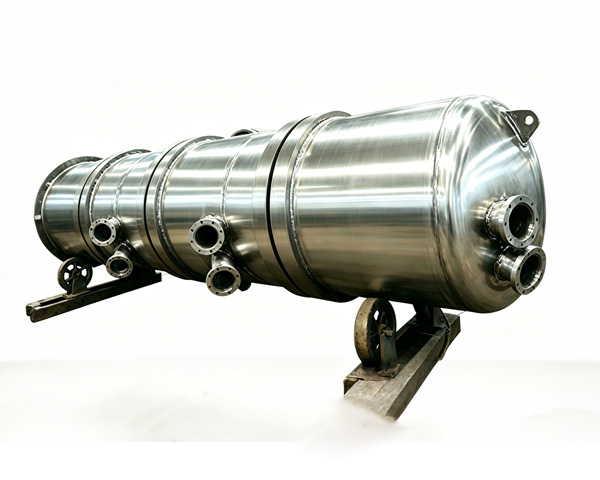
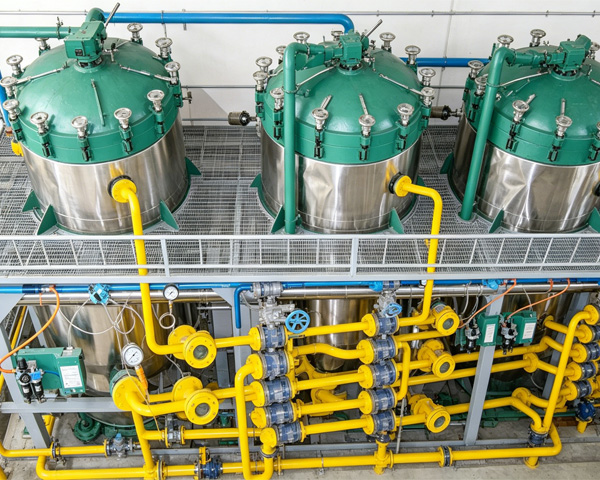
In the edible oil refining process, the decolorizer tank (also called bleaching equipment) is one of the core units. It mainly uses the adsorption of activated clay or bleaching earth to remove pigments, trace metals, residual soaps, phospholipids and other impurities from crude oil, thereby significantly improving the colour, stability and quality of the oil, and laying a good foundation for the subsequent deodorization step.
Whether you produce soybean oil, rapeseed oil, sunflower oil, palm oil, peanut oil, corn germ oil or rice bran oil, decolorizing equipment is key to ensuring that the finished oil is clear, bright and meets international standards.
I. What is a Decolorizer Tank?
A decolorizer tank is a vessel used in batch refining processes. It is typically suitable for refining production lines with a capacity of 5–50 tonnes per day, and some larger models can reach 80 tonnes/day. For larger‑scale continuous production, a continuous bleaching tower is usually recommended.
The decolorizer tank is generally installed after the neutralising and washing steps and before the deodorization step.
II. Why Use a Decolorizer Tank?
| Function | Description |
| Improves appearance | Effectively removes pigments such as carotenoids and chlorophyll, making the oil clear and bright |
| Enhances stability | Removes pro‑oxidant metal ions and pigments, extending shelf life |
| Removes harmful impurities | Adsorbs polycyclic aromatic hydrocarbons, pesticide residues, trace metals and other contaminants |
| Enhances flavour | Removes odorous substances, improving taste |
| Meets standards | nsures oil colour and impurity content comply with national or industry standards |
III. Main Features of the Decolorizer Tank
- Vacuum operation: Works under negative pressure (93.3–96 kPa), preventing oil oxidation and improving bleaching efficiency.
- Steam heating system: Provides stable temperature control for effective pigment removal.
- Efficient agitation design: Combines mechanical agitation and steam stirring to ensure thorough mixing of oil and bleaching earth.
- Easy discharge and cleaning: Facilitates removal of spent bleaching earth, reducing downtime.
- Customisable capacity: Suitable for small to large refineries, flexible configuration.
IV. Working Principle of the Bleaching Process
A typical bleaching process includes the following steps:
1. Vacuum preparation: Start the vacuum system to pull the decolorizer tank to the required vacuum level.
2. Oil feeding and heating: Add degummed and deacidified oil to the decolorizer tank and heat to about 110°C for dehydration.
3. Add bleaching earth: Add adsorbents such as activated clay, acid‑activated clay or activated carbon proportionally via pneumatic conveying or a metering device.
4. Mixing and adsorption: Under vacuum and agitation, the oil and adsorbent are fully mixed, adsorbing pigments and impurities.
5. Filtration separation: Use a leaf filter or plate‑and‑frame filter to separate the spent bleaching earth from the oil, obtaining bleached oil.
6. Polishing filtration: The bleached oil passes through a safety filter into a bleached oil storage tank, which is kept under vacuum to prevent oxidation.
> Pre‑filtration technology: Passing raw oil first through a saturated filter cake (containing still‑active bleaching earth) before mixing with fresh earth can reduce bleaching earth consumption. However, this method is only applicable to dry oils.
V. Two‑Stage Bleaching Technology
For oils that are very dark in colour or require high purity (e.g., coconut oil, grape seed oil), two‑stage bleaching can be used. This technology uses different bleaching agents mixed in two stages under different temperature and humidity conditions, followed by two filtration steps, to achieve the best decolorizing effect. For palm oil and rapeseed oil, two‑stage bleaching combined with single‑stage filtration can also significantly save bleaching earth consumption.
VI. Common Bleaching Agents and Their Applicability
| Bleaching Agent | Characteristics | Application |
| Natural bleaching earth | Limited decolorizing effect | Animal fat processing |
| Acid‑activated bleaching earth | Removes a wide range of impurities, very effective | Widely used for various vegetable oils |
| Activated carbon | Strong adsorption of PAHs and specific contaminants | Oils requiring high purity |
| Synthetic amorphous silica | Selectively removes phospholipids, trace metals, soaps | Wet bleaching |
VII. Factors Affecting Decolorizing/Bleaching Performance
- Adsorbent dosage: Higher dosage gives better decolorization, but neutral oil loss also increases – a balance between cost and effect is needed.
- Operating pressure: Higher vacuum improves decolorization. Typically, pressure should be 93.3–96 kPa (700–720 mmHg).
- Temperature and time:
- Under vacuum (e.g., 6.7 kPa), soybean oil decolorization requires a maximum temperature of only 82°C for 20 minutes.
- Under atmospheric pressure, the operating temperature needs to be above 104°C.
- Oil quality: The efficiency of preceding degumming and deacidification directly affects bleaching performance.
VIII. Selection Guide for Decolorizing Equipment
| Production Scale | Recommended Equipment | Characteristics |
| 5–50 t/day | Batch decolorizer tank | Low investment, flexible operation, suitable for small and medium‑sized oil mills |
| 50–80 t/day | Large decolorizer tank | Higher capacity, still batch type |
| Above 80 t/day | Continuous bleaching tower | Highly automated, suitable for large refineries |
IX. Our Decolorizing Equipment Solutions
We provide customised decolorizer tanks and bleaching systems, including wet, dry and two‑stage bleaching solutions. Our equipment offers the following advantages:
- High vacuum level: Effectively prevents oxidation, improves bleaching efficiency.
- Uniform agitation: Ensures thorough contact between oil and adsorbent.
- Energy‑saving design: Steam heating system with high thermal efficiency.
- Easy maintenance: Quick discharge and convenient cleaning.
- Global service: Technical support and spare parts supply.
Whether you are building a new refining plant or upgrading an existing bleaching section, our engineers can provide the most suitable equipment configuration and process optimisation scheme based on your oil characteristics, capacity and budget.
X. Common Application Areas
1. Seed oil processing (soybean oil, rapeseed oil, sunflower oil, cottonseed oil, peanut oil, etc.)
2.Fruit oil / palm oil processing
3.Corn germ oil and rice bran oil refining
4.Waste cooking oil and industrial grade oil pretreatment (for HVO)
5.Animal fat decolorization
The decolorizer tank is an indispensable part of the edible oil refining production line. It not only effectively removes pigments, metal ions and residual soaps, but also significantly improves the stability and sensory quality of the oil, ensuring that the finished product meets international food safety standards.
If you are looking for efficient, stable and customisable decolorizing equipment, please feel free to contact us. We will provide professional technical support and detailed equipment quotations to help your refinery achieve high‑quality, low‑cost and sustainable production.