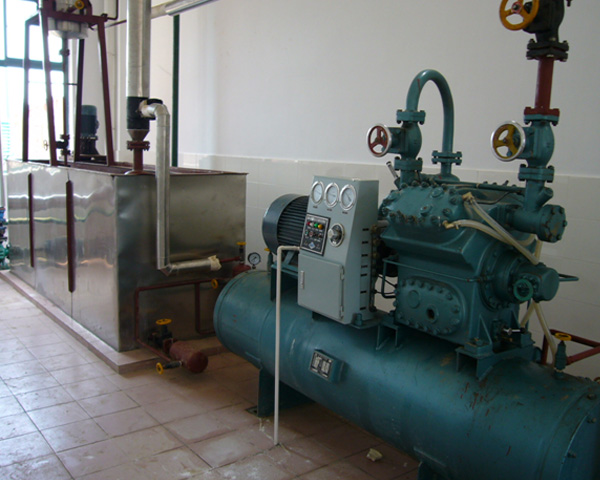
In the oil and fat processing industry, the refining process is a critical link that determines the quality of the finished oil, the yield, and ultimately the profitability of an enterprise. Among all refining processes, deacidification — the removal of free fatty acids from crude oil — is considered a core step, as it directly affects the stability, taste, and safety of the oil.
Currently, the two most widely used deacidification methods in industrial production are the alkali refining method (chemical refining) and the steam distillation method (physical refining). Among these, the alkali refining method is widely adopted by oil processing enterprises in China due to its mature technology, strong adaptability, and excellent treatment effect on various types of crude oils.
The principle of alkali refining deacidification is not complex: it uses lye to neutralize the free fatty acids in the oil, generating fatty acid salts (soapstock). At the same time, the soapstock adsorbs some pigments, gums, and other impurities, thereby purifying the oil through separation. However, while the principle is simple, achieving good results is not easy. The effectiveness of deacidification directly affects the acid value, color, yield, and the difficulty of subsequent processes. The key to determining deacidification performance lies in the equipment.
A well-configured alkali refining deacidification system helps enterprises achieve:
- Lower refining losses — reducing the loss of neutral oil carried away with the soapstock
- More stable product quality — consistent acid value, color, and transparency
- Higher production efficiency — continuous, automated operation with less manual intervention
- More controllable operating costs — more efficient consumption of lye, steam, and electricity
Main Equipment Used in Alkali Refining Deacidification System
- Soapstock Conditioning Tank — Recovering “Lost” Oil
- During alkali refining, the resulting soapstock often contains more than 40% neutral oil. If this portion of oil is discharged directly with the soapstock, it represents a significant loss for the enterprise.
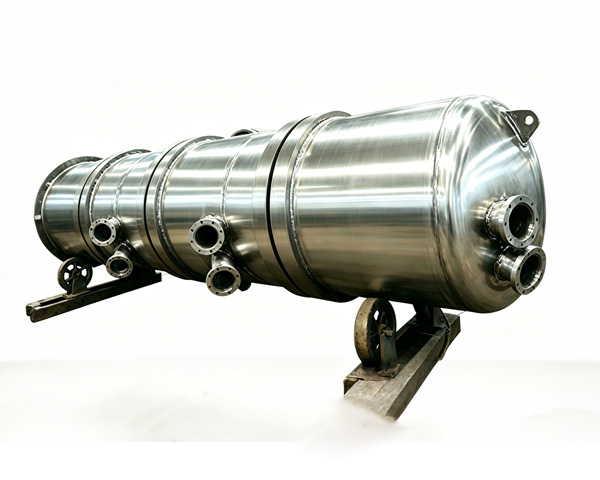
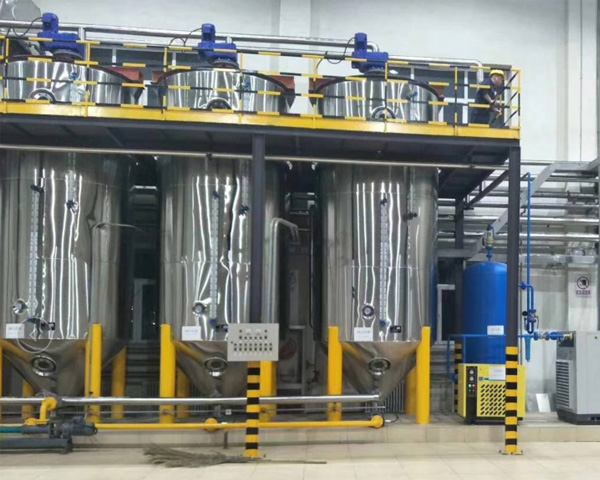
- The role of the soapstock conditioning tank is to separate and recover this “oil hidden in the soapstock” through physical means. Under vacuum conditions, the equipment uses steam heating and brine dilution to adjust the soapstock to a suitable consistency, allowing the neutral oil to be released and recovered.
- A well-designed soapstock conditioning tank not only features a reliable structure — a dished head, conical bottom, vertical screw agitator, and cage-type heat transfer device — but more importantly, it helps enterprises effectively reduce refining losses and maximize the value of every ton of crude oil.
- Oil-Lye Proportioning Device — Precision is the Starting Point of Quality
- The accuracy of lye addition directly affects the deacidification effect and oil loss. Adding too much increases oil loss; adding too little results in incomplete deacidification, failing to meet the acid value standard for the finished oil.
- The oil-lye proportioning device is designed precisely to solve this “precision control” issue. Whether it is a proportioning pump (metering pump) or an oil-lye proportioning machine, the core function is to achieve synchronized and precise adjustment of oil and lye flow rates. In particular, the YJR oil-lye proportioning machine and the YBND metering pump, specially designed for oil refining, adopt a double-plunger cylinder structure. They offer high flow accuracy and stable operation, allowing flexible adjustment of the proportion based on changes in crude oil quality, providing reliable support for continuous alkali refining processes.
- For a refining enterprise, a precise proportioning device means more stable product quality and less waste of raw materials.
- Mixer — Ensuring Thorough Reaction
- Whether the lye and oil can be thoroughly mixed determines the completeness of the neutralization reaction. Poor mixing results in increased oil entrapment in the soapstock and higher refining losses.
- Various types of mixers are available to meet different process requirements:
- Paddle mixer (horizontal or vertical): Suitable for conventional processes such as alkali refining washing and continuous degumming. Agitation intensity is adjustable, offering strong adaptability.
- Centrifugal mixer: Integrates mixing and conveying in one unit. Compact in structure, it is especially suitable for continuous production lines, offering high mixing efficiency.
- Static mixer (Kenics type): Has no moving parts inside the pipeline, making it maintenance-free and durable. Suitable for highly automated production lines.
- Selecting the appropriate mixing equipment allows for more thorough contact between lye and oil and a more complete reaction, thereby improving refining efficiency and reducing oil entrapment in soapstock.
- High-Speed Centrifuge — Separation Determines Final Quality
- The final step in alkali refining deacidification is oil-soap separation and oil-water separation. The effectiveness of this separation directly determines the purity and clarity of the finished oil.
- At this stage, the high-speed centrifuge is undoubtedly the core equipment.
- The tubular centrifuge is known for its extremely high separation factor (15,000 to 60,000), making it suitable for high-precision separation applications, such as oil-soap suspension separation (de-soaping machine) or oil-water emulsion separation (dewatering machine). Its flexible shaft structure allows for automatic self-centering, ensuring smooth and reliable operation.
- The disc centrifuge is currently the most widely used centrifugal equipment in the global oil and fat refining industry. It utilizes the principle of thin-layer separation to achieve high separation efficiency without increasing rotational speed, offering large processing capacity and strong adaptability. Self-cleaning models can achieve automatic solids discharge, greatly reducing manual intervention and making them suitable for large-scale continuous production.
- For a refining enterprise, a stable and reliable centrifuge means longer operation cycles, lower maintenance costs, and consistently high-quality finished oil.
From soapstock recovery to lye proportioning, and from mixing reactions to high-speed separation, each step in alkali refining deacidification involves critical equipment. Properly configuring this equipment not only enhances the quality of the finished oil but also effectively reduces refining losses and saves production costs.
If you are planning a new refining line or looking to optimize the deacidification section of your existing line, feel free to reach out. Based on your crude oil type, production capacity, and process requirements, we can provide objective equipment selection references and configuration suggestions.