
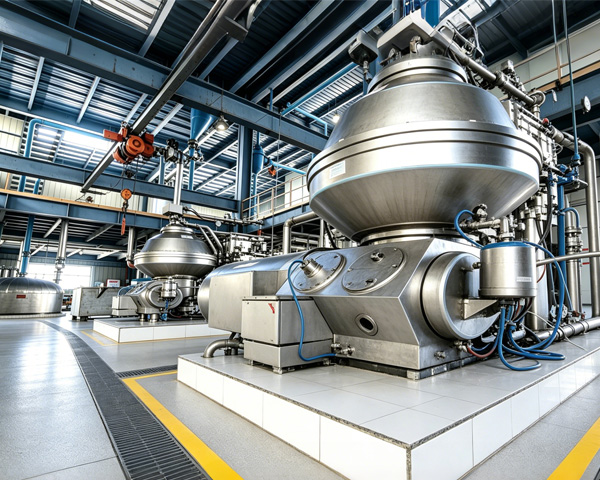
Canola oil is one of the most widely consumed vegetable oils in the world, used extensively in cooking, margarine, biodiesel, and industrial applications. However, crude canola oil obtained from pressing or solvent extraction still contains phospholipids, free fatty acids, pigments, and odorous compounds that make it unsuitable for direct sale. It must undergo refining to meet food-grade, biofuel, or industrial standards.
So, what exactly does the canola oil refining process involve? What equipment is required for each step? This article breaks down the four core stages of canola oil refining.
1. Degumming – The First Step in Refining
Canola oil naturally contains high concentrations of non-hydratable phospholipids, requiring more thorough degumming compared to many other oils. The purpose of degumming is to remove phospholipids (gums) that can cause oil instability and cloudiness, while also reducing subsequent refining costs.
Common degumming methods:
Water degumming: Uses water to hydrate hydratable phospholipids, causing them to swell, agglomerate, and settle, then removes them via a centrifugal separator. This is the basic method, suitable for oils that will undergo further refining.
Acid degumming: Adds mild acids such as phosphoric or citric acid to convert non-hydratable phospholipids into hydratable form, then removes them with water. This method is more effective at removing stubborn phospholipids, particularly suitable for biodiesel and industrial applications.
Enzymatic degumming: Uses enzymes to break down phospholipids, improving oil yield and reducing waste. Although more expensive, it is efficient and environmentally friendly – an emerging green technology.
Core equipment: Degumming tank (with agitation and heating systems), centrifugal separator, acid/enzyme dosing systems.
2. Neutralization / Deacidification – Removing Free Fatty Acids
After degumming, canola oil still contains free fatty acids, which raise the acid value and create undesirable flavours. The neutralization step uses an alkali (such as sodium hydroxide) to react with free fatty acids, forming soapstock, which is then removed by centrifugal separation.
Two mainstream processes:
Alkali refining (chemical refining): Suitable for most edible oils, thorough deacidification, but produces soapstock and wastewater.
Physical refining (distillation deacidification): Uses steam distillation under high temperature and high vacuum to remove free fatty acids, without producing soapstock. Suitable for high-acid-value oils.
Core equipment: Alkali refining kettle (neutralization tank), centrifugal separator (for soapstock separation), washing tank, vacuum dryer.
3. Bleaching – Removing Pigments and Impurities
The term “bleaching” can be misleading – this process does not use any bleaching agents. Instead, it removes pigments and impurities through adsorption.
How it works: Under vacuum conditions, activated clay (bleaching earth) or activated carbon is added to the deacidified oil. After thorough mixing, the adsorbent captures chlorophyll, carotenoids, and other pigments, as well as residual metal ions, soaps, and polycyclic aromatic hydrocarbons. The spent adsorbent is then removed by filtration.
Research shows that industrial bleaching can improve the oxidative quality of canola oil even more effectively than deodorization.
Core equipment: Bleaching tank (vacuum agitated vessel), leaf filter or plate-and-frame filter press, adsorbent dosing system, vacuum system.
4. Deodorization – Removing Odours to Produce Neutral Oil
Deodorization is the final and one of the most critical steps in refining. It uses high-temperature, high-vacuum steam distillation to remove volatile odour compounds such as aldehydes, ketones, and free fatty acids, producing neutral, high-purity finished oil.
Process conditions: Typically conducted at 230–260°C and under 2–5 mbar high vacuum, with direct steam (stripping steam) passed through the oil. The steam carries away volatile odour components, which are then condensed and recovered.
After deodorization, free fatty acid content can be reduced to below 0.08%, with a neutral flavour, clear colour, and significantly improved oxidative stability.
Core equipment: Deodorizer tower (stainless steel construction, with packing or trays), vacuum system (steam ejectors or multi-stage vacuum pumps), fatty acid trap, oil-to-oil heat exchanger (heat recovery), cooler.
Complete Refining Process Equipment Overview
| Stage | Core Equipment | Primary Function |
|---|---|---|
| Degumming | Degumming tank, centrifugal separator, acid/enzyme dosing systems | Removes phospholipids (gums) to prevent cloudiness and instability |
| Neutralization | Alkali refining kettle, centrifugal separator, washing tank | Removes free fatty acids, lowers acid value |
| Bleaching | Bleaching tank (vacuum), leaf filter, adsorbent system | Adsorbs pigments, metal ions, and residual soaps |
| Deodorization | Deodorizer tower, vacuum system, fatty acid trap, heat exchanger | Removes odours and volatile compounds, produces neutral oil |
Refined Products and Applications
After the four-step refining process – degumming → neutralization → bleaching → deodorization – the resulting RBD canola oil (refined, bleached, deodorized) is clear, neutral in flavour, and stable in quality. It can be bottled for retail sale or used in:
- Household cooking oil and salad oil
- Margarine and shortening
- Biodiesel feedstock
- Industrial oils and cosmetic base oils
Emerging Opportunity: Canola Protein Extraction – Unlocking Greater Value
The canola processing industry is approaching a new breakthrough. Unlike the well-established soybean protein concentrate market, canola protein has not yet reached large-scale commercial production. However, with expertise in solvent-based protein extraction, desolventizing, and drying, industry leaders have now fully developed commercial-scale canola protein extraction processes.
Canola protein offers a mild flavour, rich amino acid profile, and excellent functional properties, making it promising for applications such as plant-based meat alternatives, sports nutrition supplements, and aquaculture feed. For processors, this means moving beyond simply selling canola meal for animal feed and instead converting it into high-value protein ingredients with significantly higher margins.
Our Canola Oil Refining Equipment Solutions
We offer complete canola oil refining equipment solutions – from single machines to turnkey plants:
- Degumming section: Degumming tanks, centrifugal separators, acid/enzyme dosing systems
- Neutralization section: Alkali refining kettles, centrifugal separators, washing tanks, dryers
- Bleaching section: Bleaching tanks, leaf filters, vacuum systems
- Deodorization section: Deodorizer towers, vacuum systems, fatty acid traps, heat exchanger networks
- Automation control systems: Precision monitoring of temperature, pressure, and flow to ensure consistent quality
Whether you are planning a new canola oil refinery or upgrading an existing line, our engineers can provide the optimal equipment configuration based on your capacity, raw material characteristics, and budget.
Contact us today for a professional canola oil refining equipment solution and quotation!