
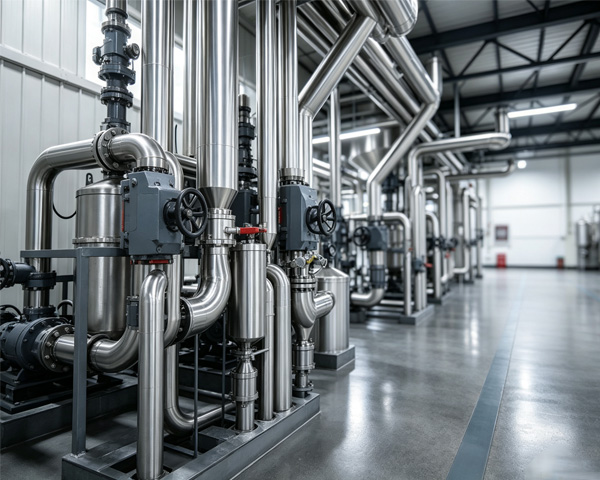
Investing in a palm oil refinery raises one critical question for most investors: How much capital do I really need?
Overestimating creates financial pressure; underestimating risks project stoppage. A palm oil refinery can cost anywhere from $20,000 for a mini batch system to over $10 million for a fully continuous large-scale plant. The huge variation comes down to three key factors: capacity, process route, and automation level.
This article breaks down the cost structure of palm oil refineries across small, medium, and large scales – helping you build a realistic investment budget.
I. Why Must Palm Oil Be Refined?
Crude palm oil (CPO) straight from the press is deep red in colour and contains free fatty acids, phospholipids, pigments, and odorous compounds – it cannot be consumed directly. The core objective of palm oil refining is to remove impurities, improve flavour, and extend shelf life through four key stages: degumming, deacidification, bleaching, and deodorisation.
Based on automation level and capacity, palm oil refining processes fall into three types:
- Batch refining: 1–20 TPD – low investment, flexible operation, ideal for small-scale production and multi-oil type switching
- Semi-continuous refining: 10–50 TPD – partially automated, suitable for medium-sized plants
- Fully continuous refining: 50–300+ TPD – fully automated, low energy consumption, consistent quality
II. Budget References for Different Refinery Scales
1. Small Batch Refinery (1–10 TPD)
Small refineries are the entry point for small and medium investors – ideal for cooperatives, plantation owners, or regional small-scale oil mills.
Typical equipment configuration: Neutralisation/deacidification tank, bleaching tank, deodorisation tank, thermal oil heater, vacuum system, filtration system, electrical control panel.
| Capacity | Equipment Investment (USD) | Total Estimated Budget (USD) | Floor Space |
|---|---|---|---|
| 1–3 TPD | $20,000–32,000 | $45,000–65,000 | 100–150 m² |
| 5 TPD | $35,000–45,000 | $70,000–95,000 | 150–250 m² |
| 10 TPD | $50,000–65,000 | $110,000–160,000 | 250–400 m² |
Market reference (Nigeria): A 1 TPD refinery costs approximately $20,000 in equipment, while a 5 TPD line costs about $40,000.
Note: If fractionation is required (separating palm oil into olein and stearin), equipment investment increases by an additional $13,000–22,000.
Material impact on cost: For a 10 TPD refining line, a carbon steel standard configuration costs approximately $94,000–105,000, while a full 304 stainless steel configuration runs $171,000–185,000. Material choice directly affects equipment lifespan and oil hygiene standards.
2. Medium Semi-Continuous / Continuous Refinery (10–50 TPD)
Medium refineries suit regional suppliers and mid-sized oil enterprises, with more complete equipment configurations and higher automation.
Typical equipment configuration: Continuous degumming centrifuge, physical deacidification tower, vacuum bleaching tower, multi-stage deodorisation tower.
| Capacity | Equipment Investment (USD) | Total Estimated Budget (USD) |
|---|---|---|
| 10–20 TPD | $50,000–150,000 | $150,000–300,000 |
| 20–50 TPD | $200,000–500,000 | $400,000–900,000 |
Medium refineries typically use semi-continuous or continuous processes, with refining losses of approximately 1.5%–1.8% and refining costs of roughly $30/tonne of crude oil.
3. Large Continuous Refinery (50–300+ TPD)
Large refineries serve export markets, large food companies, and industrial-scale production.
| Capacity | Equipment Investment (USD) | Total Estimated Budget (USD) |
|---|---|---|
| 50–100 TPD | $170,000–500,000 | $400,000–1,200,000 |
| 100+ TPD | $200,000–2,000,000 | $800,000–5,000,000+ |
A palm oil refinery construction contract in Malaysia was valued at 40 million ringgit (approximately $9 million). Large plants involve highly complex system configurations, including continuous degumming systems, physical distillation deacidification towers, high-capacity vacuum bleaching towers, and multi-stage deodorisation towers.
III. Detailed Cost Breakdown
The total investment in a palm oil refinery can be broken down into the following major components:
1. Equipment Procurement (40%–60% of total investment)
Equipment is the largest cost item. A complete palm oil refining line includes:
- Degumming system: Degumming tank, centrifuge separator – removes phospholipids and gums
- Deacidification system: Alkali refining kettle or deacidification tower – removes free fatty acids
- Bleaching system: Bleaching tank, leaf filter – adsorbs pigments and impurities
- Deodorisation system: Deodorisation tower, vacuum system – high-temperature steam removes odours
- Auxiliary systems: Thermal oil heater, vacuum pumps, piping and valves, electrical control systems
Equipment material (carbon steel vs stainless steel 304/316L) and automation level are the core variables affecting equipment prices.
2. Infrastructure and Civil Works (20%–30% of total investment)
Includes production workshops, raw material storage, finished oil tank farms, wastewater treatment facilities, office areas, etc. Floor space ranges from 100 m² (1 TPD) to several thousand square metres (large plants).
3. Installation, Commissioning, and Working Capital (5%–10% of total investment)
Includes equipment shipping, installation, piping connections, steam boiler integration, trial runs, and operator training. International freight and customs duties for large equipment can also be significant.
4. Operating Costs (ongoing expenses)
- Raw material costs: CPO price fluctuations directly impact refining margins
- Energy consumption: Steam, electricity, fuel – refining is energy-intensive
- Labour costs: Operators, quality control, maintenance staff – lower automation means higher labour costs
- Consumables and maintenance: Activated bleaching earth, filter cloths, phosphoric acid, caustic soda, plus regular equipment upkeep
IV. Key Factors Affecting Investment
1. Raw Material Quality Determines Process Selection
The acid value, peroxide value, and moisture content of crude palm oil directly affect refining difficulty and equipment configuration. High-acid-value crude oil requires stronger deacidification capacity, increasing equipment investment accordingly.
2. Physical Refining vs Chemical Refining
Two main refining processes are used for palm oil:
- Physical refining (steam distillation deacidification): Lower cost, more environmentally friendly – the preferred choice for most Malaysian refineries. It removes free fatty acids through high-temperature vacuum steam distillation.
- Chemical refining (alkali refining): Uses caustic soda to neutralise free fatty acids, producing soapstock and wastewater. Higher cost, but suitable for specific crude oils with low phospholipid and high carotene content.
3. Is Fractionation Required?
Palm oil naturally separates into liquid and solid fractions at room temperature. If the target market requires clear, transparent liquid oil (palm olein), fractionation is essential. Small-scale fractionation equipment adds approximately $13,000–22,000 to the investment.
4. Automation Level
Fully automatic PLC control systems require higher upfront investment but reduce labour costs and improve quality consistency.
V. Investment Recommendations
- Start with capacity matching: Determine refining scale based on available CPO supply – don’t blindly pursue larger capacity
- Leave budget buffer: Equipment is only part of total cost – infrastructure, installation, and working capital are equally important
- Choose materials to match target markets: Export markets and premium edible oils warrant 304 stainless steel equipment
- Plan for fractionation if needed: If your target market requires liquid oil, factor fractionation into your early planning
VI. Our Palm Oil Refining Equipment Solutions
We offer a complete range of palm oil refining equipment – from batch, semi-continuous, to fully continuous systems – covering the full process of degumming, deacidification, bleaching, and deodorisation. Whether you are planning a 1 TPD small refining workshop or a 100+ TPD large refinery, we can provide the most suitable equipment configuration based on your raw material quality, capacity targets, and budget.
Contact us today for a customised palm oil refinery investment plan and quotation!