
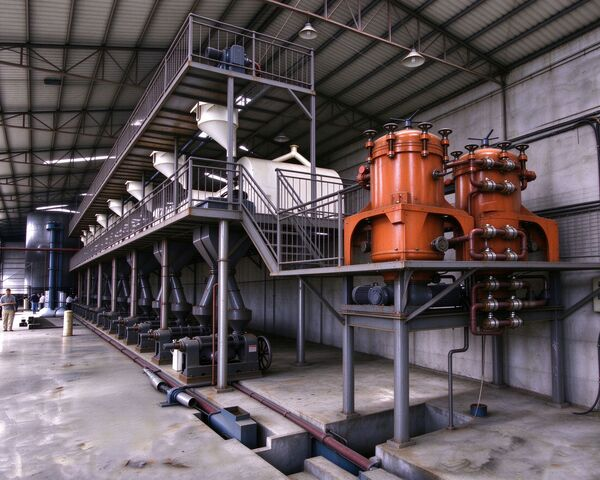
12% Capacity Utilization: Where the Real Opportunity Sits in Tanzania’s Sunflower Oil Market
Tanzania’s edible oil industry presents a puzzling contradiction. The country has 1,604 registered edible oil processing plants with a combined installed capacity of roughly 2.53 million tonnes per year. Yet actual annual output sits at about 302,000 tonnes — a capacity utilization rate of approximately 12%. Meanwhile, national demand reaches about 700,000 tonnes, forcing the country to import roughly 430,000 tonnes of edible oil each year.
This data reveals something most market reports overlook: Tanzania’s sunflower oil bottleneck isn’t a shortage of factories. It’s a shortage of efficient processing capacity. For equipment buyers, that distinction matters. The opportunity isn’t building yet another plant to compete with 1,604 existing operations — it’s deploying higher-efficiency equipment to close the gap between installed capacity and actual output.
KMEC has over two decades of experience in oil processing equipment, serving operations from 1 TPD small mills to 100 TPD industrial plants. This guide examines Tanzania’s sunflower oil market through four decision lenses: structural capacity gap, 2026 policy window, technical requirements, and phased investment framework.
1. Structural Analysis: Why 1,604 Plants Produce Only 12% of Installed Capacity
What the Plant Size Distribution Reveals
Of Tanzania’s 1,604 edible oil processing enterprises, 1,038 are micro-scale operations, 543 are small businesses, 9 are medium-sized plants, and just 14 qualify as large processors. Micro and small enterprises account for 98.6% of all facilities — and their equipment, process capability, and product quality vary enormously. This fragmentation is the primary driver of the industry’s low capacity utilization.
Most of these micro and small plants operate with outdated equipment and lack refining and dewaxing capability. They can only produce low-grade crude oil. Of the total sunflower oil processed — over 1 million tonnes — only about one-quarter meets the standard for purified refined oil. The rest cannot enter formal retail channels and is sold as bulk crude oil at low prices.
Quantifying the Supply Gap
Tanzania’s annual edible oil demand is approximately 700,000 tonnes. Domestic production is about 302,000 tonnes. The gap is roughly 430,000 tonnes. In 2025, the country spent nearly $659 million on edible oil imports — almost three times the $228 million spent the previous year.
The core tension: demand for refined sunflower oil is growing, but the supply side lacks the refining and dewaxing capacity to produce it. The absence of refining equipment among small and medium processors is the critical barrier preventing them from entering higher-value markets.
What Large-Scale Projects Tell Us
Against this backdrop of underutilization, a few large-scale projects stand out. Vion Win Ltd.’s sunflower oil refinery in Singida processes 100 tonnes of sunflower seeds per day and has created 370 jobs. Mainland Group Agro Process expanded its Dodoma facility to 150,000 tonnes per year. By April 2026, it had produced 48,000 tonnes of edible oil, generating 450 direct jobs and 2,000 indirect positions.
Cemex Ventures invested over TZS 100 billion in its Dodoma operations, scaling daily output from 50 tonnes to 100 tonnes, with a product line spanning sunflower oil, soap, glycerin, and animal feed.
What do these projects have in common? All configured complete refining and dewaxing equipment. All positioned their products as refined oil rather than crude. For equipment buyers, the signal is clear: in Tanzania’s market, investing in refining and dewaxing capability delivers more commercial value than simply expanding pressing capacity.
2. The 2026 Policy Window: How Tax Structure Affects Equipment Decisions
Core Tax Changes
Tanzania’s 2026/27 fiscal year introduced a systematic set of tax adjustments for the edible oil sector. The key measures: VAT exemption for vegetable oils produced from locally grown oilseeds; 10% import duty on non-palm crude oil; 10% export duty on crude sunflower oil and sunflower seeds; 35% or $300 per tonne import duty on refined edible oil (whichever is higher).
The combined effect: locally processed sunflower oil gains a structural cost advantage, while imported refined oil becomes significantly more expensive. For equipment buyers, this means the economics of building a refining plant in Tanzania have improved considerably.
Direct Impact on Equipment Procurement Decisions
The VAT exemption applies to “vegetable oils produced from locally grown oilseeds.” If you process imported sunflower seeds, your product may not qualify. Equipment buyers need to ensure stable procurement relationships with local growers or cooperatives when planning their raw material supply chain.
The 35% or $300/tonne import duty on refined oil provides price protection for local refiners. At typical Tanzanian market prices for refined sunflower oil, the landed cost of imported refined oil plus duty now significantly exceeds the local processing cost line. This gives policy-level certainty to the investment return on local refining capacity.
The government will also continue subsidizing sunflower seeds for the next five years, at approximately TZS 2 million annually. Lower feedstock costs directly improve processing margins.
Raw Material Supply Trends
Tanzania’s oilseed production grew nearly 34% over five years, from 1.63 million tonnes in 2019/20 to 2.18 million tonnes in 2023/24. Sunflower accounts for about 56% of total oilseed output, with groundnuts at roughly 28%. This sustained growth in feedstock supply provides the foundation for processing capacity expansion.
3. Technical Requirements: Why Dewaxing Is Non-Negotiable in Tanzania
The Process Necessity of Sunflower Oil Dewaxing
Sunflower oil contains wax esters at levels between 0.06% and 0.2% — higher than most common vegetable oils. Oil pressed from whole seeds can contain over 1,500 ppm of wax, while dehulled pressing typically yields below 500 ppm.
These wax esters crystallize slowly at low temperatures, causing the oil to appear cloudy. Without proper dewaxing, refined sunflower oil develops flocculent sediment during storage or refrigeration, severely affecting consumer experience and shelf life. Post-processing wax content should be controlled below 30 ppm to pass a standard 24-hour cold test.
Technical Essentials of the Dewaxing Process
Dewaxing involves cooling the oil to near 0°C and holding for approximately 24 hours to crystallize wax esters into discrete forms, then removing them through filtration or centrifugation. Before cooling, phospholipid content must be reduced below 10 ppm — otherwise crystallization and filtration efficiency suffer. Adding filter aid during filtration accelerates wax-oil slurry separation.
This process places high demands on equipment: precise temperature control systems (cooling rate and holding time), efficient filtration or centrifugation equipment, and a compatible phospholipid pretreatment unit. For Tanzania’s small and medium processors, the absence of dewaxing equipment is a primary reason their products fail to meet retail standards.
Complete Refining Line Configuration
A complete sunflower oil refining line should include four core processes — degumming, deacidification, bleaching, and deodorization — plus a separately configured dewaxing module. Refining losses typically run 3%–5%, with dewaxing adding another 1%–2%. Equipment selection must account for these losses in output calculations.
For equipment buyers planning to enter the Tanzanian market, KMEC recommends incorporating the dewaxing module at the refining line design stage rather than adding it later. The dewaxing unit’s interfaces and temperature control system need to be coordinated with upstream refining processes. Retrofitting costs far more than initial configuration.
4. Phased Investment: A Practical Framework for Tanzania
Why Phased Investment Fits Tanzania’s Market
Tanzania’s feedstock supply is seasonally variable, sales channels take time to establish, and committing to a complete production line upfront creates significant cash flow pressure. The core logic of phased investment: validate the market and feedstock supply chain with a minimum viable production loop, then add refining and dewaxing modules as cash flow turns positive.
Three-Stage Equipment Configuration
Stage 1: Crude Oil Production (1–5 TPD). Configure cleaning, dehulling, pressing, and filtration equipment. Sell crude oil to local refiners or directly into lower-tier markets. Equipment investment threshold is low — the core goal is validating feedstock supply chain stability and crude oil sales channels. KMEC’s modular design allows adding refining modules later without replacing core equipment.
Stage 2: Refined Oil Production (5–20 TPD). Building on Stage 1 pressing capacity, add refining and dewaxing modules. Product upgrades to refined sunflower oil, entering retail channels and branded packaging. The VAT exemption policy begins delivering cost advantages at this stage. Refining module capacity should match pressing module output to avoid bottleneck operations.
Stage 3: Solvent Extraction & Full Chain (20+ TPD). Add solvent extraction modules to improve oil recovery rates, plus filling lines for full-chain production from feedstock to finished oil. Cemex Ventures’ Dodoma investment demonstrates this path: over TZS 100 billion invested, daily output scaled from 50 to 100 tonnes, with a product line spanning sunflower oil, soap, glycerin, and animal feed.
Risk Control in Phased Investment
Phased investment controls risk at three levels. Capital level: each stage’s investment scale remains manageable, avoiding cash flow strain from large one-time outlays. Market level: each stage produces corresponding products and revenue streams, allowing progressive market validation. Technical level: modular equipment uses standardized interfaces, so subsequent expansion requires no replacement of core equipment.
The Cooperative Model’s Reference Value
The Tanzanian government encourages small and micro sunflower oil producers to form cooperative organizations for more efficient operations in feedstock storage, cleaning, refining, and joint marketing. Agricultural Marketing Cooperatives (AMCOS) have practical cases — Chato AMCOS established a sunflower oil double-refining factory.
For equipment buyers, the cooperative model matters because collective procurement decisions take longer but order sizes typically exceed individual farmers. Supplying equipment to AMCOS requires attention to two factors: simplified operation training (cooperative operators may have varying technical skill levels) and timely spare parts supply (cooperatives typically cannot self-repair complex equipment).
5. Financing Channels: Where Tanzania’s Edible Oil Projects Get Capital
Tanzania Agricultural Development Bank (TADB)
TADB offers multiple loan products, including asset finance and project finance. Asset finance rates range from 8%–15%, with terms of 1–5 years and a 25% down payment. Project finance carries similar rates but offers up to a 2-year grace period. The grace period matters for equipment buyers: during installation, commissioning, and trial production, cash flow hasn’t turned positive yet — the grace period eases repayment pressure.
Central Bank Special Loan Facility
The Bank of Tanzania channels funds to commercial banks through a special loan facility, requiring banks to lend to the private sector at no more than 10% interest. Agriculture’s share of bank credit has risen from 8.1% to 13.7%. For qualifying edible oil processing projects, this is currently one of the lowest-cost financing channels available.
Other Financing Sources
JICA provides agricultural and rural development loans at approximately 0.2% annual interest. PBZ Bank offers agricultural loans at 14%–16%. TADB, in partnership with LonAgro, provides 9% interest loans for women and youth participation in agricultural processing. Equipment buyers should prioritize TADB and the central bank facility when planning financing — these offer the most competitive rates.
Timing Financing with Equipment Procurement
A common operational question: how to sequence equipment procurement and loan applications. The recommendation is to complete preliminary loan approval after equipment selection is finalized but before contract signing. Equipment supplier quotations and technical specifications are important materials for loan applications. KMEC provides equipment configuration plans and technical parameter documents to support the financing application process.
6. Pre-Purchase Checklist for Equipment Buyers
- Confirm target capacity matches feedstock supply capability to avoid idle equipment capacity
- Choose process route based on target product positioning: cold pressing for premium markets, hot pressing for higher oil yield
- Refining line must include dewaxing module — this is the key process distinguishing sunflower oil from other vegetable oils
- Verify all oil-contact components meet food-grade material standards
- Compare energy consumption per unit across equipment options — this is the main component of long-term operating costs
- Confirm supplier can provide installation, commissioning, operator training, and spare parts supply
- Complete loan applications before equipment procurement to avoid cash flow disruption
- Understand VAT exemption eligibility conditions to ensure feedstock procurement qualifies as “locally grown oilseeds”
7. FAQ
Q1: Why is Tanzania’s sunflower oil capacity utilization only 12%?
Tanzania has 1,604 edible oil processing plants with installed capacity of about 2.53 million tonnes per year, but actual output is only about 302,000 tonnes. The main reason: micro and small enterprises account for over 98% of all facilities, and most operate with outdated equipment and lack refining capability, producing only low-grade crude oil that cannot enter formal retail channels.
Q2: Is feedstock supply reliable for building a sunflower oil plant in Tanzania?
Yes. Tanzania is East Africa’s largest sunflower producer, with oilseed production growing from 1.63 million tonnes in 2019/20 to 2.18 million tonnes in 2023/24, of which sunflower accounts for about 56%. The government will continue providing sunflower seed subsidies for the next five years.
Q3: What is the investment threshold for a small sunflower oil processing line?
For a 1–5 TPD small production line, equipment investment starts at approximately $7,000 (basic configuration). For a 5–20 TPD line, equipment investment ranges from $20,000 to $80,000. Refining and dewaxing modules require additional configuration.
Q4: What tax incentives does Tanzania offer for sunflower oil processing in 2026?
VAT exemption for vegetable oils produced from locally grown oilseeds. 10% import duty on non-palm crude oil, 10% export duty on crude sunflower oil and sunflower seeds, and 35% or $300 per tonne import duty on refined oil.
Q5: Why is dewaxing mandatory for sunflower oil refining?
Sunflower oil has higher wax content than most common vegetable oils (0.06%–0.2%). Incomplete dewaxing causes the finished oil to become cloudy at low temperatures, affecting shelf life and consumer experience. Post-processing wax content must be controlled below 30 ppm.
Q6: What financing channels support edible oil processing projects in Tanzania?
TADB offers asset finance and project finance (rates 8%–15%, 25% down payment, grace period up to 2 years). Central bank special loan facility caps commercial bank rates at 10%. JICA provides agricultural development loans at 0.2% interest.
References
- Tridge Insights. Tanzania Aims to Boost Edible Oil Production to Reduce Imports. 2026.
- Tanzania Insight. Tanzania Establishes 1,604 Edible Oil Industries in Efforts to Reduce Imports. 2026.
- Daily News Tanzania. Tanzania Establishes 1,604 Edible Oil Industries in Efforts to Reduce Imports. 2026.
- Tridge. Tanzania Introduces Tax Incentives to Boost Edible Oil Production from Local Seeds. 2026.
- Ecofin Agency. Tanzania Seeks Greater Self-Sufficiency in Edible Oils, Tightens Import Rules. 2026.
- ScienceDirect. Fractionation and Dewaxing of Sunflower Oil — Hydrogenation Overview. Elsevier.
- Haraldsson, G. New Developments in Sunflower Oil Refining and Soapstock Splitting. 4th International Sunflower Conference, 1970.
- Daily News Tanzania. Cemex Ventures Plans Major Investment in Dodoma’s Sunflower Oil Production. 2025.
- Tanzania Agricultural Development Bank. Tanzania Sunflower Factsheet. 2025.
- Invest Tanzania. Edible Oil Import Gap Creates Major Agribusiness Opportunity. 2026.
For sunflower oil production line equipment selection, capacity configuration planning, or project feasibility assessment in Tanzania, contact the KMEC engineering team.