
The Real Price of a Used Oil Press Is Never the Listing Price
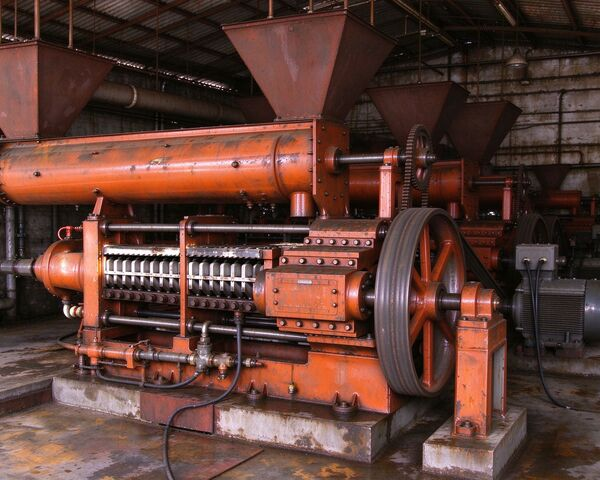
A small oil mill owner bought a second-hand screw press for $3,000. Less than four months after installation, the press worm had worn to the point where cake discharge became irregular, the bearings were making noise, and seals started leaking. Repair costs exceeded $1,500. Add two weeks of downtime, and the “half-price” machine ended up costing nearly as much as a new one.
This is not an isolated case. Used edible oil processing equipment typically sells for one-third to one-half of new equipment prices. That price gap is genuinely attractive for budget-conscious investors. But the low price is just the surface. What really determines whether a used machine is worth buying are the costs that never appear on the quotation: performance degradation, compliance risk, missing after-sales support, and production downtime.
One fact that gets overlooked: the Australian Taxation Office (ATO) sets the effective life of screw presses used in edible oil manufacturing at 20 years, with a straight-line depreciation rate of 10% per year. This means a machine that has already run for 5–8 years may still turn over physically, but its core wear parts could be approaching the end of their economic life. At that point, you are not buying “remaining value” — you are buying an asset that is accelerating toward obsolescence.
KMEC has over two decades of experience in oil processing equipment, serving operations from 1 TPD small mills to 100 TPD industrial plants. This article examines used equipment through a total cost of ownership (TCO) lens across four dimensions: performance degradation, compliance risk, true ownership cost, and scalability.
1. Performance Degradation: The Invisible Loss That Accumulates Daily
Quantified Data on Press Worm Wear
The core working components of a screw press are the press worm and the press cage. These parts operate under continuous high-pressure friction, and wear is irreversible.
A 2025 academic study documented the following: during palm oil pressing, as press worm operating hours increased from 368 to 531 hours, oil loss rate rose from 5.39% to 7.08%. The oil loss rate exceeded the company’s 6% threshold at just 411 hours. After installing a new press worm, the oil loss rate dropped from 7.66% at 10 hours to 4.16% at 163 hours.
This data reveals a critical pattern: the negative impact of press worm wear on oil yield is not linear — there is a tipping point where deterioration accelerates. Beyond that point, every additional 100 hours of operation can lose several times more oil than the previous 100 hours.
For a used screw press that has run for more than two years, if the previous owner did not replace the press worm on schedule, actual oil yield could be 5–8 percentage points below the rated value. You bought a “10 TPD machine,” but actual daily throughput might only be 7–8 tons — and oil recovery per ton is still declining.
Screw Press vs Hydraulic Press: Different Wear Sensitivity
Different types of oil pressing equipment have very different wear sensitivity.
Hydraulic presses concentrate wear on the hydraulic system and seals. The working components (pressing chamber and piston) wear relatively slowly. Hydraulic pumps and seals can be replaced, and costs are relatively controllable.
Screw presses have the press worm, press rings, and cake discharge port as continuous friction components. Wear is faster, and the impact on oil yield is more direct. Industry engineering practice shows that press worms typically need inspection or repair every 8–10 weeks. If the feedstock contains impurities (sand, metal fragments), that interval can shrink to two weeks or less.
This means: hydraulic used equipment risk is concentrated in replaceable hydraulic components, while screw press used equipment risk runs through the entire pressing core. The former can recover most performance by replacing seals. The latter’s press worm and press cage, if worn beyond a certain point, can cost 30%–50% of the original equipment price to replace.
Energy Efficiency Gap: Paying More for Electricity Every Day
Another hidden cost of old equipment is energy consumption. Modern oil presses continuously optimize transmission efficiency and motor design, consuming 15%–25% less energy than models from a decade ago.
Take a 7.5 kW screw press as an example. At 10 hours per day and an industrial electricity rate of $0.12/kWh, the annual electricity cost difference from efficiency gap is approximately $490–$820. Over three years, electricity alone eats up the price advantage of a used machine.
More importantly, energy costs often exceed initial capital expenditure over a 15–20 year asset lifecycle for oil and gas processing equipment. This means the difference in purchase price between new and used equipment gets gradually offset — and eventually reversed — by differences in energy consumption over long-term operation.
2. Compliance Risk: The “One-Vote Veto” That Gets Underestimated
Food Contact Material Compliance
All components of edible oil production equipment that contact oil must meet food-grade material standards. New equipment from reputable manufacturers has steel grades and seal materials that comply with food safety standards, and documentation is complete for production license applications. Used equipment — especially those converted from non-food-grade industrial machines — may have materials that do not meet food contact standards.
When regulatory agencies review edible oil production license applications, equipment compliance is a critical checkpoint. Non-compliant materials mean rectification at best, or failure to obtain production qualification at worst — requiring the entire project to start over. This is not a “probability issue” — it is a “once it happens, it cannot be undone” issue.
Electrical Safety and Explosion-Proof Requirements
A common structural problem with older oil press equipment is the separation of the machine body and electrical system, creating safety hazards. Modern equipment integrates the electrical control system with the main unit, equipped with overload protection, leakage protection, and automatic temperature control. If you are buying used equipment from a decade ago or earlier, pay special attention to electrical system aging — brittle insulation, loose terminal connections, and failed control components are high-frequency issues.
For processing lines involving solvent extraction, explosion-proof electrical equipment is mandatory. If the original explosion-proof certification on used extraction equipment has expired or cannot be traced, re-certification costs may far exceed the equipment price itself.
3. True Cost of Ownership: A Three-Year Calculation
Most investors compare only purchase prices when evaluating new versus used equipment. But total cost of ownership includes six components: purchase price, installation and commissioning, maintenance and repairs, energy consumption, downtime losses, and residual value.
| Cost Item | New Equipment | Used Equipment |
|---|---|---|
| Purchase price | 100% | 30%–50% |
| Installation & commissioning | Standardized, predictable | May require modification, unpredictable |
| Annual maintenance | Low (near zero during warranty) | High (frequent failures, hard-to-find parts) |
| Energy consumption | Baseline | 15%–25% higher |
| Downtime risk | Low | Medium-high (unpredictable failures) |
| Residual value | Clear depreciation | Opaque depreciation |
| Warranty | 1–2 years | Essentially none |
New edible oil production equipment typically comes with a 1–2 year warranty. If something goes wrong, the manufacturer is responsible. Used equipment is mostly out of warranty, or the warranty follows the original buyer — the new buyer gets essentially no coverage. When equipment fails, you pay for repairs yourself and need to find a technician who knows the machine.
More critically, spare parts availability. Used equipment is often older or niche models, and parts are hard to find. For discontinued models, waiting for a part could take weeks or months. Every day the production line is down is a day of lost revenue. If the used equipment has no nameplate or traceable manufacturer information, a single failure could mean the machine is scrapped because no parts can be sourced.
How to Calculate Downtime Loss
Downtime loss is the most overlooked — and most financially significant — part of TCO analysis for used equipment. Here is the calculation method:
Daily downtime loss = Daily throughput × Oil yield × Crude oil price + Daily throughput × Cake yield × Cake price − Daily feedstock cost − Daily labor cost
Take a 10 TPD plant at 33% oil yield as an example: daily crude oil output is approximately 3.3 tons. At a crude oil price of $1,200/ton, daily crude oil revenue is about $3,960. Cake revenue is about $500. Daily feedstock cost is about $6,000. Daily downtime loss is approximately $1,540 (the gross profit contribution lost per day).
If used equipment experiences 2 days of downtime per month, annual downtime loss is approximately $37,000. That number already exceeds the price difference between many used and new machines.
4. Scalability: How Far Can Used Equipment Take You?
Compatibility Issues in Capacity Expansion
If your business plan involves expanding capacity within the next 2–3 years, the limitations of used equipment in scalability will quickly become apparent. Equipment from different manufacturers and different eras often has incompatible interface standards, control protocols, and capacity matching. The used oil press you buy may not seamlessly connect with filtration or refining equipment added later.
KMEC’s modular design philosophy addresses exactly this problem. New oil press machines and oilseed pretreatment equipment use standardized interfaces and modular structures. When adding refining or filling modules in the future, there is no need for large-scale modification of existing equipment.
Efficiency Gap from Technology Iteration
Edible oil processing equipment continues to evolve. New equipment offers significant improvements in oil yield, energy consumption, automation, and hygienic design compared to models from a decade ago. Old equipment may lack these improvements, resulting in higher energy consumption, lower production efficiency, and potential non-compliance with current industry standards and environmental requirements.
Take oil yield as an example: modern screw presses optimize press worm geometry and temperature control systems, achieving oil yields 3–5 percentage points higher than earlier models. For a 10 TPD plant, that 3–5 percentage point difference means 200–350 kg of additional crude oil per day. At 300 operating days per year, annual additional revenue can reach tens of thousands to over a hundred thousand dollars.
Generational Differences in Hygienic Design
Modern edible oil processing equipment incorporates hygienic requirements at the design stage: surface roughness Ra ≤ 0.8 μm for oil-contact surfaces, ground and polished welds, no dead legs in piping, and support for CIP cleaning cycles. Early equipment often fails to meet these standards, leading to difficult cleaning, residue accumulation, and microbial risk. For export-oriented oil mills, this gap can directly determine whether products pass customer supplier audits.
5. When Is Used Equipment a Reasonable Choice?
Used equipment is not without valid applications. The following scenarios may justify consideration:
Scenario 1: Startup projects with unstable feedstock supply and low utilization. If you are in the market validation stage, with neither feedstock supply nor sales channels yet stable, using a used machine for trial production keeps risk manageable. But be prepared: this machine is a “transition asset,” not a “long-term asset.” Adopting a “minimum complete production loop” strategy — building only the core steps of cleaning, pressing, filtration, and basic storage first, then adding refining and filling later — can validate the market while controlling risk.
Scenario 2: Extremely limited budget with access to equipment that has traceable maintenance records. If used equipment has complete maintenance and inspection records and is relatively new (under 2 years), the price advantage is genuine. Detailed maintenance records are important evidence that the equipment has been properly cared for.
Scenario 3: As backup equipment or capacity supplement. Adding a used machine as peak-season capacity supplement or backup to an existing main production line carries relatively controllable risk.
If you fall into any of these scenarios, perform the following inspection checklist before purchase:
Used Equipment Inspection Checklist:
- Confirm equipment nameplate and manufacturer information are traceable to ensure spare parts availability
- Request complete maintenance and inspection records
- Inspect press worm, press cage, bearings, and seals: replace press worm if surface grooves exceed 0.5 mm depth
- Inspect electrical system: insulation aging, terminal condition, control component sensitivity
- Run test: idle for at least 30 minutes, observe temperature changes, vibration, and abnormal noise
- Confirm equipment materials meet food contact standards (request material certification)
- Understand additional costs for dismantling, transport, installation, and commissioning
- Calculate total cost of ownership, not just purchase price
6. Decision Framework: Not “New vs Used” but “What Fits Your Stage”
The decision to buy oil pressing equipment is not a “new or used” multiple-choice question. It is a “stage-matching” question.
Startup Validation Stage (1–5 TPD): If capital is tight and the market is unproven, used equipment can serve as a transition. But prioritize equipment with nameplates, traceability, and maintenance records, and reserve 30%–50% of the purchase price for repair contingencies.
Stable Operations Stage (10–50 TPD): This is the core capacity range for most oil mills. At this stage, equipment stability and compliance directly determine whether you can maintain production licenses and customer orders. New equipment is recommended, with warranty and after-sales support ensuring consistent oil yield and quality.
Scale Expansion Stage (50+ TPD): Capacity matching and system compatibility become core issues. KMEC’s oilseed pretreatment equipment, oil press machines, and oil refining equipment use unified modular design standards, supporting seamless integration from pressing to refining.
Whether choosing new or used equipment, the core principle is the same: the full lifecycle cost of the equipment, not the purchase price, is the real investment decision basis. A half-price used machine that costs you 20% more in maintenance, 15% more in electricity, and unpredictable downtime risk every year has a “real price” that may be higher than new equipment.
7. FAQ
Q1: What percentage of new equipment price does used oil mill equipment typically cost?
Used edible oil processing equipment typically sells for one-third to one-half of new equipment prices. Commercial oil presses range from $1,000 to $20,000, with medium-sized screw presses (5+ TPD) typically in the $9,000–$13,000 range. But adding dismantling, transport, installation, and refurbishment costs, the actual landed cost is often higher than the quoted price.
Q2: What is the biggest risk of buying a used oil press?
Hidden defects are the biggest risk. Press worm wear, bearing aging, and seal failure cannot be judged by appearance alone — they often only surface after a period of use. Repair costs plus downtime losses can easily exceed the price difference you saved.
Q3: How much lower is the oil yield of a used oil press compared to new?
It depends on the age and wear level. Academic research shows that as press worm operating hours increase from 368 to 531 hours, oil loss rate rises from 5.39% to 7.08%. For equipment over two years old, actual oil yield could be 5–8 percentage points lower than new equipment.
Q4: Can used equipment pass food production license review?
There is risk. If equipment materials do not meet food contact standards, or material certification documents cannot be provided, the equipment may fail production license review. Request material certification and compliance documents from the seller before purchase.
Q5: At what scale should an oil mill buy new equipment directly?
For plants processing 10 TPD or more, new equipment is recommended. Investment at this scale requires stable capacity and compliance assurance — the hidden costs of used equipment get amplified at this level.
References
- Falawati, U. (2025). Pengaruh Umur Pakai Worm Screw Press Terhadap Tingkat Oil Losses di PT. Selago Makmur Plantation. Institut Teknologi Sains Bandung.
- QIE Group. Common Soybean Oil Press Machine Troubleshooting: How to Quickly Fix Reduced Oil Yield and Abnormal Noise. 2025.
- ILO. Small-Scale Oil Extraction from Groundnuts and Copra — Expeller Maintenance and Wearing Parts. International Labour Organization.
- Australian Taxation Office. Depreciation Rates for Oil and Fat Manufacturing Assets — Extruders (Including Screw Presses), Effective Life 20 Years, ATO Ruling 2022/1.
- Anderson International Corp. Oilseed Production: Lower Capital Costs Do Not Always Equal Higher Profit. 2020.
- GQ Agri. Price Analysis of Oil Press Machines for Small and Medium-Sized Oil Mills. 2025.
- OPCH. Small Edible Oil Mill Equipment List: What a Startup Plant Really Needs. 2026.
- 中国包装网. 油脂设备应怎样维修和保养. 2013.
For new oil press equipment selection advice, capacity configuration planning, or project feasibility assessment, contact the KMEC engineering team.