
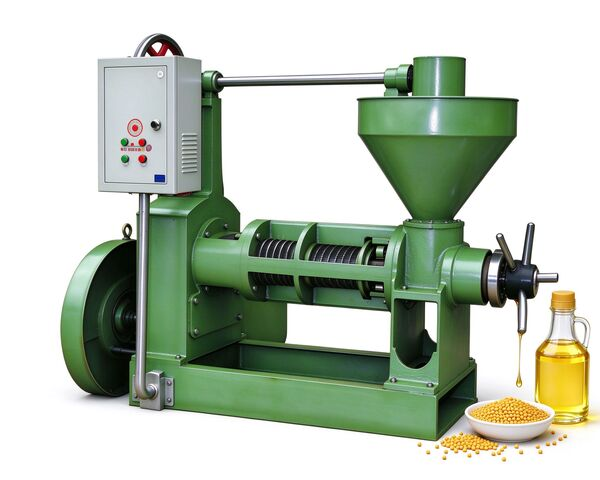
Same Crop, Two Different Equipment Problems
Bangladesh and Pakistan are often grouped together in South Asian mustard oil discussions because both countries grow mustard and both consume it as a traditional cooking oil. But the equipment decision inside each market follows a different logic.
In Bangladesh, the Kachi Ghani segment—unrefined mustard oil produced by mechanical cold pressing—accounted for 55.87% of the mustard oil market in 2025, valued at approximately USD 463 million within a total market estimated at USD 478.98 million for 2026 (Mordor Intelligence). The demand is not for “more oil” in the abstract. It is for a specific product identity: pungency retained, minimal processing, and a clear contrast with refined imported oils. The equipment that serves this market must prioritise temperature control and batch consistency over maximum throughput.
In Pakistan, the picture is different. Rapeseed and mustard oil production rose from 178,000 tonnes to 233,000 tonnes in MY 2025/26, while planted area expanded from 1.05 million to 1.21 million acres (Tridge, citing USDA data). Total vegetable oil production grew 30% to 550,000 tonnes, but Pakistan still imports around 90% of its vegetable oil demand. The growth is real, but it is happening inside an import-dependent system where throughput and extraction efficiency determine whether domestic crushing can compete with imported oil on cost. The equipment logic here leans toward adjustable screw speed and stable continuous operation, not the pursuit of a cold-press identity.
For buyers evaluating a mustard oil expeller, this distinction matters before any specification sheet is compared. KMEC has over two decades of experience in oil pressing equipment. The following sections break down the market structures, the process parameters that differ between the two routes, and the equipment configuration decisions that follow.
1. Bangladesh: The Kachi Ghani Premium and the Equipment It Requires
1.1 Why Kachi Ghani Is a Category, Not a Compromise
Kachi Ghani is often misunderstood outside South Asia as a lower-tech version of refined oil. The market data suggests otherwise. The unrefined segment commands 55.87% share and a market value of approximately USD 463 million. Consumers are not buying Kachi Ghani because it is cheaper. They are buying it because it carries a distinct sensory profile—pungency, aroma, and the perception of minimal processing.
This changes what the expeller is being asked to do. In a refined-oil plant, the expeller’s job is to extract as much oil as possible and hand it to the refinery. In a Kachi Ghani operation, the expeller’s job is to extract oil without destroying the compounds that define the product. The allyl isothiocyanate responsible for mustard’s pungency is volatile and heat-sensitive. If the pressing temperature climbs too high, the oil may still meet a yield target, but it loses the very character that justifies its premium.
The equipment implication is straightforward: a mustard oil expeller intended for the Bangladeshi Kachi Ghani market needs effective temperature management across the pressing zone, not just a high-pressure screw. Cooling capability, barrel temperature monitoring, and the ability to run at lower speeds without stalling are more important than the maximum tonnage figure on the nameplate.
1.2 FFA Is Part of the Category, Within Limits
A quality study of commercial mustard oils in Bangladesh reported FFA ranging from 0.69% to 1.40% and acid value from 1.92 to 2.81 mg KOH/g, with locally processed Ghani oil consistently at the higher end. This is sometimes read as a defect. In the Kachi Ghani context, it is more accurately understood as a boundary condition: the product is expected to retain some natural hydrolysis products, but excessive FFA shortens shelf life and signals poor seed handling or delayed pressing.
The equipment requirement is therefore not “minimise FFA at all costs,” which would push the process toward refining. It is “hold FFA within the category window” by controlling the variables that drive hydrolysis: the time between seed cleaning and pressing, the temperature of the seed and the press barrel, and the cleanliness of the press between batches. A Kachi Ghani expeller that cannot be cleaned quickly between batches, or that runs hot in the feed section, will drift toward the upper end of the FFA range even with good seed.
1.3 The Scale That Fits the Market
Research and Markets describes the Bangladeshi market as one where traditional cold-press units operated by small-to-medium mills remain central, processing domestic mustard seed with lean inventories of one to two months aligned with seasonal harvests. Mobile mini-mills and on-site cold pressing are also emerging as a decentralised production model, reducing post-harvest losses and retaining value in production areas.
This points toward equipment in the 1–10 TPD range, configured for batch or semi-continuous operation. The goal is not to build a single large plant serving national demand. It is to place flexible, temperature-controlled pressing capacity close to where the seed is grown or where the retail channel sits. A mustard oil expeller for this market should be serviceable by local technicians, have accessible temperature controls, and be sized so that a single mill can run on locally sourced seed without requiring year-round import logistics.
2. Pakistan: Yield Growth, Import Pressure and the Case for Adjustable Screw Speed
2.1 The Growth Is in Yield, Not Just Acreage
Pakistan’s rapeseed and mustard sector expanded output through a combination of area growth and yield recovery. Tridge notes that the 30% rise in vegetable oil production was driven mainly by higher yields of rapeseed and mustard rather than expanded cultivation, even though acreage did increase from 1.05 to 1.21 million acres. Seed production climbed from 469,000 tonnes to 614,000 tonnes, and oil output from 178,000 tonnes to 233,000 tonnes.
For a crushing operation, this matters because the economic case for domestic pressing depends on capturing more oil per tonne of seed at a cost that competes with imported oil. Pakistan still imports roughly 90% of its vegetable oil, so the domestic crusher is not operating in a protected bubble. The expeller has to earn its place through extraction efficiency and energy consumption, not through a premium story.
2.2 What the Mustard Expeller Data Actually Shows
A commercial 9-bolt screw expeller tested on mustard seed at 4.6% moisture content, with seed oil content of 35%, delivered 79% oil expression efficiency across three passes at an average throughput of 135 kg/h and an average worm speed of 46 rpm. The barrel temperature averaged 66.1°C, with the highest temperatures concentrated around bolts 5–7.
Two things stand out from this data. First, 79% recovery in three passes is not a single-pass number. It reflects the practical reality that mustard seed, with its fibrous hull and relatively high oil content, does not release all its oil in one squeeze. The equipment’s pass-to-pass handling and cake management matter as much as the screw geometry. Second, the 46 rpm average speed is in a moderate range, not an aggressive high-speed grind. This is consistent with the principle that pushing screw speed higher can raise throughput but often at the cost of extraction efficiency and higher barrel temperatures.
For the Pakistani market, the implication is that a mustard oil expeller should be evaluated on its ability to sustain repeatable recovery across multiple passes and to hold barrel temperature within a range that does not degrade oil quality, rather than on a single “maximum yield” claim. An adjustable screw speed is valuable here because seed quality varies between harvests and regions; a fixed-speed press that is optimised for one seed lot may underperform on the next.
2.3 The Equipment Logic: Flexibility Over Specialisation
Unlike Bangladesh, where the Kachi Ghani identity imposes a specific temperature and process envelope, Pakistan’s growing but import-exposed crushing sector benefits from equipment that can adapt to different seed qualities and throughput targets. A press that can run at lower speeds when seed is high in oil and at moderate speeds when the priority is volume gives the operator a way to manage both recovery and output. The same press may also need to handle rapeseed alongside mustard, which places a premium on compression ratio flexibility and changeover ease.
This is where the oil press machine configuration diverges between the two markets. The Bangladeshi Kachi Ghani mill prioritises a stable, cool-running process for a defined product. The Pakistani crusher prioritises the ability to hold recovery and throughput across variable feedstock while keeping barrel temperature under control.
3. Matching Expeller Parameters to Market Requirements
3.1 Temperature: A Product Definition Variable, Not Just a Quality Variable
In Kachi Ghani production, temperature is part of the product definition. The pungency and aroma that consumers pay for are heat-sensitive. An expeller that runs with a hot barrel in the feed section or that lacks cooling in the compression zone will produce oil that analyses as mustard oil but performs poorly on the sensory attributes that drive repeat purchase.
In the Pakistani crushing context, temperature is still a quality variable, but the tolerance is different. The 66.1°C average barrel temperature observed in the three-pass test is above the range typically associated with cold-press identity, yet it is consistent with a process where the priority is recovery and throughput across multiple passes. The equipment decision is not “hot vs cold” in the abstract; it is whether the press can hold a target temperature band that matches the intended product.
3.2 Screw Speed and Compression Ratio: The Adjustability Question
The mustard expeller data point of 46 rpm average speed at 135 kg/h throughput is useful as a reference, but it should not be read as a universal optimum. It describes one commercial expeller on one seed lot. The engineering takeaway is that mustard pressing operates in a moderate speed range, and that the press should be capable of holding that range without excessive vibration or temperature spikes.
Compression ratio matters because mustard seed oil content sits in the 35–40% range, with hull fibre influencing how the cake forms and releases oil. A compression ratio designed for a higher-oil, lower-fibre seed will behave differently on mustard. Equipment buyers should ask whether the mustard oil expeller can be supplied with a screw configuration suited to mustard’s fibre profile, and whether the discharge gap can be adjusted as seed moisture and oil content vary across the season.
3.3 FFA and Seed Handling: The Upstream Variables
The Bangladeshi FFA range of 0.69%–1.40%, with Local Ghani oil at the higher end, is a reminder that the expeller is not the only variable. Seed moisture, storage time, and the interval between cleaning and pressing all influence hydrolysis. An expeller with excellent temperature control cannot compensate for seed that has been stored wet or held too long before crushing.
For both markets, this means the equipment package should be considered alongside oilseed cleaning equipment and seed handling practice. A press fed with poorly cleaned seed will wear faster, run hotter in the feed zone, and produce oil with higher FFA and sediment. The expeller specification is only as good as the upstream discipline.
4. Investment Scale and Phased Configuration
4.1 Bangladesh: Small, Distributed Capacity
Commercial cold-press expellers in the Pakistani market list at price points ranging from roughly PKR 150,000 for a 10 kg/h unit to PKR 380,000 for a 25–28 kg/h unit, with smaller household and mini-commercial models starting lower. These figures reflect the low-capacity end of the regional equipment market and should be treated as a floor, not a benchmark for a Kachi Ghani operation that needs reliable temperature control and food-grade contact surfaces.
For Bangladesh, the realistic starting configuration is a 1–5 TPD cold-press line with cleaning, temperature-controlled pressing, and filtration. The investment case rests on serving a defined local or regional Kachi Ghani channel, not on competing with large refined-oil imports. A phased approach—start with pressing and filtration, add capacity as the retail channel stabilises—matches the decentralised structure of the market described by Research and Markets.
4.2 Pakistan: Efficiency Retrofit and Capacity Expansion
For Pakistan, the first equipment question is whether the operation is replacing traditional ghani capacity or adding new screw-press capacity alongside existing units. A mustard oil expeller with adjustable screw speed and a mustard-suitable screw profile can be justified on recovery improvement and throughput stability. If the operation already has cleaning and cake handling, the press upgrade may be the highest-return step before any building or utility expansion.
The phased logic here is press first, then auxiliary capacity. Cleaning, filtration, and oil storage can be scaled after the press is running at its target recovery and temperature band. This avoids over-investing in peripheral equipment before the core extraction performance is validated on locally sourced seed.
4.3 The KMEC Configuration Logic
KMEC configures mustard oil expeller and oil press machine packages around the intended product and feedstock, rather than around a single universal specification. For a Kachi Ghani-oriented project, the configuration emphasis is on temperature control across the pressing zone and batch-to-batch cleaning access. For a Pakistani crushing operation, the emphasis is on adjustable screw speed, mustard-compatible compression geometry, and sustained recovery across multiple passes. In both cases, the expeller is treated as part of a chain that includes oilseed cleaning equipment and downstream filtration, because the oil that leaves the press carries the consequences of every upstream decision.
5. FAQ
Q1: Why does Bangladesh’s Kachi Ghani segment account for 55.87% of the mustard oil market?
Consumer preference for unrefined, cold-pressed oil with retained pungency and minimal processing. The segment was valued at approximately USD 463 million within a total market of USD 478.98 million in 2026, reflecting a category identity rather than a price-driven choice.
Q2: What mustard oil expeller configuration suits the Bangladeshi market?
A small-to-medium cold-press configuration (roughly 1–10 TPD) with effective temperature control across the pressing zone, batch cleaning access, and filtration. The priority is preserving pungency and holding FFA within the 0.69%–1.40% range observed in commercial Bangladeshi samples, not maximising single-pass throughput.
Q3: What does the commercial mustard expeller data show for Pakistan?
A 9-bolt expeller on mustard seed at 35% oil content achieved 79% oil expression across three passes at 135 kg/h throughput and 46 rpm average worm speed, with barrel temperature averaging 66.1°C. This indicates that mustard pressing benefits from moderate screw speeds and multi-pass recovery rather than single-pass high-speed operation.
Q4: How much does a small mustard oil expeller cost in the region?
Listed commercial cold-press units range from roughly PKR 150,000 for a 10 kg/h model to PKR 380,000 for a 25–28 kg/h model in Pakistan. These are low-capacity regional price points; a Kachi Ghani-oriented line with temperature control and food-grade contact surfaces will sit above this floor.
Q5: Does screw speed need to be adjustable for mustard pressing?
Adjustability is valuable in both markets, but for different reasons. In Pakistan, variable seed quality and the need to balance recovery against throughput make adjustable speed a practical requirement. In Bangladesh, the ability to run at lower speeds without losing temperature control supports the Kachi Ghani product identity.
Q6: Can one expeller configuration serve both markets?
Not optimally. The Bangladeshi Kachi Ghani route prioritises a cool, stable pressing environment and batch cleanliness for a defined sensory product. The Pakistani crushing route prioritises adjustable speed, mustard-compatible compression geometry, and sustained multi-pass recovery under import-cost pressure. A single “universal” specification compromises both.
References
- Mordor Intelligence / Research and Markets, Bangladesh Mustard Oil — Market Share Analysis, Industry Trends & Statistics, Growth Forecasts (2026–2031), July 2026.
- Tridge Insights, “Pakistan’s Vegetable Oil Production Rises 30% in MY 2025/26 Amid Continued Import Dependence,” July 2026.
- Patil, R.T. & Ali, N., “Crushing characteristics of mustard with commercial oil expeller,” Journal of Food Science and Technology, 36(5), 1999, pp. 408–412.
- Nahida, U.S., Bashar, A. & Mia, M.A., “Physicochemical profiling and quality evaluation of commercial mustard oils brands in Bangladesh: Indicators of stability and consumer safety,” 2026.
- KissanMall Pakistan, commercial cold-press and oil expeller price listings, 2026.
- USDA Foreign Agricultural Service, Pakistan — Oilseeds and Products Annual, 2026 (as cited by Tridge).
For mustard oil expeller configuration for the Bangladeshi Kachi Ghani market or Pakistani crushing operations, contact the KMEC engineering team.