
A Market-Access Rule That Reaches Past the Refinery and Into the Oil Mill’s Intake Records
Most summaries of the EU Deforestation Regulation (EUDR) frame it as a “deforestation-free” requirement covering seven commodities. That’s accurate, but for anyone specifying equipment for an edible oil processing line, it misses the operative point. What the regulation actually demands is narrower and more concrete: for every consignment of palm oil or soybean oil placed on the EU market, the operator must be able to identify the plots of land where the raw material was grown, and demonstrate that those plots were not deforested after 31 December 2020 and were farmed legally.
That obligation sits with the operator—the entity first placing the product on the EU market. Under the December 2025 amendment (Regulation (EU) 2025/2650), the Due Diligence Statement (DDS) is filed solely by that first-in-line operator. Downstream operators and traders no longer file their own statements, though the first downstream operator must retain and pass on the DDS reference number. An oil mill in Indonesia, Malaysia, West Africa or South America is not, in most cases, the EUDR operator. Its EU buyer is. But the mill is the physical and informational chokepoint where farm-level material converges. Whether the operator can file a truthful DDS depends on what the mill can document.
This is the shift equipment buyers need to build into their project budgets. The oil mill is no longer just a processing node. It is becoming a data node—and the equipment specification has to make that role technically feasible. KMEC has over two decades of experience configuring oil mill plants and edible oil processing lines. The sections below cover the scope of EUDR, the data architecture it imposes on the mill, the smallholder traceability gap that defines the practical difficulty, and the equipment implications that follow.
1. First, Confirm Whether Your Oil Is in Scope
EUDR covers seven commodity groups: cattle, cocoa, coffee, palm oil, rubber, soya and wood. For edible oil processors, two streams matter: palm oil and soybean oil. Rapeseed oil and sunflower oil fall entirely outside the scope of the Regulation. That’s not a minor footnote. A processor weighing feedstock flexibility between palm, soy, rapeseed and sunflower is also weighing whether the finished oil will need plot-level traceability to enter the EU market.
Scope is determined by CN/HS code in Annex I, not by whether a product “contains” a regulated material. Palm oil falls under EUDR. A finished margarine whose CN code does not appear in Annex I is not subject to a separate due diligence procedure—even though its palm oil ingredient was subject to that procedure earlier in the chain. For an oil mill plant, the compliance burden attaches to the crude oil and the primary processing stream, not necessarily to every downstream formulation.
Timelines have been deferred twice. Under the current timetable, large and medium-sized operators apply the rules from 30 December 2026; micro and small operators from 30 June 2027. Equipment procurement cycles for a new oil mill plant run 12–24 months. A project commissioning after the 2026 deadline can’t treat EUDR data capability as a post-startup upgrade.
2. The Data Architecture: Plot-Level Geolocation, Not Mill-Level Visibility
The core data requirement is geolocation of the production plot. For plots under 4 hectares, a single latitude and longitude point is sufficient—provided that point identifies the plot’s location. For plots 4 hectares and above, polygon data (perimeter coordinates) is required. FEDIOL’s guidance goes a step further: even for plots under 4 hectares, supplying polygon data can help avoid false non-compliance alerts.
This is a materially higher bar than “know your supplying mills.” A palm oil mill may know which collectors delivered fruit on a given day and may monitor its broader sourcing area. But a supply shed is not a plot list. The supply shed represents the wider area from which a mill may source fruit; it does not establish which individual farms contributed to a particular consignment. EUDR requires the latter.
For an oil mill plant, intake records must be structured to carry plot references forward. The key records, as described in palm oil traceability guidance, are mill identity, intake volumes, supplier lists carrying plot references, delivery documentation, and volumes that reconcile between those sources. A mill that weighs and processes fruit without linking deliveries to plot identifiers can still produce oil. What it cannot produce is the evidentiary chain an EU buyer needs to file a DDS.
3. The Smallholder Gap: 2.67 Million Farmers and a Structural Traceability Deficit
The practical difficulty isn’t in the mill’s own records. It’s in what arrives at the mill gate.
Indonesia’s palm oil supply chain illustrates the scale. 2.67 million independent smallholder farmers produce 40–41% of national output, yet remain excluded from digital traceability systems. Two technical challenges remain unsolved. The first-mile problem: existing systems presuppose continuous connectivity and document-capable actors. The commingling problem: fresh fruit bunches (FFB) from hundreds of farms are processed simultaneously at mill nodes, making physical segregation infeasible.
Fresh fruit bunches must be processed within 24 hours of harvest to prevent oil degradation. That short window means fruit from company estates, independent farmers and multiple collectors can reach a mill on the same day and be combined during processing. A mill may know which collector delivered a load without having complete records of every farm that contributed fruit.
Under EUDR, this is not a documentation inconvenience. Commodities of unknown origin cannot be mixed with EUDR-compliant material. The EU Commission’s position is explicit: commodities must be segregated from unknown-origin or non-compliant commodities at all stages. No blending, no partial traceability, no batch dilution. If an undocumented delivery can’t be reliably separated from the rest of a batch, the uncertainty can affect considerably more volume than the original delivery.
This is why mill lists, satellite monitoring and certification alone don’t close the gap. Satellite alerts and supply-shed mapping help identify forest-related risk; they don’t establish whether fruit from a particular plot entered a specific mill delivery. Mass-balance certification—which allows certified material to be mixed with non-certified material—can’t by itself establish EUDR compliance. RSPO’s mass-balance model permits mixing certified and non-certified palm oil, but those arrangements “do not automatically satisfy EUDR expectations.” EUDR Navigator puts it more directly: mass balance “fails to meet EUDR compliance standards due to its inability to precisely trace commodities back to their origin.”
A separate but related gap is legality. A plot may show no deforestation after the cut-off date while questions remain about land-use rights or plantation permits. The EU’s own FAQ clarifies that formal land titles are not always required if domestic law allows production and commercialisation without them—but operators must still verify that there is no risk of illegality in the supply chain. The mill’s supplier records therefore need to carry not only coordinates but legality evidence tied to the same plot reference.
4. What This Means for Equipment Selection and Mill Configuration
For an equipment buyer, EUDR doesn’t change the physics of pressing, extraction or refining. It changes what the material handling and batch management layer around that equipment must be able to do. The implications below are practical, not theoretical.
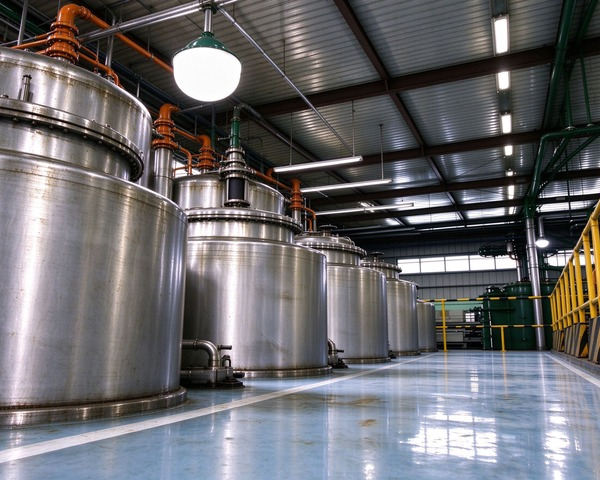
Batch identity must survive the process. EUDR-compliant palm or soy material cannot be blended with unknown-origin material. That rules out a mill design where intake from multiple suppliers is commingled in a single silo or continuous process stream without batch separation. The oil mill plant layout needs to accommodate lot-based intake, segregation and traceable transfer from receiving through pressing or extraction, so that a finished oil batch can be linked back to a defined set of plot references.
Segregation can be physical or temporal—but it has to be designed in. Industry guidance for mills recommends preparing for segregated sourcing either physically (separate tanks and lines) or temporally (designated compliant processing windows). The temporal option can be lower-cost where infrastructure investment is prohibitive, but it’s logistically demanding: the mill must be able to guarantee that no unknown-origin material enters the system during a designated compliant run. Either route is a layout and control-philosophy decision, not an administrative afterthought.
Intake data capture is part of the plant scope. Plot coordinates, harvest dates and supplier identifiers arrive with the raw material. If the mill’s weighing and receiving system records only weight and supplier name, the plot reference is lost at the gate. A mill configured for EUDR readiness needs reception records that can accept and store plot-level identifiers—whether through a weighbridge interface, a supplier app, or a simple digital log—and carry them into the batch record. This isn’t a feature of the press or the extractor. It’s a feature of the front-end material handling and data layer that KMEC configures alongside the processing equipment.
The three-level distinction matters: DDS, batch, delivery. EUDR forces a clean separation between the DDS level (due diligence declaration, reference number, origin data, risk assessment), the batch level (which specific quantity has which origin and which DDS reference), and the delivery level (which quantity from which batch went to which recipient). A mill’s batch records must be able to support this structure. If the plant’s control system treats “batch” as a production run without a defined origin set, the data architecture can’t be retrofitted without touching the front end of the plant.
Supplier data is a precondition, not a software add-on. No equipment supplier can generate plot coordinates that the mill hasn’t collected. What the equipment and system configuration can do is remove barriers to collecting and carrying that data. A mill that starts with a receiving sheet designed around plot references will find EUDR compliance manageable. A mill that starts with a weight-only intake record will face a retrofit that touches the front end of the plant, not just the IT system.
5. A Practical Checklist for Equipment Buyers Facing EUDR Exposure
- Confirm feedstock scope. Palm oil and soybean oil are in scope; rapeseed and sunflower oil are out. If the project may switch between feedstocks, design the data layer for the in-scope streams from the outset.
- Define the batch unit before specifying equipment. Decide what constitutes a traceable lot at intake, and require that the oil mill plant layout and control philosophy can segregate and track that lot through pressing, extraction, storage and dispatch.
- Specify intake data fields. Require that the receiving system can capture plot ID or coordinates, harvest date and supplier identity, and link them to the lot record. A weighbridge ticket with weight only won’t cut it.
- Choose physical or temporal segregation deliberately. Physical segregation means separate tanks and lines; temporal segregation means designated compliant processing windows. Either must be reflected in the plant layout and operating procedure, not left to ad hoc decisions.
- Treat certification as supporting evidence, not a substitute. RSPO, ISPO, MSPO or ISCC certification can inform risk assessment, but a mass-balance certificate alone does not prove plot-level origin. The equipment and data configuration must support segregation or plot-referenced aggregation.
- Plan the data layer with the same lead time as the processing equipment. EUDR obligations for large and medium operators begin 30 December 2026; micro and small operators 30 June 2027. A mill that commissions after the applicable date needs the intake and batch-tracking capability from day one, not as a phase-two project.
6. FAQ
Q1: Does EUDR apply to all edible oils?
No. EUDR covers seven commodity groups including palm oil and soya (soybean oil). Rapeseed oil and sunflower oil remain outside the scope of the regulation. A processor handling multiple feedstocks needs to distinguish which streams carry the plot-level traceability obligation.
Q2: Is the oil mill the “operator” under EUDR?
In most cases, no. The operator is the entity first placing the product on the EU market. Under Regulation (EU) 2025/2650, only that first-in-line operator must submit a DDS. But the mill is where plot-level material converges, and the EU buyer’s DDS depends on the mill’s records. The mill is a data node, not the legal operator.
Q3: What geolocation data is required for each plot?
For plots under 4 hectares, a single latitude and longitude point sufficient to identify the plot’s location can be used. For plots 4 hectares and above, polygon data (perimeter coordinates) is required. The DDS also requires the date or time range of production for each plot.
Q4: Can a mill rely on mass-balance certification for EUDR compliance?
No. Mass-balance models allow certified material to be mixed with non-certified material. EUDR requires that commodities be segregated from unknown-origin or non-compliant material at all stages; no blending, partial traceability or batch dilution is allowed. A mass-balance certificate alone cannot establish compliance. The mill’s batch management must support physical or temporal segregation.
Q5: Why is the smallholder supply chain a particular problem?
Indonesia alone has 2.67 million independent smallholders producing 40–41% of national output, yet many remain outside digital traceability systems. Fruit must be processed within 24 hours, so deliveries from multiple farms and collectors can be combined at the mill on the same day. Without deliberate intake and segregation design, plot-level separation becomes infeasible.
Q6: What is the compliance deadline?
Under the current timetable, large and medium-sized operators apply the rules from 30 December 2026; micro and small operators from 30 June 2027.
References
- IEEE, “Blockchain Traceability for EUDR-Compliant Indonesian Palm Oil Supply Chains,” 2026 — Indonesia’s palm oil supply chain faces a structural traceability deficit affecting 2.67 million smallholder farmers who produce 41% of national output yet remain excluded from digital traceability systems; first-mile data capture gap and FFB commingling at mill nodes.
- German Federal Office for Agriculture and Food (BLE), EUDR FAQs — for plots below 4 hectares, geolocation can be described with one latitude and longitude point; for plots above 4 hectares, polygon data is required.
- EUDR Navigator, “EUDR Mass Balance vs. Segregation: Operational Guide,” August 2026 — mass balance fails to meet EUDR compliance due to inability to precisely trace commodities to origin; commodities must be segregated from unknown-origin or non-compliant material at all stages; no blending, partial traceability or batch dilution allowed.
- Zero Deforestation Hub, “Cross-Sectoral Analysis: EUDR Thailand Palm Oil and Wood,” 2025 — mills should prepare for segregated sourcing either physically (separate tanks and lines) or temporally (designated compliant processing windows).
- osapiens, “Updated EUDR FAQs and Guidance Published,” May 2026 — compliance deadlines unchanged: 30 December 2026 for large and medium operators; 30 June 2027 for micro and small enterprises.
- ECOS/ISEAL, RSPO mass balance and EUDR — RSPO mass-balance model permits mixing certified and non-certified palm oil, but these arrangements do not automatically satisfy EUDR expectations.
- EUDR Palm Oil Compass 2026 — CN code determines scope, not the share of a commodity; margarine made from palm oil is not covered; deadlines and role structure.
- Polygon One, EUDR Palm Oil Compass 2026 — data fields include batch number, mill list with coordinates, plot ID and size, segregation commitment.
- FEDIOL, EUDR FAQ guidance — even for plots under 4 hectares, providing polygon data is advisable to avoid false non-compliance alerts.
For oil mill plant layout, batch traceability and segregation design, or EUDR-ready intake data architecture for edible oil processing lines, contact the KMEC engineering team.