
Softening Doesn’t “Heat the Seed.” It Defines Whether the Flaker Can Form a Flake at All.
On a pretreatment line, softening is often described as “warming the seed so it flakes more easily.” That is accurate but incomplete. The more useful description is this: softening sets the plasticity window the seed must occupy when it enters the flaking mill.
Inside the roll gap, the seed is not being crushed. It is being stretched and flattened. A seed that is too dry and too cold behaves brittlely: it fractures, the oil-bearing cells are not opened cleanly, and the mill produces fines instead of flakes. A seed that is too wet or too warm becomes adhesive: it sticks to the roll surface, refuses to release as a coherent sheet, and the downstream extractor bed loses permeability. Neither failure mode announces itself at the softening stage. Both surface later — as channeling in the extractor, as higher residual oil, as lower throughput.
Softening decides whether a flake can be made. Flaking decides how thin and how uniform that flake is. Together they set the geometric ceiling on extraction efficiency. KMEC has over two decades of experience configuring oilseed pretreatment and flaking equipment. The sections below examine the plasticity window, the geometric logic of flake thickness, feedstock-specific parameter shifts, and the hidden drift caused by roll wear.
1. The Plasticity Window: Moisture and Temperature as Coupled Variables
1.1 What the Softening Machine Actually Delivers
Cracked seed leaving the cracker typically arrives at 8–10% moisture — dry enough to be brittle, not dry enough to flow cleanly through a roll gap. A softening machine raises moisture into the 10–12% range and temperature to 60–70°C, using direct steam injection combined with indirect heating over a residence time of 15–30 minutes. The purpose is not “cooking” in the culinary sense. It is making the seed deform rather than shatter under the flaking roll.
The measurable payoff is 15–20% lower flaking power consumption. That figure is not a soft benefit. It is the direct consequence of feeding the flaker material that yields to pressure instead of resisting it. A flaker grinding through dry, brittle seed draws more current per tonne and generates more fines — fines that are oil-bearing material never cleanly entering the extraction stage.
1.2 Drum vs Stack: Why Residence-Time Uniformity Matters More Than Footprint
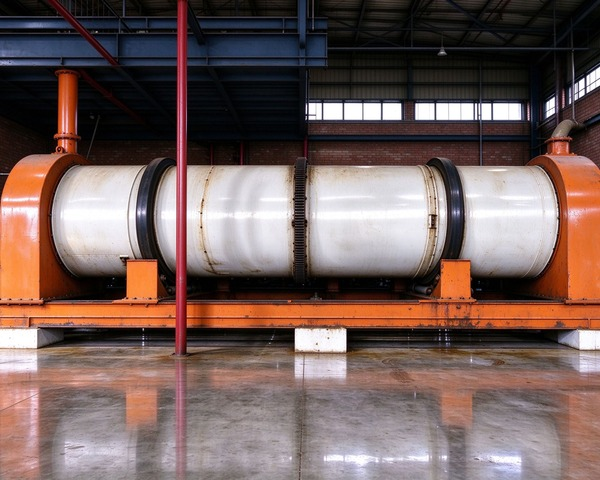
Softening equipment splits into two broad architectures. Vertical stack conditioners use trays and agitators; seed levels and residence time are adjustable, and the footprint is compact. Horizontal rotary drum conditioners use a slowly rotating drum with internal heating elements; seed is lifted and showered through the drum volume, and the continuous rotation eliminates the processing dead zones that can appear in tray-based equipment.
The engineering difference is residence-time distribution. A stack conditioner’s trays can produce a wider spread of actual treatment times: some seed passes quickly, some lingers. A drum conditioner’s continuous tumbling and adjustable drum speed give a narrower distribution — seed that enters together receives closer to the same heat and moisture dose. For a flaker that needs a narrow plasticity window, that uniformity is not a convenience. It is the difference between a flake thickness distribution that holds within tolerance and one that drifts batch to batch.
KMEC’s oilseed drum softening machine is configured around this logic: the drum speed and residence time are set against the target feedstock’s moisture absorption behaviour, not against a generic “heating time.” The goal is to deliver seed to the flaker at the same plasticity every hour, not merely at the “right average” plasticity.
2. Flake Thickness: The Geometric Variable That Governs Extraction
2.1 The Quantified Relationship
Flaking exists to rupture oil-bearing cells and shorten the distance solvent must travel from the flake surface to the oil inside. That distance is set by flake thickness, and the relationship is steep.
Industry data shows that a 10% increase in average flake thickness can reduce extraction efficiency by 2–4 percentage points, because thicker flakes leave unruptured cells at the centre. For a plant processing hundreds of tonnes per day, a drift from 0.30 mm to 0.33 mm is not a cosmetic variation. It is a recurring loss of recoverable oil.
The physical boundary conditions are equally clear. Flakes thinner than roughly 0.2 mm become fragile; they fracture in conveying and extraction, generating fines that cause channeling and burden the miscella filtration system. Flakes thicker than 0.4 mm leave the centre insufficiently opened; solvent cannot penetrate to the interior within a practical residence time. The operable window for solvent extraction sits between those limits.
2.2 Feedstock-Specific Windows
Flake thickness targets are not universal. Soybean is typically flaked to 0.25–0.30 mm, balancing cell rupture against flake durability. Rapeseed, with a harder seed coat and smaller kernel, is run slightly thicker at around 0.35 mm; pushing thinner increases fines without proportionate extraction gain. Cottonseed meats, higher in oil and softer in texture, tolerate 0.35–0.40 mm without collapsing in the extractor bed. The flaking mill’s roll gap must be adjustable and repeatable across these ranges — not fixed at a single “best” setting.
3. Roll Wear: The Hidden Drift in Flake Thickness
3.1 How Wear Degrades the Flake Without Announcing Itself
Flaking rolls operate under continuous abrasive load. Roll hardness is typically specified at HRC 60–65, precision-ground to hold dimensional accuracy. But hardness does not eliminate wear; it delays it. Over time, the roll face wears unevenly, and the effective gap across the roll width stops matching the nominal setting. The flake thickness distribution widens: the average may still look acceptable, but the proportion of over-thick flakes rises.
Industry analysis is blunt about the consequence: rolls worn out of tolerance are one of the most common hidden causes of high residual oil. The mechanism is the same as a deliberately thicker flake — unruptured cells in the centre — but the cause is not a process decision. It is an unnoticed mechanical drift.
3.2 Maintenance Logic: Distribution, Not Uptime
Because wear is gradual, a maintenance schedule based on “running hours” or “tonnes processed” can miss the point at which flake quality begins to decline. The more direct trigger is flake thickness distribution. When the spread of measured flake thickness widens — even if the mean remains within the target band — the roll face is likely out of tolerance. At that point, regrinding or replacement is not an overhaul decision; it is a residual-oil decision.
KMEC’s flaking mill configurations treat roll hardness, grinding precision and gap-adjustment durability as selection criteria equal in weight to throughput. A flaker that holds a nominal gap on day one but loses tolerance after months of abrasive duty is not a flaker that holds flake thickness. The softening machine upstream and the flaking rolls downstream form one continuous material-conditioning chain: a softening drift changes the seed’s resistance to deformation, and a roll-wear drift changes the gap through which that seed must pass. Both show up at the solvent extraction plant, not at the point of origin.
4. FAQ
Q1: Can flaking proceed without softening?
Not cleanly for most feedstocks. Dry, brittle seed fractures in the roll gap instead of deforming into a coherent flake, producing fines that cause channeling and reduce extraction efficiency. Softening raises moisture to 10–12% and temperature to 60–70°C so the seed deforms rather than shatters.
Q2: What is the measurable benefit of correct softening?
A 15–20% reduction in flaking power consumption, fewer fines and longer roll life. The power saving is a direct result of feeding the flaker material that yields to pressure rather than resisting it.
Q3: How much does flake thickness affect extraction?
A 10% increase in average flake thickness can reduce extraction efficiency by 2–4 percentage points, because thicker flakes retain unruptured oil cells at the centre. Flakes below ~0.2 mm become fragile and generate fines; flakes above ~0.4 mm leave the centre inadequately opened.
Q4: Drum or stack softening machine — which suits a flaking line better?
A horizontal drum conditioner generally delivers a narrower residence-time distribution than a tray-based stack conditioner, because continuous tumbling avoids the dead zones and uneven treatment times that tray designs can produce. For a flaker that requires a narrow plasticity window, that uniformity supports more consistent flake thickness.
Q5: How does roll wear affect residual oil?
Rolls wear unevenly across the face, so the effective gap no longer matches the nominal setting. The flake thickness distribution widens, the proportion of over-thick flakes rises, and unruptured cells at the flake centre raise residual oil. Worn rolls are described in industry data as one of the most common hidden causes of high residual oil.
Q6: How should roll maintenance be scheduled?
Trigger regrinding or replacement on flake thickness distribution, not on running hours alone. When the spread of measured thickness widens — even if the mean remains in-band — the roll face is likely out of tolerance. Roll hardness is typically HRC 60–65, but hardness delays wear rather than eliminating it.
References
- Pragya India, “Conditioner in Oil Seed Processing: Purpose and Operation,” 2026 — cracked seed arrives at 8–10% moisture; conditioner raises to 10–12% at 60–70°C over 15–30 minutes; 15–20% reduction in flaking power; dry brittle seed produces fines and channeling.
- Pragya India, “Conditioner — 50–500 TPD” — direct steam injection plus indirect heating; moisture target 10–12% from 8–10% incoming; temperature 60–70°C; residence time 15–30 minutes; 15–20% less flaking power, fewer fines and longer roll life.
- UEC, “Conditioning,” 2021 — two types of conditioners: vertical stack and horizontal rotary; temperature, moisture and residence time critical to output.
- Myande, “Rotary Drum Conditioner” — horizontal rotary conditioner uses stepless speed regulation to adjust material residence time by variety and physical properties.
- Oil Mill Equipment, “Oilseed Drum Softening Machine” — continuous drum rotation ensures uniform mixing and heating, eliminating processing dead zones found in traditional equipment; residence time adjustable by oilseed type and moisture; single-unit capacity 50–1,500 t/day; drum structure requires roughly one-tenth the power of traditional vertical conditioners.
- Vic Machinery, “How To Reduce Residual Oil In Oil Cake,” September 2026 — target flake thickness 0.25–0.4 mm; 10% increase in average flake thickness reduces extraction efficiency by 2–4 percentage points; rolls worn out of tolerance are one of the most common hidden causes of high residual oil.
- Pragya Equipment, “Flaker Machine Guide: Turning Seeds into Flakes for Extraction,” 2026 — flake thickness 0.25–0.35 mm; roll hardness HRC 60–65 precision-ground; surface area increase 10–15× over cracked seed; fines kept under 5% with hard rolls and roll cooling; capacity 50–500 TPD.
- Guance Machinery, “Optimizing the Soybean Oil Pretreatment Process Flow,” 2025 — conditioning heats kernels to 60–70°C and moisturizes to 10–11% for flaking.
For oilseed softening machine or flaking mill selection, plasticity-window and flake-thickness matching, or pretreatment-line audits, contact the KMEC engineering team.