
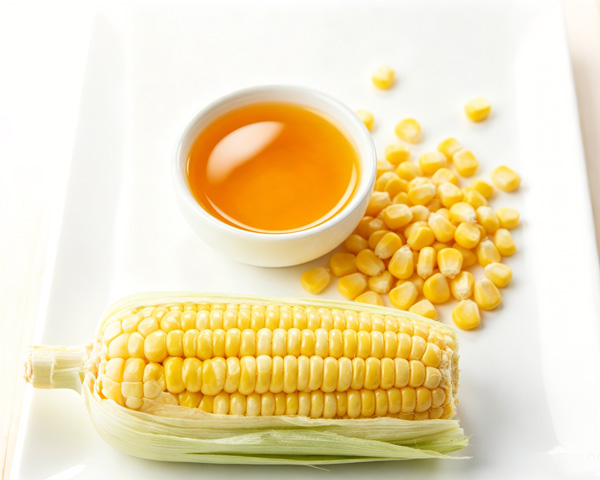
Corn oil is a high‑quality vegetable oil extracted from corn germ. But you cannot press oil directly from corn kernels – the first step in making corn oil is to “take out” the germ from the kernel. The whole process requires just three steps: Germ Separation → Pressing/Extraction → Refining. Let us walk you through the complete process in 3 minutes.
Step 1: Germ Separation (How to choose among three methods?)
Corn germ accounts for only 7%–14% of the corn kernel, yet it contains more than 80% of the kernel’s oil. There are three mainstream methods for germ separation:
1. Dry Method
No water added; direct mechanical crushing and sieving.
✅ Simple, low energy consumption, no pollution
❌ Low extraction efficiency, germ contains some endosperm
🔧 Equipment: Crusher, Sieving Machine
2. Wet Method
Corn is steeped in water, then crushed, and a rotary liquid separator separates germ from starch. The germ is then dried.
✅ Separation efficiency as high as 85%–95%, germ oil content 44%–50%
❌ High energy consumption, high pollution, large investment
🔧 Equipment: Steeping Tank, Rotary Separator, Dryer
3. Semi‑Wet Method (Recommended)
Adjust the corn moisture content to 16%–20%. Utilising the difference in elasticity, toughness and compressive strength between germ and endosperm after water absorption, a press and a flat sieve are used for separation.
✅ Extraction rate over 85%, low energy consumption, no pollution, low investment
❌ Germ may still contain a small amount of endosperm
🔧 Equipment: Moisture Conditioning Unit, Dehuller, Crusher, Press, Flat Sieve
> Summary: The semi‑wet method is recommended for small and medium‑sized oil plants; large plants pursuing high efficiency may choose the wet method.
Step 2: Oil Extraction – Pressing vs. Solvent Extraction
Once the corn germ is separated, the next step is to extract the oil. There are two main processes:
Pressing (Physical Pressing)
– Applicable to: Small and medium‑sized oil plants
– Core equipment: Screw oil press (pressure must exceed 69 MPa)
– Oil yield: Approximately 65% (6%–7% residual oil in cake/meal)
– Advantages: Simple equipment, no chemical residues, retains natural flavour
Solvent Extraction (Chemical Extraction)
– Applicable to: Large oil plants
– Core equipment: Flaking Mill, Cooking Kettle, Pre‑press, Extractor, Evaporator, Condenser, Solvent Recovery System
– Oil yield: Combined with pre‑pressing, total oil yield can reach 97%
– Advantages: Extremely high raw material utilisation
– Note: Requires a solvent recovery system for safety and environmental protection
> Common combination in large plants: Pre‑pressing (first press out part of the oil with a screw oil press) + solvent extraction (extract remaining oil from the cake/meal) – total oil yield up to 97%.
New Technology: Aqueous Enzymatic Extraction
Uses a mixture of water and enzymes to extract oil. It is environmentally friendly and mild, but not yet widely used in industrial applications.
Step 3: Refining – Making Corn Oil Clear, Stable and Edible
Freshly extracted crude corn oil is dark amber in colour and contains phospholipids, free fatty acids, waxes and odours. It cannot be consumed directly. It must be processed with refining equipment to become clear, stable finished oil.
Refining mainly consists of four steps:
| Process | Function | Core Equipment |
| Degumming | Removes phospholipids and gums | Degumming tank, centrifuge separator |
| Deacidification | Removes free fatty acids | Alkali refining kettle / deacidification tower |
| Bleaching | Adsorbs pigments, lightens oil colour | Bleaching tower, filter (with activated clay) |
| Deodorization | Removes odours | Deodorization tower, vacuum system |
(If needed, a dewaxing step can be added to prevent cloudiness at low temperatures. Equipment: dewaxing crystalliser and filter)
Refined corn oil is not only suitable for home cooking but can also be used as a base oil for health foods, pharmaceuticals and cosmetics.
Understand the Complete Corn Oil Production Process
Corn kernels → Germ separation (dry/wet/semi‑wet) → Corn germ → Pressing/Extraction → Crude corn oil → Refining (degumming → deacidification → bleaching → deodorization) → Finished corn oil
What Equipment Do You Need? (List by Process)
| Process | Recommended Equipment |
| Germ separation (semi‑wet) | Moisture conditioning unit, dehuller, crusher, press, flat sieve |
| Pressing | Screw oil press (>69 MPa) |
| Solvent extraction | Flaking mill, cooking kettle, pre‑press, extractor, evaporator, condenser, solvent recovery system |
| Refining | Degumming tank, centrifuge separator, alkali refining kettle/deacidification tower, bleaching tower, filter, deodorization tower, vacuum system |
How is corn oil made? It is just three steps: Germ Separation → Pressing/Extraction → Refining. Whether you plan to build a small oil plant or a large production line, you can choose different process combinations according to your needs. We provide complete corn oil processing equipment – from germ separation and oil extraction to refining. Our engineers can tailor a solution for you.
Want to learn more about equipment or get a quote? Feel free to contact us.