
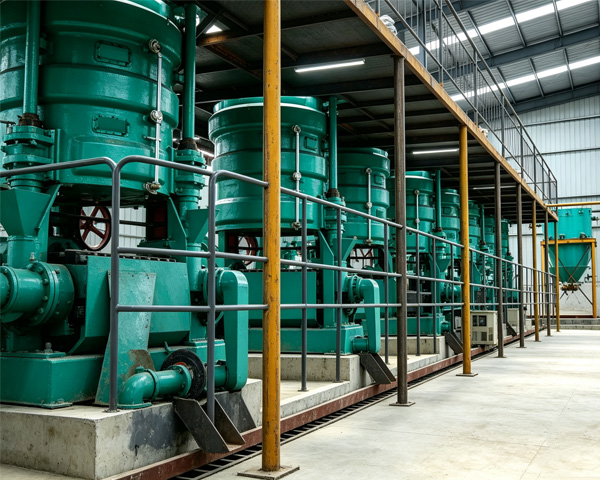
Nigeria is Africa’s largest peanut producer, with an average annual output of over 3 million tonnes. In the 2025 planting season, Nigeria is expected to harvest approximately 4.3 million tonnes of groundnuts, slightly above the five‑year average. At the same time, Nigeria spends over US$600 million annually on edible oil imports – this massive supply‑demand gap represents a golden opportunity for local groundnut oil processing.
But before starting a groundnut oil processing project, the most practical question remains: How much does it actually cost?
The answer depends on three variables: scale, technology, and equipment configuration. This article breaks down the real cost of building a groundnut oil plant in Nigeria from three dimensions – equipment, site, and operations.
I. Why Now Is the Best Time to Enter the Nigerian Groundnut Oil Market
Abundant raw materials: Nigeria has vast groundnut cultivation areas, mainly in the northern states of Katsina, Kaduna, and Kano. With 2025 production estimated at 4.3 million tonnes, raw material supply is secured.
Import substitution dividend: Nigeria’s huge edible oil import bill is a persistent concern. Local industry associations have repeatedly called on the government to protect domestic producers – meaning local processors are benefiting from an increasingly favourable policy environment.
Strong market demand: Groundnut oil is a daily cooking staple in Nigerian households, with steady and growing market demand. Whether for bulk wholesale or bottled retail, sales channels are secure.
II. Cost Comparison of Three Scale Options
Depending on plant scale and target market, total investment typically ranges from US$30,000 to US$300,000. Below is a detailed comparison of three typical configurations:
| Scale | Daily Processing Capacity | Equipment Investment | Site & Labour | Product Positioning | Best For |
|---|---|---|---|---|---|
| Small | 10 tonnes/day | $35,000–50,000 | Small site, 2–3 workers | Crude oil for food/industrial use | Startups, small cooperatives |
| Medium | 20 tonnes/day | $60,000–100,000 | Dedicated workshop, 5–8 workers | Refined oil for direct sale | Regional suppliers, mid‑scale investors |
| Large | 50 tonnes/day | $150,000–250,000 | Large site, 10+ employees | Meets national/export standards | Large enterprises, exporters |
All figures are estimates. Actual costs vary by equipment configuration, level of automation, and local construction conditions.
Advantages of a small plant: Low entry barrier and manageable risk. If you have limited capital and are just starting out, a small plant is the safest choice. A 10‑tonne‑per‑day peanut oil expeller with basic filtration equipment is enough to start producing crude oil for the local market.
Advantages of a medium plant: Modular design allows for future expansion. Adding refining equipment upgrades your product from crude to refined oil, opening access to supermarkets and retail channels with higher profit margins.
Advantages of a large plant: Industrial‑scale production with integrated automation and ERP systems delivers the lowest overall unit cost – ideal for export or supplying large food companies.
III. Fixed Costs vs. Variable Costs: Where Does the Money Go?
Building a groundnut oil plant in Nigeria involves two main cost categories:
Fixed Costs (one‑time investment):
- Land & facilities: Leasing or purchasing land, building factories and warehouses
- Equipment procurement: Core equipment includes groundnut sheller, cleaning sieve, dryer, screw oil press, and oil filter
- Installation & training: Equipment setup and operator training
Variable Costs (ongoing expenses):
- Raw materials: Groundnut prices are the most volatile, affected by season and market conditions
- Energy consumption: Electricity, fuel, and water during production
- Packaging & transportation: Bottles and logistics costs
- Temporary labour: Hired during peak production periods
IV. Five Key Factors Affecting Costs
In Nigeria, the following five factors have the greatest impact on the return on investment for a groundnut oil plant:
1. Groundnut price volatility
Groundnuts are the largest input cost, with prices varying significantly by season. Prices are lower during the harvest season (October–December) and can rise 20%–30% during the off‑season. The profitability of a peanut oil press depends largely on the timing of raw material procurement.
Recommendation: Sign long‑term supply contracts with local farmers; build storage facilities to buy at low prices during the harvest and process during the off‑season.
2. Equipment source and quality
The origin of equipment affects both cost and long‑term performance. High‑quality groundnut oil processing equipment may have a higher upfront cost, but lower maintenance costs and longer service life make it more cost‑effective over time.
3. Labour costs and skills
Labour availability and wage levels vary by region. Skill training affects production efficiency and waste rates.
4. Energy costs
Edible oil production is energy‑intensive. Electricity and fuel costs are high – price increases or power outages can significantly impact operations.
5. Policy and taxation
Nigeria’s agricultural tax incentives, tariffs, and subsidies affect both setup and operating costs.
V. Equipment Selection: What to Buy First, What to Delay?
Key equipment for a groundnut oil processing line includes:
- Pre‑treatment equipment: Sheller (for in‑shell groundnuts), cleaning sieve, dryer – pre‑treatment quality directly affects oil yield
- Oil press: The screw oil press is the core machine – choose a proven model already operating in Nigeria
- Oil filtration unit: Removes impurities from crude oil, improving appearance and extending shelf life
- Refining system (optional): Degumming, deacidification, bleaching, deodorisation – can be deferred if selling only bulk crude oil
- Filling and packaging machine (optional): For bottled retail products – not needed for wholesale sales
Budget control principle: Prioritise essential equipment and delay non‑essential purchases. Start with the peanut oil expeller and filtration unit to begin production, then add refining and filling lines once revenue is stable.
VI. Three Practical Budget Control Tips
1. Prioritise essential equipment, delay non‑essential items
Start with the screw oil press and filtration unit, then add refining and packaging later.
2. Choose standard models
Models already proven in Nigeria are easier to source spare parts for and have shorter delivery times.
3. Choose a supplier with local technical support
Reliable after‑sales support minimises downtime and ensures production continuity.
VII. Your Next Step
Nigeria’s groundnut oil processing sector is in a policy dividend phase – abundant raw materials, significant import substitution potential, and strong market demand. Starting small with a reliable groundnut oil press to validate the market and build a customer base, then gradually expanding capacity and product lines, is a proven path to success.
We offer flexible capacity solutions from small to large, including on‑site assembly and technical training. Whether you are planning a 10‑tonne‑per‑day small oil mill or an industrial‑scale line of 50 tonnes per day or more, we can provide the most suitable groundnut oil processing equipment configuration based on your budget and raw material situation.
Contact us today for a customised investment plan and quotation for your groundnut oil plant.