
Pressing is just the beginning. The oil that flows out of a screw oil press or hydraulic oil press is not yet ready for bottling.
This is what we call “crude oil” – it contains fine seed particles, phospholipids, and other sediments, making it appear cloudy and unclean. If sold without filtration, the oil will remain cloudy, have a shorter shelf life, and frankly, won’t look appealing to customers.
Filtration determines whether your oil is a premium product worth a high price or a low-value commodity.
So, what are the common filtration methods for flaxseed oil production? Which method suits which production scale? This article examines the principles, pros and cons, and suitable applications of 5 mainstream filtration methods.
Method 1: Edible Oil Refining Equipment – The “Ultimate Solution” for Maximum Purity
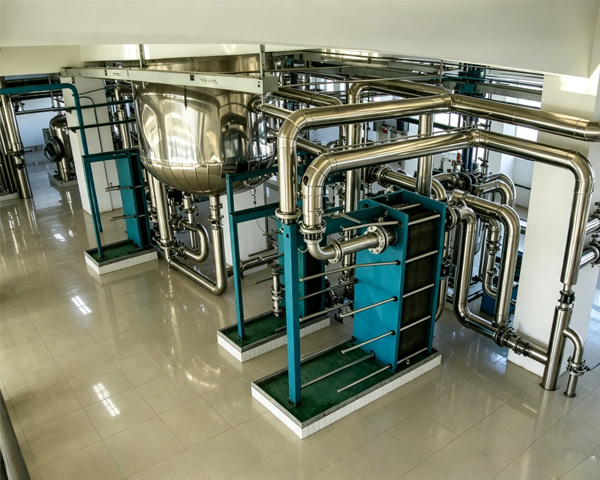
How it works: This is a complete refining system that goes far beyond simple filtration. It removes free fatty acids, gums, and odours from flaxseed oil, maximising purity.
Advantages:
- Produces flaxseed oil that is stable, clear, and neutral in flavour
- Highly scalable and customisable to different capacities
- Suitable for large commercial markets – products can enter supermarkets and branded retail channels
Disadvantages:
- Higher cost and larger space requirements
- Small amount of oil loss during the refining process
Best for: High-volume production for mass markets – supplying supermarkets, food processing plants, or export markets.
Supporting equipment: Refining systems are typically used alongside screw oil presses to form a complete pressing-refining production line.
Method 2: Centrifugal Oil Filter – Fast, Efficient Continuous Production
How it works: Uses high-speed rotation to spin impurities out of crude oil. Think of it as a “salad spinner for oil.”
Advantages:
- Very fast – ideal for continuous production lines
- No filter cloth or paper required, saving on consumable costs
Disadvantages:
- Residue collected in the drum requires manual cleaning
- Higher initial machine cost
Best for: Medium to large production lines that need to process large volumes of crude oil quickly, especially continuous operations.
Method 3: Pneumatic (Air Pressure) Oil Filter – A Flexible, Easy-to-Operate Choice
How it works: Uses compressed air to force crude oil through multiple layers of filter cloth, trapping impurities.
Advantages:
- Simple operation, quickly produces clear oil
- Suitable for both cold-pressed and hot-pressed oils
Disadvantages:
- Requires an external air compressor – takes up space and needs maintenance
- Filter cloth requires regular cleaning
Best for: Small to medium-sized oil mills, especially workshops with sufficient space and existing air compressor equipment.
Method 4: Vacuum Oil Filter – The Top Choice for Small Mills That Prioritise Nutrient Retention
How it works: Uses a vacuum pump to draw oil through a filter, effectively removing fine solid particles and even moisture.
Advantages:
- Low-stress process helps preserve the natural colour and nutritional components of flaxseed oil
- Compact design, ideal for small oil mills
Disadvantages:
- Relies on a vacuum pump – requires electricity and maintenance
- Filter cloth needs proper management
Best for: Small artisan oil mills, premium cold-pressed oil production – especially producers focused on retaining Omega-3 and other nutrients.
Supporting equipment: Typically paired with a hydraulic oil press to form a complete cold-press + vacuum filtration production line – ideal for small-batch artisan cold-pressed oil operations.
Method 5: Plate and Frame Filter Press – The “Quality Guarantee” for Premium Cold-Pressed Oils
How it works: Uses mechanical pressure to force flaxseed oil through multiple layers of fine filter paper, producing high-purity oil.
Advantages:
- Produces extremely pure flaxseed oil
- No heating required – perfectly preserves the flavour and nutrition of flaxseed oil
- Ideal for premium cold-pressed products
Disadvantages:
- Relies on filter paper – an ongoing consumable cost
- Operation can be more complex and labour-intensive
Best for: High-end cold-pressed flaxseed oil production, boutique oil mills, producers focused on quality over quantity.
Five Filtration Methods at a Glance
| Filtration Method | Key Advantage | Main Disadvantage | Best For |
|---|---|---|---|
| Refining Equipment | Highest purity, most stable quality | High investment, large footprint | High volume, supermarket channels |
| Centrifugal Filter | Fast, no consumables | Requires manual residue cleaning | Continuous medium-large production lines |
| Pneumatic Filter | Simple operation, flexible | Requires air compressor, electricity | Small-medium oil mills |
| Vacuum Filter | Retains nutrients, compact | Relies on vacuum pump | Small mills, premium cold-pressed oils |
| Plate and Frame Press | High purity, no heating | Ongoing filter paper cost | Premium cold-pressed oils |
How to Choose the Best Filtration Method for Your Operation
The key isn’t “which is the best” – it’s “which is the best fit for your production model.”
If you’re an artisan oil maker – with a limited budget, focused on quality, and selling to farmers’ markets and high-end restaurants – a plate and frame filter press or vacuum oil filter is your best choice. They preserve the natural flavour and Omega-3 fatty acids of flaxseed oil without heating.
If you’re a growth-oriented business – supplying supermarkets and branded retail, pursuing volume and consistency – edible oil refining equipment is the more suitable option. While the initial investment is higher, it reduces labour cost per bottle and ensures consistent flavour across every batch.
If you’re a mid-sized producer – somewhere in between – a centrifugal oil filter or pneumatic oil filter offers the balance of speed and cost.
Pressing is only the first step – filtration is what determines the value of your oil.
From the high-speed processing of a centrifugal oil filter, to the fine filtration of a plate and frame filter press, to the complete purification of edible oil refining equipment – each filtration method has its unique value. Choose the right filtration solution, and your flaxseed oil can go from “crude oil” to the “liquid gold” that customers are willing to pay for.
If you’re planning a flaxseed oil production line, or unsure which filtration solution best fits your production scale and quality goals, we can provide complete equipment solutions – from screw oil presses and hydraulic oil presses to filtration equipment and refining systems – tailored to your capacity and oil quality targets.
Contact us today – don’t let filtration ruin your good oil.