
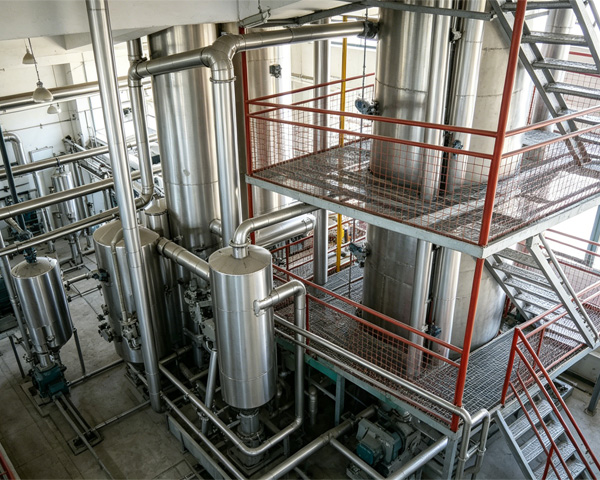
In the oil and fat refining industry, safety is always the top priority. Whether it is a large palm oil refinery or a small edible oil refining workshop, explosion protection for equipment is an uncompromising requirement. Why? Because refineries handle large quantities of flammable materials – crude oil, solvents, refined oil products, and volatile chemicals. When these substances mix with air in the right proportion, any electrical spark, hot surface or open flame can become an ignition source.
Explosion protection for refinery equipment is not just about meeting regulations – it is a lifeline that protects people, the environment, and the integrity of production. This article will guide you through the explosion‑proof requirements for refinery equipment and how to select edible oil refining equipment that meets the standards.
I. Why Is the Refinery Environment a “Hazardous Area”?
Refineries are inherently high‑risk locations. Common flammable substances include:
– Crude oil and various fractions (gasoline, diesel, kerosene)
– Solvents (e.g., n‑hexane, used in extractors)
– High‑temperature oils (during deodorisation and bleaching processes)
– Volatile gases (hydrogen, methane, etc.)
Once these substances leak, they form explosive gas atmospheres when mixed with air, and any ignition source can cause an explosion. Therefore, all oil pressing equipment and refining equipment that may come into contact with flammable media must have explosion‑proof properties.
II. Four Core Elements of Explosion‑Proof Design
1. Structural Materials: Strong and Durable to Withstand Internal Explosions
The enclosures of explosion‑proof equipment must be made of high‑strength materials capable of withstanding the pressure generated by an internal explosion while preventing flames or hot gases from escaping to the outside. Common materials include:
– Stainless steel: High strength and corrosion resistance, suitable for enclosures of decoloriser tanks, deodoriser towers, etc.
– Cast aluminium or cast iron: Used for motors, junction boxes and other components.
2. Seals and Gaskets: Airtightness is Key
Good sealing prevents flammable gases or vapours from entering the equipment. All inspection panels, cable entries, and flange connections must use high‑temperature‑resistant, ageing‑resistant gaskets (e.g., silicone rubber, PTFE) to form an airtight seal. This not only enhances explosion protection but also prevents contamination of internal components.
3. Electrical Systems: Eliminate All Potential Ignition Sources
Electrical equipment is the primary ignition source in a refinery. The following measures are essential:
– Explosion‑proof enclosures: Enclose electrical components such as motors, switches, and control panels in specially designed housings to prevent internal explosions from propagating to the outside.
– Intrinsically safe circuits: Limit the energy (voltage and current) in a circuit so that under any fault condition, it cannot produce a spark or high temperature capable of igniting an explosive atmosphere.
– Explosion‑proof motors: Used to drive screw oil presses, pumps, fans, etc., typically rated as “Ex d” or “Ex e”.
4. Earthing and Static Elimination: Avoid Spark Accumulation
Static discharge is also a common ignition source. All storage tanks, pipes, and equipment housings must be reliably earthed, and static eliminators installed. For large oil storage tanks, floating roofs should be used to minimise the vapour space above the liquid.
III. International Explosion‑Proof Certifications: ATEX, NEC and Others
Refinery equipment must comply with a range of international explosion‑proof standards:
– ATEX (EU): Applicable to equipment and protective systems intended for use in potentially explosive atmospheres.
– NEC (US National Electrical Code) and NFPA (US National Fire Protection Association) standards: Define hazardous area classifications and equipment selection requirements.
– IECEx (IEC): A globally recognised explosion‑proof certification system.
As an equipment supplier, we ensure that all our products are rigorously tested and certified to meet these standards. This not only gives our customers confidence in the safety of our equipment but also helps them comply with local regulations.
IV. Specific Explosion‑Proof Requirements for Different Types of Refinery Equipment
| Equipment Type | Explosion‑Proof Focus | Common Measures |
| Distillation column | High temperature, high pressure, contact with flammable gases | Pressure relief devices, explosion discs, thermal insulation |
| Pumps and compressors | Handling flammable liquids/gases, shaft seals prone to leakage | Explosion‑proof motors, double mechanical seals, leak detection |
| Storage tanks | Storing large quantities of flammable liquids, vapour accumulation at the top | Floating roofs, earthing systems, nitrogen blanketing |
| Extractor | Uses solvents such as n‑hexane, highly flammable | Fully enclosed design, oxygen concentration monitoring, inert gas protection |
| Decoloriser tank | Vacuum operation, hot oil mixed with bleaching earth | Vacuum system explosion protection, pressure relief valves, temperature interlock |
| Deodoriser tower | High temperature (>200°C), high vacuum, oil prone to oxidation | Steam heating system explosion protection, emergency vent |
V. Case Focus: How Is Edible Oil Refining Equipment Made Explosion‑Proof?
Many people think that edible oil refining is safer than petroleum refining, but that is not necessarily true. During deodorisation and bleaching, hot oil and steam can still form explosive mixtures. Our edible oil refining equipment is designed with a comprehensive explosion‑proof philosophy:
– Electrical components: Use explosion‑proof motors and control boxes; all wiring adopts intrinsically safe design.
– Ventilation systems: Ensure timely removal of steam and gases from the refining workshop to prevent accumulation.
– Temperature sensors: Interlocked with PLC – if temperature deviates abnormally, the system shuts down and alarms immediately.
– Small‑scale edible oil refinery equipment: Although compact and low‑investment, it still meets ATEX/NEC standards. We provide compact explosion‑proof solutions without compromising safety.
VI. Maintenance and Training: The Last Line of Defence for Explosion Protection
Even the best equipment can fail if not properly maintained. Regular maintenance includes:
– Replacing aged gaskets and seals
– Checking the sealing of cable entries
– Testing earthing resistance
– Calibrating temperature and pressure sensors
At the same time, operators must receive professional training to understand:
– The potentially explosive hazardous areas in the refinery (zones: 0, 1, 2)
– How to identify abnormal conditions (odours, unusual noises, vapour leaks)
– Emergency response procedures (shutdown, evacuation, firefighting)
VII. Safety Is the Return on Investment
Explosion‑protection requirements for refinery equipment are complex and comprehensive, covering materials, sealing, electrical systems, certification, maintenance, training and more. However, all this investment is worthwhile – because safety is the greatest benefit.
If you are looking for edible oil refining equipment and have any questions about explosion‑protection requirements, please feel free to contact us. Our engineering team can provide customised solutions that fully comply with explosion‑proof standards, based on your workshop environment, process conditions and local regulations. From small refining lines to large continuous plants, we ensure that you can produce high‑quality oils safely and worry‑free.
No compromise on safety, more efficient production. We look forward to working with you!