
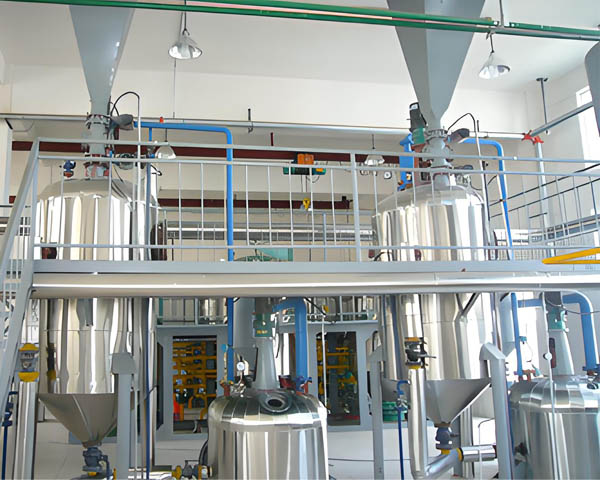
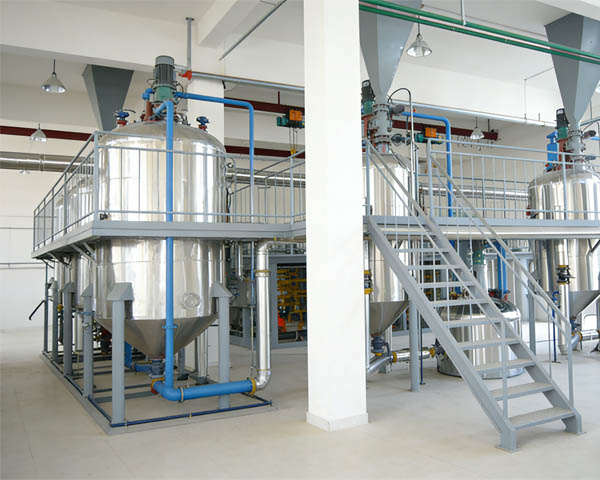
As one of the world’s major edible oils, soybean oil is highly regarded for its rich nutritional profile and wide range of applications. However, the oil obtained from pressing or solvent extraction—commonly known as crude soybean oil—contains impurities such as phospholipids, free fatty acids, pigments, and beany flavor, making it unsuitable for direct food use or sale. Soybean oil refining is the essential process that removes these impurities and enhances oil quality.
A complete soybean oil refining process not only improves the stability and smoke point of the oil but also significantly extends its shelf life, enabling the final product to meet national premium grade standards and achieve higher market value and consumer recognition.
The Six Key Steps in Soybean Oil Refining
Modern oil refining plants typically adopt a six-step process to convert crude soybean oil into a pure, stable, and versatile premium grade product. Each step relies on efficient and reliable refining equipment.
- Hydration Degumming
- Degumming is the first step in refining, aimed at removing phospholipids and other gum-like impurities from crude oil. By adding hot water or electrolyte solutions such as acid, alkali, or salt, the hydrophilic properties of phospholipids cause them to absorb water, swell, and coagulate, allowing separation from the oil. This process requires precise temperature control and high mixing efficiency. KMEC offers hydration degumming equipment featuring advanced agitation and heating systems to ensure stable and reliable degumming performance.
- Alkali Refining Deacidification
- Alkali refining is used to remove free fatty acids from crude oil. By adding a sodium hydroxide solution, free fatty acids react with the alkali to form soapstock, which precipitates and is separated from the oil. This step also helps eliminate phospholipids, proteins, and other impurities, further improving oil purity. The design of alkali refining equipment directly affects oil yield and quality. Our equipment uses high-efficiency mixing and centrifugal separation technologies to maximize deacidification while minimizing neutral oil loss.
- Vacuum Drying
- During refining, oil absorbs a certain amount of moisture. If not removed, this moisture can lead to hydrolytic rancidity during storage and transportation. Vacuum drying removes moisture by rapid evaporation under negative pressure and low temperature, preserving oil quality and extending shelf life. Our vacuum drying equipment offers high dehydration efficiency, a compact structure, and low energy consumption, making it an indispensable part of the soybean oil refining line.
- Adsorption Bleaching
- The bleaching step removes pigments, trace metals, residual soap, and other impurities from the oil. By adding highly adsorptive bleaching agents under controlled conditions, impurities are adsorbed and then separated by filtration, resulting in a clearer, higher-quality oil. Effective bleaching relies on stable, high-performance bleaching equipment. Our systems feature multi-stage adsorption and filtration, allowing flexible adjustments to process parameters for optimal color removal and oil yield.
- Vacuum Deodorization
- Deodorization takes advantage of the significant difference in volatility between triglycerides and odor-causing compounds under high temperature and vacuum conditions. Using steam distillation, this process removes undesirable odors and flavors, enhancing the oil’s sensory quality and thermal stability. Deodorization equipment is a core component of the refining line. Our units utilize high-efficiency packed columns and advanced vacuum systems to ensure thorough deodorization with low energy consumption and stable operation.
- Winterization Dewaxing
- For soybean oil intended to remain clear at low temperatures, winterization is essential. By cooling the oil, waxes crystallize and are then removed by filtration, significantly improving transparency and cold stability. Our winterization equipment employs precise temperature control and efficient filtration technology, making it especially suitable for producing high-end edible oils and products destined for export markets with strict quality requirements.
Quality Assurance and Packaging After Refining
Every batch of refined soybean oil must undergo rigorous sampling and testing before leaving the facility. Only oil that meets premium grade standards is allowed to proceed to the filling stage. If any batch fails to meet specifications, it is returned to the refining section for reprocessing.
In the packaging stage, automatic filling and sealing machines, labeling machines, and inspection systems form a modern packaging line, ensuring product safety and convenience during storage, transport, and sale.
Market Prospects and Investment Value in Refining Equipment
As consumer demand for high-quality edible oils continues to rise, the market for premium grade soybean oil is steadily growing. The refining process not only adds value to the oil but also delivers substantial economic returns for edible oil processors. With expanding export markets in Argentina, Brazil, the European Union, and beyond, investing in a high-standard soybean oil refining plant is becoming an industry trend.
For companies looking to enter the soybean oil processing sector, choosing a reliable, efficient, and technologically advanced soybean oil refining equipment solution is key to project success. Our company specializes in the R&D and manufacture of oil processing machinery, offering comprehensive support from process design and equipment selection to installation and commissioning, helping clients achieve high-quality soybean oil production with lower costs and greater efficiency.
Soybean oil refining is a critical process that transforms crude oil into high-quality edible oil through degumming, deacidification, drying, bleaching, deodorization, and winterization. Each stage requires specialized equipment to ensure the final product meets national standards and satisfies market demand for premium edible oils.
If you are planning a soybean oil processing project or looking to upgrade your existing production line, we invite you to explore our complete refining equipment solutions. We provide professional, cost-effective, and technically sound support tailored to your specific needs.