
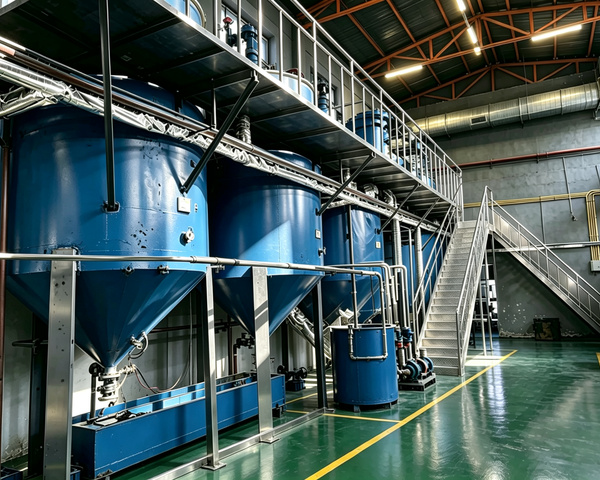
Selecting canola oil refining equipment is fundamentally an engineering decision that balances capacity requirements, capital constraints, and long‑term operating costs.
In real‑world projects, many oil mills fall into two common traps: focusing only on the initial equipment quotation while underestimating long‑term losses in yield, energy, and labour; or blindly pursuing a fully continuous, fully automated system while overlooking raw material stability, maintenance capability, and market pace. Batch refining and continuous refining are not a question of “advanced vs outdated” – they are engineering choices for different capacity scales and different market positions.
This article draws on the practical context of the EU canola oil industry to compare the two refining modes across four dimensions: capacity matching, neutral oil loss, energy and labour, and product quality consistency – helping you choose a canola oil refining solution that truly “adds up”.
I. Capacity Scale Determines the Technology Route
Canola oil refining equipment covers an extremely wide capacity range, from 1 tonne per day for small pressing workshops to over 1,000 tonnes per day for large export‑oriented plants, with completely different technology routes.
Batch refining typically serves 1–20 TPD capacities – suitable for small and medium‑sized mills that switch between multiple oil types frequently and have limited initial budgets. The process is batch‑based: degumming, neutralization, bleaching, and deodorization are carried out sequentially in separate tanks, with each batch cycle taking approximately 8–12 hours. Equipment investment is roughly one‑third to one‑half that of a continuous system of the same capacity.
Continuous refining is suited to 50+ TPD capacities – for single‑oil or limited‑product‑mix operations targeting export markets or requiring extremely high oil consistency. The process is fully continuous: crude oil passes sequentially through a degumming centrifuge, neutralization, bleaching tower, and continuous deodorizer. The entire system is closed, reducing oxidation risk.
The critical dividing line is 30–50 TPD. Below 30 TPD, the flexibility and low investment threshold of batch refining offer clear advantages. Above 50 TPD, the economies of scale of continuous refining become significant.
II. Neutral Oil Loss: The Biggest “Hidden Cost” of Batch Refining
Neutral oil loss during refining is a core indicator of economic performance – and the most significant cost difference between batch and continuous systems.
Batch refining uses gravity settling or simple water washing for soapstock separation, with relatively limited separation efficiency. Neutral oil loss is typically 1.5%–2.5%. For a plant processing 50 TPD of canola oil, assuming 2% neutral oil loss, approximately 1 tonne of refined oil is lost per day. At a canola oil market price of around $1,200/tonne, annual losses (330 days) can exceed $390,000.
Continuous refining uses a disc centrifuge separator for soapstock separation, achieving far higher separation efficiency than gravity settling. Neutral oil loss can be controlled at 0.5%–1.0%. For the same 50 TPD plant, the daily neutral oil loss in a continuous system is only one‑quarter to one‑half that of a batch system.
What does this difference mean? The higher initial investment in continuous refining equipment can typically be recovered within 2.5–4 years through reduced neutral oil loss. For plants processing over 30 TPD, the economic advantage of continuous refining is very clear.
III. Energy and Steam Consumption: Batch Re‑heating vs Continuous Steady‑State Operation
The batch refining process is “one batch at a time”: degumming, neutralization, bleaching, and deodorization are completed sequentially in separate tanks, with each stage requiring re‑heating and cooling. This batch operation mode leads to significantly higher steam consumption than continuous systems.
According to 2023 data from the International Oilseed Processing Association (IOPA), continuous systems show clear advantages in both energy consumption and capacity:
| Parameter | Batch Refining | Continuous Refining |
|---|---|---|
| Power consumption | Approx. 28 kWh/tonne | Approx. 18 kWh/tonne |
| Steam consumption | Re‑heating increases steam use by 15%–20% | Heat recovery reduces steam consumption by over 30% |
| Labour | 3–5 operators per shift | 1–2 operators per shift |
| Capacity ceiling | 30–60 MT/day | Up to 100 MT/day |
| Batch consistency (CV%) | ≥8% | ≤2% |
Continuous systems use heat recovery and steady‑state temperature operation to reduce steam consumption by over 30%. Meanwhile, one operator can monitor the entire continuous line, saving $15,000–$30,000 per year in labour costs.
IV. Product Quality Consistency: Batch Fluctuation vs Stable Output
The ultimate goal of canola oil refining is to consistently produce RBD canola oil with FFA below 0.1%, light colour, and neutral flavour.
Batch refining batch consistency is significantly affected by operator skill and raw material quality fluctuations. The same raw material may produce slight variations in colour and acid value across different shifts. IOPA data shows a batch system coefficient of variation (CV%) of ≥8%, compared to ≤2% for continuous systems. This is a challenge for branded retail oils.
Continuous refining uses PLC automatic control and online monitoring to maintain stable control of deodorization temperature, vacuum, and residence time. Deodorization temperature can be precisely controlled within 240–260°C, with vacuum maintained at 2–5 mbar, ensuring that every batch has trans fatty acid content below 1% and acid value consistently below 0.1%.
V. An Often‑Overlooked Quality Variable: Deodorization Temperature and Trans Fatty Acids
In continuous refining, the deodorization stage is the key step for controlling trans fatty acids. A study published in the Journal of the American Oil Chemists’ Society conducted a systematic kinetic study on canola oil deodorization at 204°C to 230°C over 2 to 86 hours. The study found that increasing deodorization time and temperature both led to higher isomerization of linolenic and linoleic acids: after deodorization, trans linoleic acid could rise from <1% to nearly 6% of total fatty acids, while trans linolenic acid could rise from <1% to over 65%.
Another study published in the Journal of Agricultural and Food Chemistry confirmed the critical nature of deodorization conditions from a different angle: when extreme conditions of 250°C for 5–6 hours were used, trans fatty acid content in low‑erucic acid rapeseed oil exceeded 5% of total fatty acids, while 650 mg/kg of cyclic fatty acid monomers were also formed. Importantly, the study confirmed that degumming, neutralization, and bleaching – the three preceding stages – hardly change the fatty acid composition. The formation of trans fatty acids and cyclic fatty acid monomers is caused entirely by the deodorization stage.
This means: while ensuring FFA compliance, deodorization temperature should be kept as close as possible to the critical point for linolenic acid isomerization, avoiding excessive heating that leads to trans fatty acid exceedance. Modern continuous refining equipment uses high‑vacuum systems and multi‑stage deodorizer designs to achieve the same FFA stripping effect at lower temperatures, thereby minimising trans fatty acids.
VI. Selection Decisions: Four Typical Scenarios
Scenario 1: Multiple oil types, small batches, flexible switching
→ Batch refining. The same equipment can process canola, peanut, and soybean oil without changing core equipment – suitable for small and medium‑sized mills with diverse raw material sources. Operators can manually adjust alkali dosage, washing cycles, or bleaching time based on the specific crude oil batch – a “cook‑to‑order” capability that reduces neutral oil loss and improves yield.
Scenario 2: Single main oil type, 30–50 TPD
→ Semi‑continuous refining. The front end (degumming, neutralization) uses batch operation, while the back end (bleaching, deodorization) uses continuous operation – balancing flexibility and efficiency.
Scenario 3: Single oil type, 50+ TPD, export‑oriented
→ Fully continuous refining. Lowest neutral oil loss, best product consistency – suitable for export projects with strict certification compliance requirements.
Scenario 4: Existing batch line, planned expansion
→ Stepwise upgrade. Retain existing batch bleaching and deodorization equipment, add continuous degumming and neutralization sections, and gradually transition to continuous operation.
VII. Frequently Asked Questions (FAQ)
Q1: Which equipment should a 30 TPD canola oil refinery choose?
30 TPD sits near the dividing line between batch and continuous. If the raw material is a single oil type with stable quality, a semi‑continuous solution is recommended – batch front end, continuous back end – balancing investment and efficiency. If raw material varieties change frequently, batch refining offers greater flexibility.
Q2: Is neutral oil loss really lower in continuous refining?
Yes. Continuous systems use disc centrifuge separators for soapstock separation, controlling neutral oil loss at 0.5%–1.0%, compared to 1.5%–2.5% for batch gravity settling. For a 50 TPD plant, this difference can save hundreds of thousands of dollars per year in neutral oil losses.
Q3: How much investment is needed to upgrade from batch to continuous refining?
Continuous refining equipment typically costs 2–3 times that of a batch system of the same capacity. The exact amount depends on capacity, automation level, and equipment material. For a 50 TPD continuous refining line, the investment is typically in the million‑dollar range.
Q4: How does deodorization temperature affect trans fatty acid content?
Deodorization temperature is the main controlling variable for trans fatty acid formation. Studies show that within the 204–230°C range, each increase in temperature significantly raises the isomerization rate of linolenic and linoleic acids. Keeping deodorization temperature near the critical point for linolenic acid isomerization, combined with a high‑vacuum system, is the key to controlling trans fatty acids.
VIII. What KMEC Can Do for You
Whether you are planning a 10 TPD small canola oil refining workshop or a 500+ TPD large continuous refinery, KMEC offers complete canola oil refining equipment solutions.
Our product line covers the entire refining process:
- Batch refining equipment: Refining tank, alkali refining kettle, bleaching tank, deodorizing tank, vacuum system – suitable for 1–20 TPD
- Semi‑continuous refining equipment: Batch degumming and neutralization + continuous bleaching and deodorization – suitable for 30–50 TPD
- Fully continuous refining equipment: Disc centrifuge separator, bleaching tower, deodorizer tower, PLC automatic control system – suitable for 50–1000+ TPD
- Supporting equipment: Screw oil press, extractor, leaf filter, oil‑to‑oil heat exchanger, fatty acid trap
KMEC engineers can provide the optimal refining equipment configuration based on your daily capacity, raw material quality, target market (domestic or export), and budget – from single machines to complete turnkey EPC plants.
Contact KMEC today for a customised canola oil refining equipment selection plan and quotation!
Data sources: AOCS Official Methods, Journal of the American Oil Chemists’ Society, Journal of Agricultural and Food Chemistry, International Oilseed Processing Association (IOPA) 2023 Study, QIE Refinery, UNIDO Industrial Refining Cost Data, and peer‑reviewed research literature.