
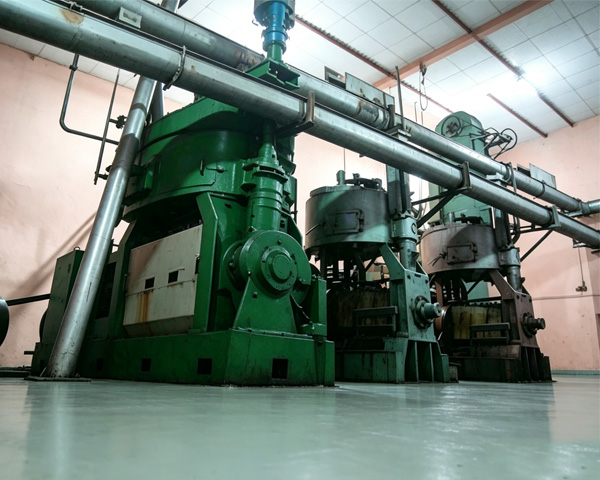
In the edible oil production industry, investing in a high-capacity screw press is only the first step. What truly determines a company’s profitability is how to maximize the return on investment (ROI) throughout the entire lifecycle of the equipment. For processing plants handling several tons or even dozens of tons of oilseeds per day, the screw press is not just a core component – it is the profit engine. This article combines the working principle, operating modes, and pretreatment processes of screw presses to provide you with a practical set of strategies to boost ROI.
1. Choose the Right Model for Your Capacity – Avoid “Overloading a Small Machine”
Screw presses are available in capacities ranging from a few kilograms per hour to several tons per hour. Large-scale processing requires high-capacity models; otherwise, frequent shutdowns and overload operation will significantly increase energy consumption and maintenance costs. Professional manufacturers like KMEC offer a wide range of models. Your selection should be based on:
– Daily processing target (e.g., 10 t/day or 50 t/day)
– Type of oilseed (oil content and physical properties of peanuts, soybeans, rapeseed, etc.)
– Continuous operation requirements (24/7 or not)
It is recommended to leave a 10–15% capacity margin to handle seasonal moisture variations or temporary production increases. A well-designed heavy-duty gearbox and robust frame (as mentioned in the source material) are the foundation for long-term continuous operation, directly reducing unplanned downtime losses.
2. Hot Pressing vs. Cold Pressing: Choose the Mode Based on Your Profit Goals
Screw presses support both hot pressing and cold pressing modes. Their impact on ROI is significantly different:
| Mode | Oil Yield | Meal Quality | Typical Application |
| Hot pressing | Higher | Lower (protein denatured) | Maximizing oil yield; meal sold as low‑value fuel or feed |
| Cold pressing | Moderate | High (bioactive components preserved) | Producing premium cold‑pressed oil; meal can be sold at higher price (e.g., health food ingredients) |
Best practice for maximizing ROI: If your meal can be sold at a high price (e.g., organic peanut meal), cold pressing may generate higher overall returns than hot pressing. Conversely, if oilseeds are expensive and the by‑product value is low, prioritize hot pressing. An electric heating system can stabilize preheating temperatures, ensuring efficiency in hot pressing while avoiding excessive damage to meal value.
3. Oilseed Pretreatment: A Non‑Negligible Efficiency Booster
The source material clearly states that almost all oilseeds must go through cleaning, drying, crushing, flaking, cooking, and conditioning. In large‑scale production, skipping or simplifying pretreatment will lead to:
– Accelerated wear of the screw press (due to hard impurities)
– 5–15% reduction in oil yield
– Higher residual oil in the cake
ROI enhancement point: Invest in an automated pretreatment line (screening, magnetic separation, crushing, softening rolls). Although the initial investment is higher, the cost is typically recovered within 6–12 months through reduced power consumption, extended screw and cage bar life, and improved oil yield. The flaking step is particularly important: it significantly increases the surface area of the oilseeds, allowing the screw press’s multi‑stage progressive pressing technology to achieve maximum effect.
4. Generate Additional Cash Flow with By‑Products and Vacuum Filtration Systems
The oil cake discharged from a screw press is not waste. The source material notes that “most processing plants sustain part of their operations by selling oilseed by‑products or oil cakes.” In large‑scale production, you can:
– Grind the meal and sell it as animal feed
– Further extract residual oil (e.g., second‑stage pressing or solvent extraction)
Meanwhile, modern screw presses integrate vacuum filtration systems that more thoroughly separate impurities from crude oil. Cleaner crude oil commands a higher price and reduces subsequent refining costs. Every 1% increase in crude oil purity reduces refining loss by about 2% – a substantial benefit in large‑scale production.
5. Reduce Total Operating Costs with Intelligent and User‑Friendly Design
The long‑term ROI of a high‑capacity screw press is heavily influenced by operation and maintenance costs. The user‑friendly design features highlighted in the source material include:
– An intuitive control panel (reduces training time and operating errors)
– Quick‑change wear parts (screw worms, cage bars)
– Electric heating and temperature control (eliminates reliance on operator experience)
Practical advice: Record data such as “current load – oil yield – residual oil in meal” for each batch, and use the equipment’s automation interface to build a process database. Customized fully automated production lines (like those offered by KMEC) allow one‑click switching between different oilseed parameters, greatly reducing downtime for adjustments. If you save just 30 minutes of non‑productive time per day, that translates to over 180 hours of additional production per year.
6. Full Life‑Cycle Service from the Manufacturer – The Invisible Lever of ROI
When purchasing equipment, look beyond the price and evaluate the manufacturer’s scope of technical support:
– Factory layout planning (logistics efficiency directly affects feed continuity to the screw press)
– Installation, commissioning, and operator training (reduces early‑stage failures)
– Spare parts availability (screws, bearings, gearboxes)
The “global service, full support” mentioned in the source material is exactly what large‑scale processing plants need. The loss from a one‑week shutdown waiting for an imported screw can far exceed the price difference between equipment options.
From “Buying a Machine” to “Operating a Profit Center”
To maximize ROI from a high‑capacity screw press, consider the following as a whole:
1. Correct sizing (match capacity to oilseed)
2. Mode selection(hot or cold pressing, based on by‑product value)
3. Pretreatment investment (flaking, conditioning, and other efficiency measures)
4. By‑product valorization (oil cake, crude oil clarification)
5. Intelligence and maintenance (reduce unplanned downtime)
6. Manufacturer service support (total cost of ownership)
The screw press is no longer just a processing machine – it is the core node for profit optimization in an oil mill. By applying the strategies above, you can convert equipment capacity into sustainable cash flow and build dual advantages in cost and quality within the competitive large‑scale oilseed processing market.